Dinner · Part 3 of 3: Tips & recipe card
Easy Artisan Sourdough Bread with Crackling Crust Tips, FAQ & printable recipe
- Prep
- Cook
- Total
- Serves
- 1
Tips for success
For the best crust, let the dough proof in the refrigerator for the full 12 hours. The cold dough is easier to score, and the slow fermentation develops a deeper flavor.
When scoring, use a very sharp blade and make one confident slash at a 45-degree angle. This creates the classic ear. If you want a more blistered crust, you can spray the dough with water just before placing it in the Dutch oven, but this is optional.
To achieve an open crumb, handle the dough gently during shaping and avoid deflating it. Use wet hands during stretch-and-folds to prevent sticking. If the dough tears, don’t worry—just continue with the folds. The bread will still be delicious.
For a more pronounced sour flavor, extend the cold proof to 14-16 hours. If you prefer a milder taste, shorten it to 8 hours. You can also add seeds or herbs to the dough, but keep the base recipe as is for the classic loaf.
Variations
- Seeded Sourdough: Add 1/4 cup each of sunflower seeds, sesame seeds, and poppy seeds to the dough during the final stretch-and-fold. Sprinkle more seeds on the work surface before shaping to coat the outside.
- Whole Wheat Blend: Replace 100 g of the bread flour with whole wheat flour. The loaf will be slightly denser but more nutritious. Increase the water by 25 g to keep the dough hydrated.
- Herb and Garlic: Fold in 2 tablespoons of finely chopped fresh rosemary and 3 minced garlic cloves during the last stretch-and-fold. The garlic will mellow during the long proof.
- Olive Oil Crust: After scoring, brush the top of the dough with a little olive oil and sprinkle with flaky sea salt. This gives a shiny, salty crust that pairs beautifully with soups and salads.
Storage and make-ahead
- Fridge
- Store the bread in a paper bag at room temperature for up to 3 days. Do not refrigerate, as it will go stale faster.
- Freezer
- Freeze the baked loaf for up to 3 months. Wrap tightly in plastic wrap and foil. Thaw at room temperature and reheat in a 350°F oven for 10 minutes.
- Reheat
- To re-crisp the crust, place slices or the whole loaf in a 350°F (175°C) oven for 5-10 minutes. Avoid microwaving, which makes the crust rubbery.
Store the bread in a paper bag at room temperature for up to 3 days. The crust will soften, but you can re-crisp it in a 350°F (175°C) oven for 5-10 minutes. Avoid plastic bags, which trap moisture and make the crust chewy. If the bread is cut, place the cut side down on a cutting board and cover with a clean kitchen towel.
The dough can be prepared up to 12 hours ahead through the overnight proof. After shaping, cover the banneton and refrigerate. The next day, bake as directed.
You can also freeze the baked loaf: wrap it tightly in plastic wrap and then foil for up to 3 months. Thaw at room temperature and re-crisp in the oven before serving.
Serving ideas
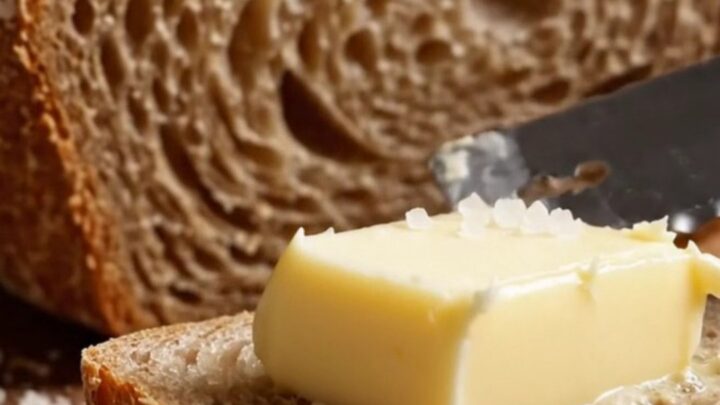
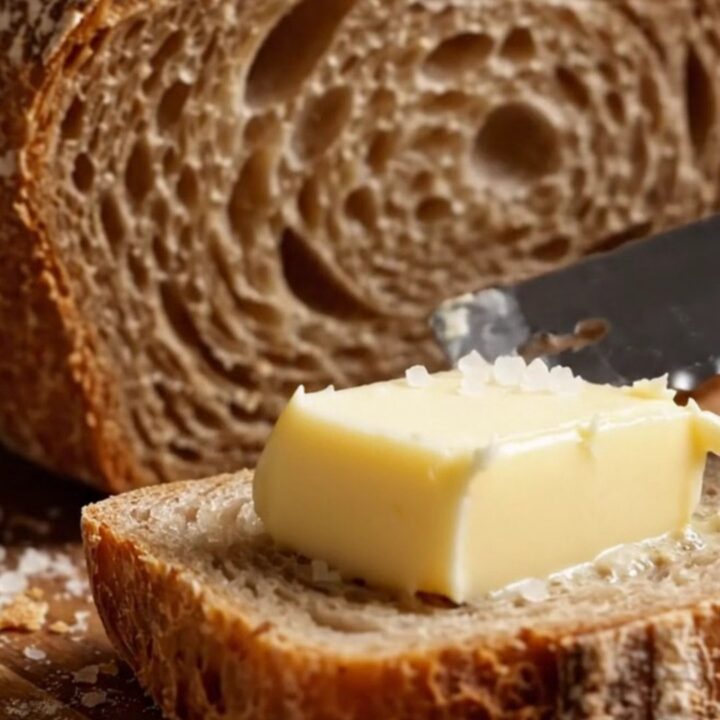
Serve the bread warm or at room temperature with salted butter, as shown in the video. The butter melts into the open crumb, enhancing the nutty, tangy flavor of the sourdough. For a more indulgent treat, serve with olive oil and balsamic vinegar for dipping, or use it for bruschetta topped with tomatoes and basil.
This bread also makes excellent toast. The thick slices hold up well to toppings like avocado, eggs, or jam. It’s also perfect for sandwiches—the sturdy crust and chewy crumb provide a great texture.
For a simple dessert, spread with honey or chocolate spread. Leftover bread can be turned into breadcrumbs or croutons, so nothing goes to waste.
Frequently asked questions
Why is the crust not crackling?
Can the dough be proofed at room temperature instead of overnight?
What if the dough is too sticky to shape?
How do you know if your starter is active enough?
Can this recipe be made without a Dutch oven?
Easy Artisan Sourdough Bread with Crackling Crust
Ingredients
- 100 g active sourdough starter
- 350 g warm water
- 500 g bread flour
- 10 g sea salt
- salted butter, for serving
Instructions
- In a large bowl, stir together the active sourdough starter and warm water until the starter is mostly dispersed. Add the bread flour and sea salt, then mix with a spatula or your hand until no dry flour remains and a shaggy dough forms. Cover the bowl with plastic wrap or a damp towel and let it rest for 30 minutes.
- Perform four sets of stretch-and-folds at 30-minute intervals. To do one set, wet your hand, reach under one side of the dough, stretch it up and over to the opposite side, then repeat for the other three sides. After each set, re-cover the bowl and let it rest.
- After the final fold, let the dough rest for 30 minutes. Turn it out onto a lightly floured surface. Gently shape it into a tight round boule by pulling the edges toward the center and pinching the seams. Place the boule seam-side up in a floured banneton basket.
- Cover the banneton with plastic wrap or a towel and refrigerate for at least 8 hours, or up to 12. The cold proof slows fermentation and develops flavor while making the dough easier to handle.
- Place a Dutch oven with its lid on the center rack of the oven. Preheat the oven to 450°F (230°C) for at least 30 minutes before baking. The Dutch oven must be screaming hot to create steam and a crackling crust.
- Carefully remove the hot Dutch oven from the oven. Turn the proofed dough out onto a piece of parchment paper. Use a razor blade or lame to score the top with a single deep slash or a cross pattern. The score should be about 1/2 inch deep.
- Lift the parchment paper with the dough into the hot Dutch oven. Put the lid on and bake for 20 minutes. The covered environment traps steam, which keeps the crust soft while the bread rises.
- Remove the lid and continue baking for 20 to 25 minutes, until the crust is deep golden brown and blistered. The internal temperature of the bread should reach at least 200°F (93°C) for a fully baked loaf.
- Transfer the bread to a wire rack and let it cool for at least 1 hour before slicing. This allows the crumb to set; cutting too early can result in a gummy interior.
- Use a serrated bread knife to slice the loaf into thick pieces. Spread each warm slice with salted butter, allowing it to melt into the open crumb. Serve immediately.
Estimated nutrition per serving
- Calories
- 180
- Protein
- 6 g
- Carbohydrates
- 36 g
- Fat
- 1 g
Next recipe

Crispy Chicken Alfredo Sandwich on Toasted Garlic Ciabatta
See the recipe → →This recipe is based on a short cooking video and is published under the pen name Clara Weller. It was checked before publication, but errors can slip through. Nutrition, when shown, is an estimate. Read more in our editorial policy and on our food safety page.
More recipes to try

Roasted Smashed Tomato Tagliatelle with Mozzarella
Total time: 35 min
Fluffy Mini Pizzas That Freeze Perfectly
Total time: 1 h 40 min
One-Pan Roasted Tomato and Spinach Rigatoni Bake
Total time: 50 min
Layered Cheesy Beef Tortilla Casserole Pie
Total time: 45 min
Turkish Meatball and Roasted Vegetable Casserole: One-Pan Comfort
Total time: 55 min