Dinner · Part 3 of 3: Tips & recipe card
Crusty Artisan Sourdough Bread with Open Crumb Tips, FAQ & printable recipe
- Prep
- Cook
- Total
- Serves
- 1
Tips for success
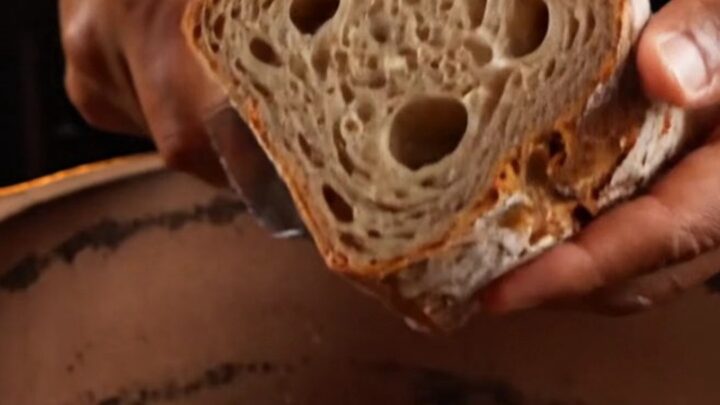
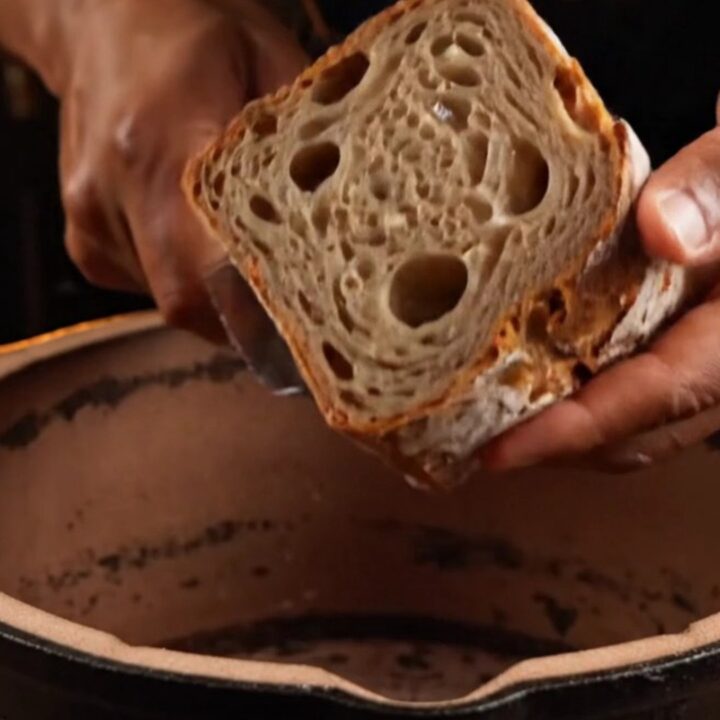
For the best open crumb, handle the dough gently during shaping and avoid deflating it. Use wet hands when working with the dough to prevent sticking. If the dough is too sticky, resist adding extra flour; instead, wet your hands and work quickly. The dough should be slightly tacky but manageable.
To achieve a deep, blistered crust, bake the bread on a preheated baking stone or steel placed under the Dutch oven for extra heat.
After baking, turn off the oven, crack the door open, and leave the bread inside for 10 minutes to further crisp the crust. Always let the bread cool completely before slicing—this is essential for a perfect crumb.
Variations
- Whole Wheat Sourdough: Replace 1 cup of the bread flour with whole wheat flour. Increase the water by 2 tablespoons, as whole wheat absorbs more liquid. The loaf will have a denser crumb and a nuttier flavor.
- Seeded Sourdough: Add 1/2 cup of toasted sesame seeds, sunflower seeds, or poppy seeds to the dough during the final stretch-and-fold. Press additional seeds onto the outside of the loaf before baking for extra crunch.
- Herb and Garlic Sourdough: Fold in 2 tablespoons of chopped fresh rosemary and 3 cloves of minced garlic during the last fold. The herbs infuse the bread with a fragrant, savory aroma that pairs well with olive oil.
- Rye Sourdough: Substitute 1 cup of bread flour with dark rye flour. The dough will be stickier and require a slightly longer ferment. The resulting loaf has a deep, malty flavor and a denser crumb.
Storage and make-ahead
- Fridge
- Keep the bread at room temperature in a paper bag; do not refrigerate as it will dry out. Refrigerating bread accelerates staling.
- Freezer
- Freeze the fully baked and cooled loaf, wrapped tightly in plastic and foil, for up to 3 months.
- Reheat
- To reheat slices, toast them in a toaster or under the broiler until crisp. For a whole loaf, warm in a 350°F (175°C) oven for 10-15 minutes.
Store the cooled sourdough in a paper bag or wrapped in a clean kitchen towel at room temperature for up to 3 days. The crust will soften slightly but can be refreshed by placing the loaf in a 350°F (175°C) oven for 5-10 minutes.
Avoid storing in plastic, which traps moisture and makes the crust chewy. For longer storage, slice and freeze the bread.
The dough can be prepared up to 14 hours ahead through the cold ferment step. After shaping, place the banneton in the refrigerator and bake the next day.
The cold ferment not only makes the dough easier to handle but also enhances the flavor. You can also freeze the shaped, unbaked dough for up to 1 month; thaw in the refrigerator overnight before baking.
Serving ideas
Serve the sourdough warm or at room temperature with a generous pat of butter and a sprinkle of flaky sea salt.
The crackling crust and open crumb are perfect for dipping into olive oil and balsamic vinegar, or for making hearty sandwiches. The tangy flavor pairs beautifully with soups, stews, and salads.
For a show-stopping presentation, slice the loaf just before serving to showcase the open crumb. The bread's rustic appearance makes it a stunning centerpiece for any table. Leftover slices can be toasted and topped with avocado, eggs, or smoked salmon for a delicious breakfast or brunch.
Frequently asked questions
Why is the sourdough crumb dense and not open?
Can this sourdough be made without a Dutch oven?
How long does the sourdough starter need to be active?
Can the cold ferment be extended beyond 14 hours?
Why does the crust become soft after storing?
Crusty Artisan Sourdough Bread with Open Crumb
Ingredients
- 3 1/2 cups unbleached bread flour
- 1 1/2 cups warm water
- 1/2 cup bubbly active sourdough starter
- 2 tsp fine sea salt
- rice flour for dusting, to taste
Instructions
- In a large bowl, combine the bread flour and warm water. Mix with a spatula until no dry flour remains. Cover the bowl with plastic wrap or a damp towel and let rest for 45 minutes. This autolyse step hydrates the flour and starts gluten development.
- Add the bubbly active sourdough starter and fine sea salt to the dough. Use wet hands to work them in thoroughly, squeezing and folding until the dough is smooth and elastic. The dough will tighten as you mix.
- Perform 4 sets of stretch-and-folds over 2 hours, spacing them 30 minutes apart. To stretch and fold, grab one side of the dough, lift it up, and fold it over the center. Repeat on all four sides. This builds gluten strength without kneading.
- Turn the dough out onto a lightly floured surface. Gently shape it into a round boule by folding the edges into the center and then flipping it over. Let it rest for 20 minutes uncovered.
- After the rest, shape the dough into a tight boule by pulling the surface taut. Dust a banneton basket generously with rice flour. Place the dough seam-side up in the basket. Cover and refrigerate for 14 hours.
- Place a Dutch oven in the oven and preheat to 465°F (240°C) for at least 30 minutes. Carefully invert the cold dough onto a piece of parchment paper. Using a razor blade or lame, score a deep crescent ear along one side of the dough.
- Lift the parchment with the dough into the hot Dutch oven. Add one ice cube beside the dough, then cover with the lid. Bake for 25 minutes covered. The ice cube creates steam, helping the crust stay supple and rise.
- Remove the lid and continue baking for 15 more minutes until the crust is deep mahogany brown and blistered. The internal temperature should reach 205°F (96°C) for a fully baked loaf. Carefully transfer the bread to a wire rack.
Estimated nutrition per serving
- Calories
- 1800
- Protein
- 60 g
- Carbohydrates
- 360 g
- Fat
- 10 g
Next recipe

One-Pan Giant Meatball Shell Pasta with Peas and Carrots
See the recipe → →This recipe is based on a short cooking video and is published under the pen name Clara Weller. It was checked before publication, but errors can slip through. Nutrition, when shown, is an estimate. Read more in our editorial policy and on our food safety page.
More recipes to try
Golden Greek Chicken Wraps: Quick & Flavorful
Total time: 30 min
Smoked Paprika Cheesy Taco Boats
Total time: 31 min
Crispy Chipotle Chicken Burritos with Garlic Adobo Paste
Total time: 40 min
Bakery-Style Homemade Pizza with Cloud-Soft Crust
Total time: 1 h 38 min
One-Pan Skillet Chicken & Cheese Quesadilla Börek
Total time: 45 min