Dinner · Part 1 of 3: Ingredients
One-Pan Giant Meatball Shell Pasta with Peas and Carrots
- Prep
- Cook
- Total
- Serves
- 6
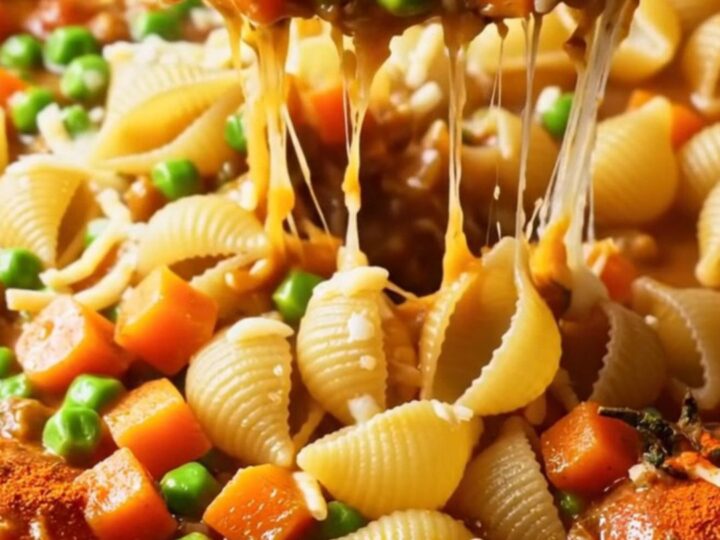
This one-pan giant meatball shell pasta brings together a generously seasoned beef meatball, ripe tomatoes, sweet peas, carrots, and small pasta shells in a single skillet.
As it simmers, the meatball breaks down into a rich, chunky ragù that coats every shell, while a blanket of melted mozzarella pulls it all together. It's a hearty, comforting dinner that feels both rustic and special, perfect for a busy weeknight when you want something satisfying without a pile of dishes.
Imagine a giant, juicy meatball surrounded by tomatoes and garlic, steaming in a skillet until tender, then broken into a savory sauce that clings to every pasta shell. That's the heart of this one-pan meal.
Sweet peas and carrots add color and a gentle sweetness, while the melted cheese on top makes each spoonful irresistible. The best part: everything cooks in one skillet, from the meatball to the pasta, so cleanup is minimal and the flavors meld beautifully.
Ingredients
- 1 lb seasoned beef meatball (about 1 lb/500 g)
- 4 whole vine tomatoes
- 6 cloves garlic
- 3 tbsp olive oil
- 1/2 cup water
- 1 cup sweet green peas
- 1 cup diced carrots
- 1 1/2 cups small pasta shells
- 1 tsp salt
- 1 tsp paprika
- 1 1/2 cups hot vegetable broth
- 1 1/2 cups shredded mozzarella (kashar) cheese
- 2 tbsp chopped fresh parsley
Why this recipe works
Cooking the meatball whole in the skillet before breaking it apart keeps the meat exceptionally moist and tender. The initial sear creates a flavorful crust, and the steam from the tomatoes and water gently cooks the interior without drying it out.
Breaking the meatball into chunks after steaming distributes the meaty goodness throughout the sauce, giving every bite a taste of the seasoned beef.
Simmering the pasta directly in the skillet with the broth and vegetables lets the pasta absorb all the savory liquid, so it's infused with flavor from the inside out.
The starches released from the pasta help thicken the sauce into a silky, clinging texture that coats each shell. This one-pot method also means fewer dishes and a more concentrated, deeply satisfying sauce.
Notes and substitutions
The recipe calls for a 1-pound (500 g) seasoned beef meatball. You can use a store-bought one or make your own by mixing ground beef with grated onion, garlic, cumin, salt, and pepper. The seasonings in the meatball are key—they flavor the entire sauce as it simmers. If using a plain meatball, consider adding extra spices to the sauce.
Small pasta shells are ideal because they catch the chunky ragù and vegetables in their curves. If you can't find shells, use another small shape like elbow macaroni or ditalini. The cooking time may vary slightly, so check for doneness. For the cheese, kashar is traditional, but low-moisture mozzarella works perfectly and melts beautifully.
- seasoned beef meatball: Use a store-bought seasoned meatball or make your own by mixing ground beef with grated onion, garlic, cumin, salt, and pepper.
- small pasta shells: Any small pasta shape like elbow macaroni, ditalini, or orzo works; adjust cooking time if needed.
- vegetable broth: Chicken broth can be used if not strictly vegetarian.
- mozzarella (kashar) cheese: Use low-moisture mozzarella or provolone for a similar melt and flavor.
Equipment
- Large skillet with lid
- Wooden spoon or spatula
- Chef's knife
- Cutting board
- Measuring cups and spoons
- Serving spoon
Up next · Part 2 of 3
4 steps · 25 min of cooking · what to look for at each stage
Step-by-step instructions (Part 2)