Dinner · Part 2 of 3: Instructions
One-Pan Giant Meatball Shell Pasta with Peas and Carrots Step-by-step instructions
- Prep
- Cook
- Total
- Serves
- 6
Before you start
Before starting, make sure you have a large skillet with a lid—a 12-inch skillet works well. Mince the garlic if you prefer smaller pieces, but leaving the cloves whole to steam and then break apart is also fine.
Dice the carrots into small, even cubes so they cook through in the 10-minute simmer. Measure out the broth and have it hot, as adding cold liquid can lower the temperature and extend cooking time. Shred the mozzarella if not pre-shredded, and chop the parsley for the garnish.
Ingredients at a glance (13)
- 1 lb seasoned beef meatball (about 1 lb/500 g)
- 4 whole vine tomatoes
- 6 cloves garlic
- 3 tbsp olive oil
- 1/2 cup water
- 1 cup sweet green peas
- 1 cup diced carrots
- 1 1/2 cups small pasta shells
- 1 tsp salt
- 1 tsp paprika
- 1 1/2 cups hot vegetable broth
- 1 1/2 cups shredded mozzarella (kashar) cheese
- 2 tbsp chopped fresh parsley
Instructions
Searing and Steaming
- Sear the Meatball and TomatoesHeat the olive oil in a large skillet over medium-high heat. Place the seasoned beef meatball in the center of the skillet. Arrange the whole vine tomatoes and garlic cloves around the meatball. Cook for 2-3 minutes until the meatball is browned on the bottom. Pour in the water, cover with a lid, and let steam for 10 minutes. After steaming, remove the lid, peel the tomato skins, and use a spatula to break the meatball and tomatoes into a rustic chunky ragù.Look for The meatball should be browned and the tomatoes softened; the liquid will be released from the tomatoes.Safe temperature 160°F (71°C) internal temperature (ground meat)Tip Use a heavy skillet to distribute heat evenly and prevent sticking.
- Add Vegetables and PastaAdd the sweet green peas, diced carrots, small pasta shells, salt, paprika, and hot vegetable broth to the skillet. Stir everything together gently to combine. Bring the mixture to a simmer, then reduce the heat to medium-low. Cover the skillet and let it cook for 10 minutes, stirring once halfway through, until the pasta shells are tender and the sauce has thickened.Look for The pasta should be al dente and the sauce should be thick enough to coat the back of a spoon.Tip If the sauce seems too dry, add a splash of hot broth or water.
At this stage, the meatball should be browned on the bottom, and the tomatoes will have released their juices, creating a steamy, fragrant environment. The garlic will be softened and mellow.
When you remove the lid, you'll see the tomato skins starting to peel away, and the liquid will be a rich, reddish color. Break the meatball and tomatoes with a spatula until you have a chunky, rustic mixture.
Simmering the Pasta
- Melt the CheeseScatter the shredded mozzarella cheese evenly over the top of the pasta mixture. Cover the skillet and let it sit for 2-3 minutes, or until the cheese is melted and bubbly. Remove from heat.Look for The cheese should be fully melted and slightly golden in spots.Tip For a more golden top, place the skillet under the broiler for 1-2 minutes.
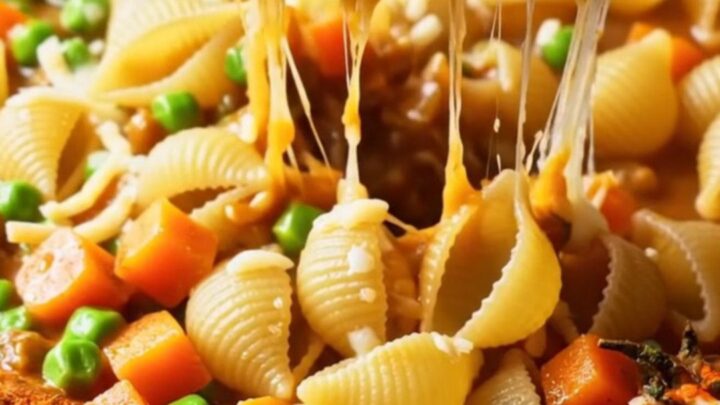
The skillet will be full of colorful ingredients: green peas, orange carrots, and small shells nestled in a thickening sauce. The aroma will be savory and slightly sweet, with the paprika adding a warm, smoky note. The pasta should be tender but not mushy, and the sauce should be clinging to the shells. If the sauce looks dry, add a splash of hot broth.
Melting the Cheese
- Garnish and ServeSprinkle the chopped fresh parsley over the melted cheese. Scoop a large serving spoonful of the cheesy meatball shell pasta onto each plate, making sure to get some of the meaty ragù and vegetables in every serving. Serve hot.Look for The pasta should be steaming and the cheese stretchy when scooped.Tip For a pretty presentation, use a large spoon to create a dome shape on the plate.
The mozzarella will melt into a golden, bubbly layer across the top of the pasta. When you scoop a spoonful, the cheese should stretch and pull, revealing the meaty ragù underneath. The steam rising from the dish will carry the aroma of toasted cheese and herbs. Garnish with parsley and serve immediately while the cheese is still warm and stretchy.
Common mistakes
One common mistake is skipping the steaming step—this is what softens the tomatoes and ensures the meatball is cooked through without drying out. Another is adding too much liquid or not enough; the pasta needs the broth to cook, but too much will make a soupy sauce.
Also, resist the urge to stir too vigorously after adding the pasta, as this can break the shells. Finally, don't skip the cheese melting time—covering the skillet lets the cheese melt evenly without burning.
How to tell it’s done
The dish is done when the pasta shells are tender but still have a slight bite (al dente), and the sauce has thickened to a consistency that coats the back of a spoon. The cheese should be fully melted and bubbly.
The internal temperature of the meatball must reach 160°F (71°C) before serving. If the meatball is still pink in the center, return the skillet to the heat and simmer for a few more minutes.
- Ground meat: 160°F (71°C) in the thickest part
Up next · Part 3 of 3
4 variations · storage & make-ahead · 5 answers · printable card
Tips, FAQ & printable recipe (Part 3)← Back to the ingredients (Part 1)