Desserts · Part 3 of 3: Tips & recipe card
Crispy Turkish Walnut Baklava with Lemon Syrup Tips, FAQ & printable recipe
- Prep
- Cook
- Total
- Serves
- 12
Tips for success
For the best results, use high-quality phyllo dough that is as thin as possible. If the sheets are too thick, the baklava will be more like a pastry than the delicate, flaky dessert you want.
Keep the phyllo covered with a damp towel at all times, as it dries out quickly and becomes brittle. When brushing the butter, use a gentle hand and make sure every sheet is coated, but do not saturate them—excess butter can make the bottom soggy.
Roasting the walnuts is a step not to be skipped. Spread them on a baking sheet and toast at 350°F (175°C) for 5–7 minutes until fragrant, then let them cool completely before chopping. This deepens their flavor and adds a wonderful aroma.
When pouring the syrup, do it slowly and evenly, using a ladle or a measuring cup with a spout. Start from the edges and work your way to the center, allowing the syrup to seep into the cut lines.
Variations
- Pistachio Baklava: Replace the walnuts with an equal amount of finely chopped pistachios for a vibrant green color and a slightly sweeter, more delicate flavor. Pistachios are a classic choice in many regions, and they pair beautifully with the lemon syrup.
- Honey Syrup: For a deeper, more floral sweetness, substitute the granulated sugar with 1 1/2 cups of honey and reduce the water to 1/2 cup. Simmer the syrup for 5 minutes, then cool completely. The honey will add a distinct richness that complements the nuts.
- Spiced Baklava: Add a pinch of ground cinnamon or cardamom to the walnut mixture before layering. This warm spice enhances the nutty flavor and adds an aromatic complexity that is especially welcome during the holidays.
- Chocolate Drizzle: After the baklava has rested and absorbed the syrup, melt 4 oz of dark chocolate and drizzle it over the top. Let the chocolate set before cutting. This adds a modern twist and a touch of indulgence that chocolate lovers will appreciate.
Storage and make-ahead
- Fridge
- Do not refrigerate baklava, as it will become soggy. Store in an airtight container at room temperature for up to 5 days.
- Freezer
- Freeze baked, syrup-soaked baklava in an airtight container for up to 3 months. Thaw at room temperature for 2 hours before serving.
- Reheat
- To refresh crispness, reheat in a 300°F (150°C) oven for 5–10 minutes, then cool completely before serving.
Store leftover baklava in an airtight container at room temperature for up to 5 days. The layers will stay crisp, though they may soften slightly over time. To refresh the crispness, you can place the baklava in a 300°F (150°C) oven for 5–10 minutes, but let it cool completely before serving again. Avoid refrigerating, as the moisture will make the pastry soggy.
Baklava is an excellent make-ahead dessert because it actually improves after a day or two as the flavors meld. Prepare the baklava fully, including the syrup soak, and let it rest at room temperature for at least 4 hours.
Then, cover and store at room temperature. It can be made up to 3 days in advance. For longer storage, you can freeze the baked, syrup-soaked baklava for up to 3 months, but note that the texture may change slightly upon thawing.
Serving ideas
Serve the baklava at room temperature, as this is when the layers are at their crispiest. Arrange the diamond pieces on a serving platter, and consider adding a few whole walnuts or a dusting of powdered sugar for a decorative touch, though the traditional version is served plain.
The contrast of the crisp pastry and the sweet, nutty filling is best enjoyed on its own, perhaps with a cup of Turkish tea or strong coffee.
For a more indulgent presentation, you can drizzle a little extra syrup over the top before serving, but this is optional. The baklava is rich, so a small piece is usually satisfying. If you are serving a crowd, cut the pieces smaller to make them easier to handle. The diamond shape is traditional, but you can also cut squares or rectangles if you prefer. Always use a sharp knife to cut cleanly through the layers.
Frequently asked questions
Why does the baklava become soggy?
Can this recipe be made with store-bought phyllo?
Is it necessary to use clarified butter?
How long should the baklava rest before serving?
Can the syrup be made ahead of time?
Crispy Turkish Walnut Baklava with Lemon Syrup
Ingredients
- 30 sheets paper-thin phyllo dough
- 1 1/2 cups clarified butter (sade yağ)
- 2 1/2 cups finely chopped roasted walnuts
- 2 cups granulated sugar
- 1 cup water
- 2 tbsp fresh lemon juice
Instructions
- In a small saucepan, combine the granulated sugar, water, and fresh lemon juice. Bring to a boil over medium heat, stirring until the sugar dissolves. Reduce the heat and simmer gently for 8–10 minutes until slightly thickened. Remove from heat and let cool completely to room temperature. Meanwhile, heat the oven to 340°F (170°C).
- Brush the bottom and sides of a 12-inch round baking pan with some of the clarified butter. Lay one sheet of phyllo in the pan, letting the edges come up the sides. Brush the entire sheet with more clarified butter. Repeat with 14 more sheets, brushing each one generously, for a total of 15 buttered phyllo layers.
- Sprinkle the finely chopped roasted walnuts evenly over the buttered phyllo, spreading them in an even, thick layer that covers the entire surface. Press gently so the nuts adhere to the butter.
- Place another sheet of phyllo over the walnuts and brush with clarified butter. Repeat with the remaining 14 sheets, brushing each one with butter, to create a total of 15 top layers. Brush the top sheet generously with butter.
- Using a sharp chef's knife, cut the baklava into traditional diamond shapes: make diagonal cuts one way, then diagonal cuts the other way, creating a grid. Cut all the way through to the bottom of the pan. Pour any remaining clarified butter evenly over the cuts, making sure it seeps into the lines.
- Place the pan on a baking sheet to catch any butter overflow. Bake at 340°F (170°C) for 50 minutes, until the top is deep golden amber and the layers are visibly crisp and flaky. The butter should be bubbling around the edges.
- Remove the baklava from the oven and immediately pour the cooled lemon syrup evenly over the entire surface, focusing on the cut lines. Listen for the sizzle as the syrup hits the hot pastry. Let the baklava absorb the syrup completely.
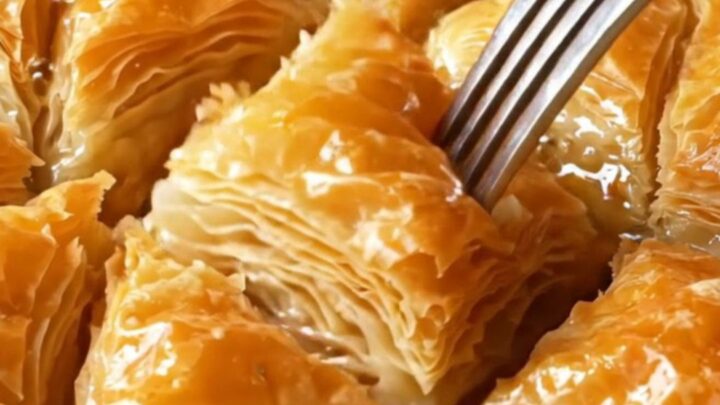
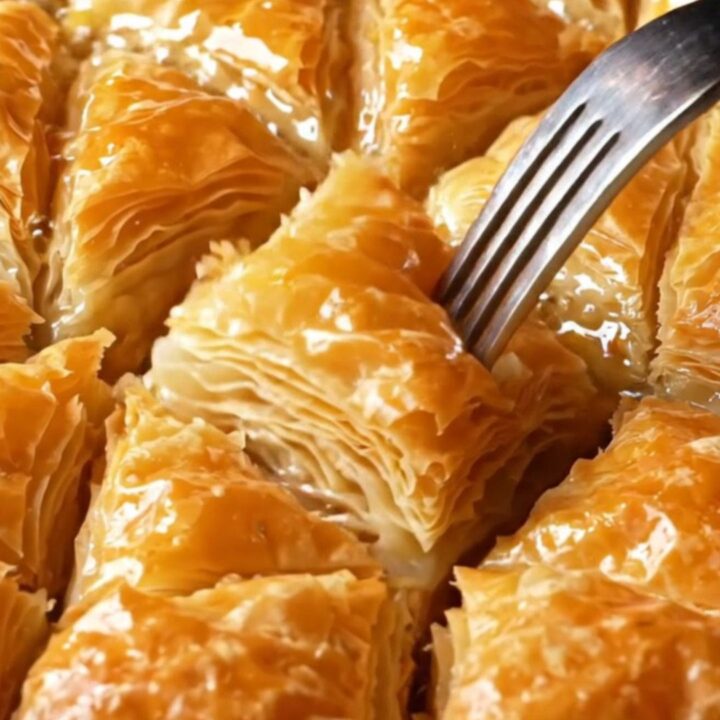
- Let the baklava rest at room temperature for at least 2 hours, allowing the layers to absorb the syrup and set. Use a fork to lift a piece—it should shatter with a crisp crunch. Serve at room temperature.
Estimated nutrition per serving
- Calories
- 380
- Protein
- 5 g
- Carbohydrates
- 35 g
- Fat
- 25 g
Next recipe
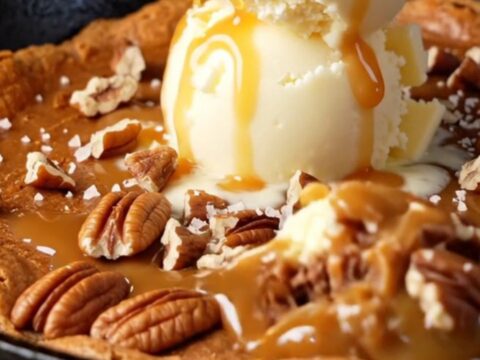
Brown Butter Pecan Skillet Blondie with Sea Salt Caramel
See the recipe → →This recipe is based on a short cooking video and is published under the pen name Clara Weller. It was checked before publication, but errors can slip through. Nutrition, when shown, is an estimate. Read more in our editorial policy and on our food safety page.
More recipes to try
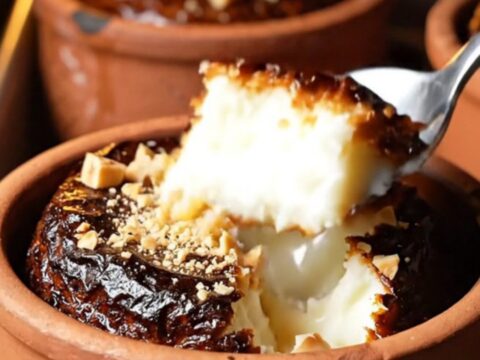
Crispy-Skinned Oven-Baked Rice Pudding (Fırın Sütlaç)
Total time: 50 min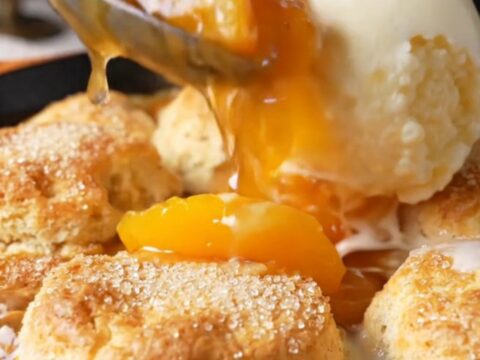
Skillet Cinnamon Peach Cobbler with Flaky Buttermilk Biscuits
Total time: 55 min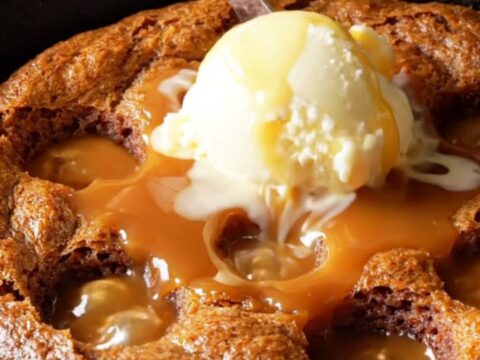
Sticky Toffee Date Pudding Skillet with Warm Molten Caramel Sauce
Total time: 40 min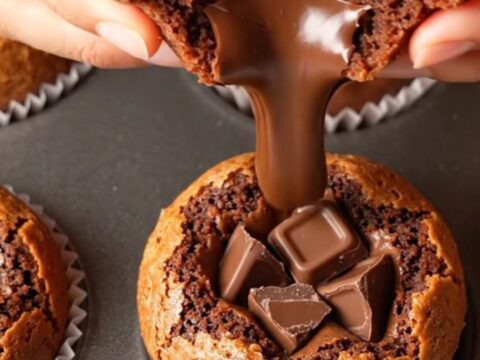
Fudgy Brownie Muffins with a Molten Center
Total time: 35 min
Viral Chocolate Peanut Butter Date Bark
Total time: 45 min