Dinner · Part 3 of 3: Tips & recipe card
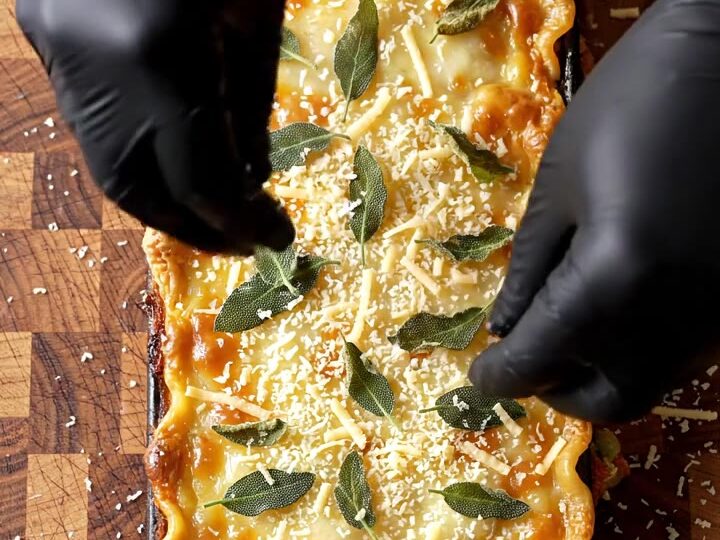
Crispy Skillet Butternut Sage Lasagna with Brown Butter Fontina Tips, FAQ & printable recipe
- Prep
- Cook
- Total
- Serves
- 6
Tips for success
For the best browning, use a well-seasoned cast-iron skillet. If you don’t have one, an oven-safe stainless steel or enameled cast-iron pan works, but the edges won’t get quite as crisp. Make sure the skillet is large enough to hold all the layers without overflowing—a 10-inch pan is ideal.
When making the brown butter, watch it closely. The butter will foam, then the milk solids will turn golden and smell nutty. Remove it from the heat as soon as it reaches that stage to prevent burning.
If you prefer a milder flavor, you can skip the browning and just melt the butter, but the nutty depth is what makes this dish special.
Variations
- Add Sausage: Brown 1/2 pound of Italian sausage in a skillet before assembling. Crumble it into the layers for a heartier dish. Cook the sausage thoroughly to 160°F (71°C) before adding.
- Use Spinach: Add a layer of sautéed spinach between the squash and cheese. Wilt 5 ounces of fresh spinach in a hot pan with a pinch of salt, then squeeze out excess moisture.
- Swap the Cheese: Replace the fontina with Gruyère or provolone for a different flavor. Smoked mozzarella also adds a subtle smokiness that pairs well with the brown butter.
- Make it Vegetarian: This recipe is already vegetarian. For a vegan version, use dairy-free butter, milk, and cheese alternatives, but note that the texture and browning will differ.
Storage and make-ahead
- Fridge
- Store leftover lasagna in an airtight container in the refrigerator for up to 4 days. Reheat gently in a skillet or microwave until hot.
- Freezer
- The baked lasagna can be frozen for up to 2 months. Thaw overnight in the refrigerator and reheat in a 350°F (175°C) oven until hot.
- Reheat
- Reheat individual portions in the microwave for 1–2 minutes, or in a skillet over medium heat, covered, for 5–7 minutes.
Leftover lasagna can be stored in an airtight container in the refrigerator for up to 4 days.
To reheat, place a portion in a skillet over medium-low heat, covered, until warmed through, or microwave individual servings. The top may lose some crispness, but the flavor remains rich and satisfying.
The lasagna can be assembled up to 8 hours ahead, covered, and refrigerated before baking. Add 10–15 minutes to the baking time if starting from cold.
The roasted squash and béchamel can also be made a day in advance and kept separately. Bring the béchamel to a gentle simmer before assembling to loosen it.
Serving ideas
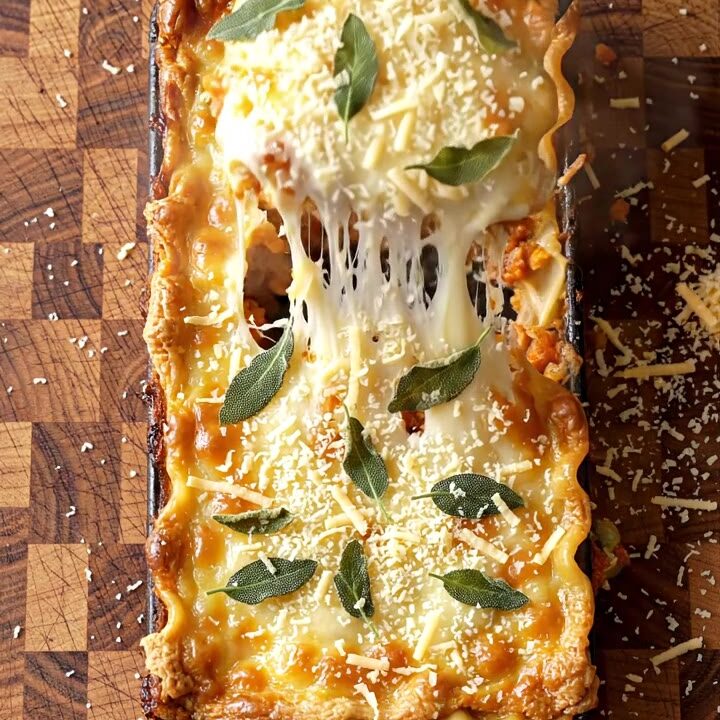
Serve the lasagna hot from the skillet, spooning out generous portions that show off the stretchy cheese and the layers of squash and noodles. A simple green salad with a lemony vinaigrette is a bright counterpoint to the richness. Crusty bread is also welcome to soak up any extra béchamel.
For a more elegant presentation, let the lasagna rest for 10 minutes, then slice it into wedges like a pie. Top each serving with a few crispy fried sage leaves and an extra dusting of parmesan.
This dish is satisfying on its own, but it also pairs well with roasted vegetables or a glass of dry white wine.
Frequently asked questions
Can this lasagna be made without a cast-iron skillet?
Why does the béchamel sometimes turn lumpy?
Can the butternut squash be replaced with another vegetable?
How can the top be made extra crispy?
Is it necessary to use no-boil noodles?
Crispy Skillet Butternut Sage Lasagna with Brown Butter Fontina
Ingredients
- 1 medium (about 2 lb) butternut squash, peeled, seeded, thinly sliced
- 1/2 cup fresh sage leaves, plus more for frying
- 8 oz fontina cheese, grated (about 2 cups)
- 1/2 cup freshly grated parmesan cheese, plus more for serving
- 12 sheets no-boil lasagna noodles (wavy ribbons)
- 6 tbsp unsalted butter
- 1/4 cup all-purpose flour
- 3 cups whole milk
- 1 tsp kosher salt, plus more to taste
- 1/2 tsp freshly ground black pepper
- 2 tbsp olive oil, for roasting
Instructions
- Heat the oven to 375°F (190°C). Line a baking sheet with parchment paper. Peel the butternut squash, cut it in half lengthwise, scoop out the seeds, and slice it thinly, about 1/8-inch thick. Toss the slices with olive oil and a pinch of salt. Spread them in a single layer on the prepared sheet. Roast for 20–25 minutes, until just tender and lightly browned at the edges. Meanwhile, grate the fontina and parmesan on the large holes of a box grater. Set aside.
- In a medium saucepan, melt the butter over medium heat. Add the sage leaves and cook, stirring occasionally, until the butter foams and turns golden brown and the sage is crisp, about 3–4 minutes. Remove the sage leaves with a slotted spoon and set them aside for the topping. Whisk the flour into the brown butter and cook for 1 minute. Slowly pour in the milk, whisking constantly, and bring to a simmer. Cook until the sauce thickens, about 5 minutes. Season with salt and pepper. Keep warm.
- Spread a thin layer of béchamel on the bottom of a 10-inch cast-iron skillet. Arrange a layer of lasagna noodles, breaking them to fit. Add a layer of roasted squash, then a spoonful of béchamel, and a sprinkle of fontina and parmesan. Repeat the layers, ending with a final layer of noodles topped with the remaining béchamel and all the fontina and parmesan. Press down gently to compact the layers.
- Place the skillet in the oven and bake for 30–35 minutes, until the top is deep golden brown and the edges are bubbly and blistered. If the top browns too quickly, cover loosely with foil. Remove from the oven and let rest for 10 minutes before serving.
- In a small skillet, heat 2 tablespoons of olive oil over medium-high heat. Add the reserved sage leaves and fry until crisp, about 30 seconds per side. Drain on paper towels. Sprinkle the fried sage and extra grated parmesan over the lasagna. Pull a portion with a spoon to show the cheese stretch, and serve hot.
Estimated nutrition per serving
- Calories
- 520
- Protein
- 20 g
- Carbohydrates
- 48 g
- Fat
- 28 g
Next recipe
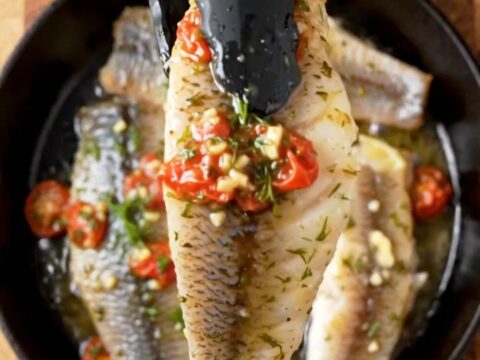
Crispy Skin Arctic Char with Garlic Herb Butter
See the recipe → →This recipe is based on a short cooking video and is published under the pen name Clara Weller. It was checked before publication, but errors can slip through. Nutrition, when shown, is an estimate. Read more in our editorial policy and on our food safety page.
More recipes to try

Skillet Zucchini Lasagna Rolls with Ricotta and Mozzarella
Total time: 45 min
Lemon Garlic Butter Parmesan Cod with Spinach
Total time: 25 min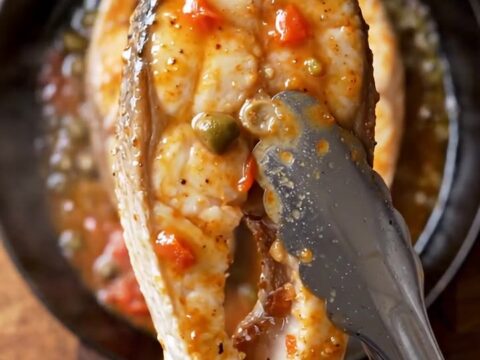
Seared Swordfish with Burst Tomato Olive Pan Sauce
Total time: 33 min
Honey Gochujang Shrimp and Octopus Skillet
Total time: 35 min
Crispy Polenta Fries with Molten Provolone and Arrabbiata
Total time: 40 min