Dinner · Part 1 of 3: Ingredients
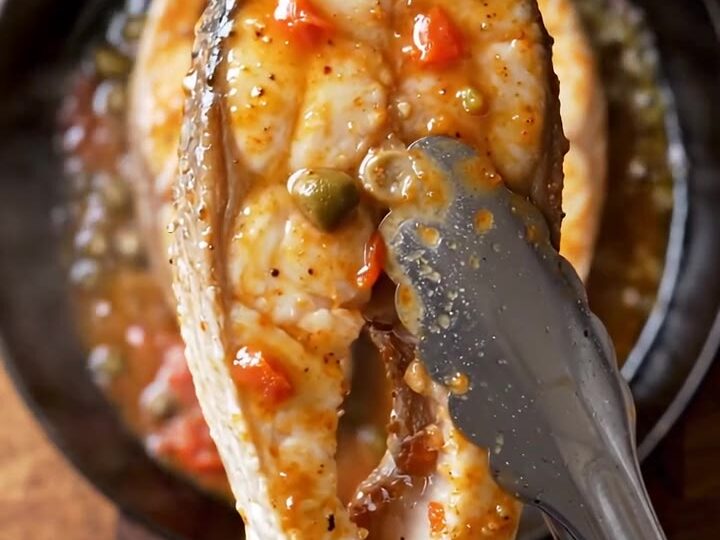
Seared Swordfish with Burst Tomato Olive Pan Sauce
- Prep
- Cook
- Total
- Serves
- 4
This seared swordfish recipe turns a simple weeknight dinner into something special. Thick swordfish steaks are seared in a hot cast iron skillet until golden, then finished with a vibrant pan sauce of burst cherry tomatoes, briny capers, kalamata olives, and a generous spoonful of garlic herb butter.
Fresh oregano and a shower of aged sheep milk cheese add the final touch. Ready in under 30 minutes, this one-skillet dish brings Mediterranean flavor to your table with minimal effort.
A great swordfish steak is meaty, mild, and takes beautifully to bold flavors. Here, the fish is seared in a screaming-hot skillet with olive oil and butter to develop a deep golden crust, then the same pan becomes the base for a quick sauce that comes together in minutes.
Cherry tomatoes burst and release their sweet juices, capers and olives add briny pops, and a swirl of garlic herb butter makes everything glossy and rich. The result is a restaurant-quality dinner that feels impressive but stays simple enough for any night of the week.
Ingredients
- 4 swordfish steaks, about 1 inch thick (6 oz each)
- 2 tbsp olive oil
- 2 tbsp unsalted butter
- 1 1/2 cups cherry tomatoes
- 2 tbsp capers, drained
- 1/2 cup kalamata olives, pitted and halved
- 1 lemon, sliced into rounds
- 3 tbsp garlic herb butter
- 1/2 cup aged sheep milk cheese, grated (such as Pecorino)
- 2 tbsp fresh oregano leaves
- kosher salt to taste
- freshly ground black pepper to taste
Why this recipe works
Searing the swordfish in a cast iron skillet over high heat creates a caramelized crust that locks in moisture and adds savory depth. The high heat also ensures the fish cooks quickly, so it stays tender and juicy inside.
Using both olive oil and butter gives the best of both worlds: the oil raises the smoke point while the butter adds nutty flavor and helps with browning.
The pan sauce is built in the same skillet after the fish is removed, so it picks up all the browned bits left behind—a shortcut to deep flavor without extra steps.
The cherry tomatoes burst and soften into a jammy sauce, while the capers and olives provide briny contrast. Finishing with garlic herb butter emulsifies the sauce and gives it a silky, luxurious texture.
Notes and substitutions
For the best results, choose swordfish steaks that are about 1 inch thick and weigh around 6 ounces each. Look for firm, moist flesh with a mild scent. If swordfish is unavailable, thick white fish like halibut or mahi-mahi work well, though cooking times may vary slightly.
The aged sheep milk cheese adds a salty, nutty note that complements the fish and the briny elements. If a sheep milk cheese is hard to find, Parmesan or an aged goat cheese are excellent substitutes. The garlic herb butter can be store-bought or made at home by mixing softened butter with minced garlic and chopped parsley, thyme, or oregano.
- swordfish steaks: halibut, mahi-mahi, or thick white fish steaks can be used; adjust cooking time as needed.
- aged sheep milk cheese: Parmesan or aged goat cheese work well.
- kalamata olives: green olives or Castelvetrano olives can be substituted.
- garlic herb butter: Make it by mixing softened butter with minced garlic and chopped herbs such as parsley, thyme, or oregano.
Equipment
- Cast iron skillet
- Box grater
- Chef's knife
- Cutting board
- Tongs
- Measuring spoons
- Measuring cups
Up next · Part 2 of 3
5 steps · 15 min of cooking · what to look for at each stage
Step-by-step instructions (Part 2)