Dinner · Part 1 of 3: Ingredients
Honey Gochujang Shrimp and Octopus Skillet
- Prep
- Cook
- Total
- Serves
- 4
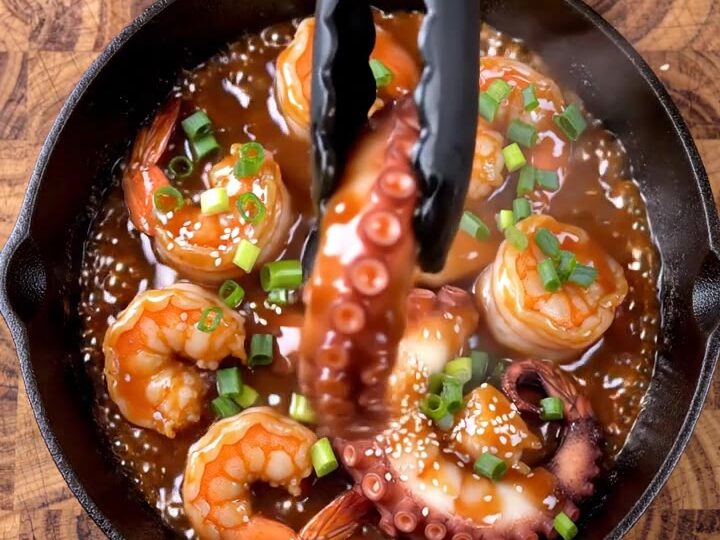
This one-pan seafood skillet brings together charred octopus and jumbo shrimp in a glossy honey-gochujang garlic butter. The sauce is savory, sweet, and spicy, with a deep crimson color and a sticky finish that clings to every piece.
A shower of toasted sesame, sliced scallions, and fresh lime brightens the rich, buttery glaze. It’s a fast, impressive dinner that feels special enough for a weekend but comes together in under half an hour.
A hot cast iron skillet delivers deep char on tender octopus and plump shrimp, then becomes the vessel for a bubbling sauce made with gochujang, honey, garlic, and butter. The gochujang brings fermented heat, honey adds caramel sweetness, and lime cuts through the richness.
The result is a savory-sweet, spicy seafood dish with charred edges and a glossy, aromatic finish. Serve it straight from the pan with rice or bread to catch every drop of the sauce.
Ingredients
- 1 lb octopus tentacles, cleaned
- 1 lb jumbo shrimp, peeled and deveined
- 6 scallions, sliced
- 2 tbsp fresh ginger, finely grated
Sauce
- 3 tbsp gochujang
- 2 tbsp honey
- 4 cloves garlic, minced
- 4 tbsp unsalted butter
Garnish
- 1 tbsp toasted sesame seeds
- 1 lime, cut into wedges
- 2 tbsp neutral oil, such as grapeseed or canola
- kosher salt to taste
Why this recipe works
The high heat of a cast iron skillet creates a deep, smoky char on the seafood while keeping the interior moist. Scoring the octopus tentacles increases surface area, so more of the meat comes into contact with the hot pan, producing crispy edges.
The shrimp are butterflied to cook quickly and evenly, and their cut side takes on a beautiful caramelized crust. This initial sear builds a flavor foundation that the sauce then enhances.
The sauce is a balance of gochujang’s fermented umami, honey’s sweetness, and butter’s richness. Adding it after the seafood is seared allows the sauce to bubble and reduce, coating each piece in a thick, glossy layer.
The grated ginger and garlic bloom in the hot butter, releasing their aromas without burning. A final squeeze of lime brightens the whole dish, cutting through the heat and fat.
Notes and substitutions
Gochujang, a Korean chili paste, is the backbone of the sauce. It has a deep, slightly sweet heat that pairs perfectly with honey and butter. Look for it in the international aisle of most supermarkets or at an Asian grocer. If unavailable, a mixture of miso, chili flakes, and a little sugar can approximate the flavor, though it will not be identical.
Octopus tentacles are often sold pre-cooked and can be found in the seafood section. If using raw octopus, simmer it until tender before searing. Jumbo shrimp are ideal because they stay plump and juicy. A well-seasoned cast iron skillet is essential for the char; if you do not have one, a heavy stainless steel pan works. Use a neutral oil with a high smoke point, such as grapeseed or canola.
- octopus tentacles: squid or extra shrimp (adjust cooking time; squid cooks in 1–2 minutes)
- gochujang: mix 2 tbsp miso with 1 tsp chili flakes and 1 tsp sugar
- honey: maple syrup or brown sugar (use 1 1/2 tbsp for similar sweetness)
- unsalted butter: salted butter (reduce added salt in the dish)
Equipment
- Cast iron skillet
- Box grater
- Chef's knife
- Cutting board
- Measuring spoons
- Tongs
- Small bowl
Up next · Part 2 of 3
8 steps · 15 min of cooking · what to look for at each stage
Step-by-step instructions (Part 2)