Dinner · Part 3 of 3: Tips & recipe card
Crispy Skillet Arctic Char with Garlic Dill Butter Tips, FAQ & printable recipe
- Prep
- Cook
- Total
- Serves
- 2
Tips for success
For the crispiest skin, pat the fillets dry with paper towels and let them air-dry in the refrigerator for 30 minutes before cooking, if time allows. This removes surface moisture.
When scoring, use a sharp knife and cut just through the skin, not into the flesh. The crosshatch pattern not only looks beautiful but also helps the skin crisp evenly and prevents curling.
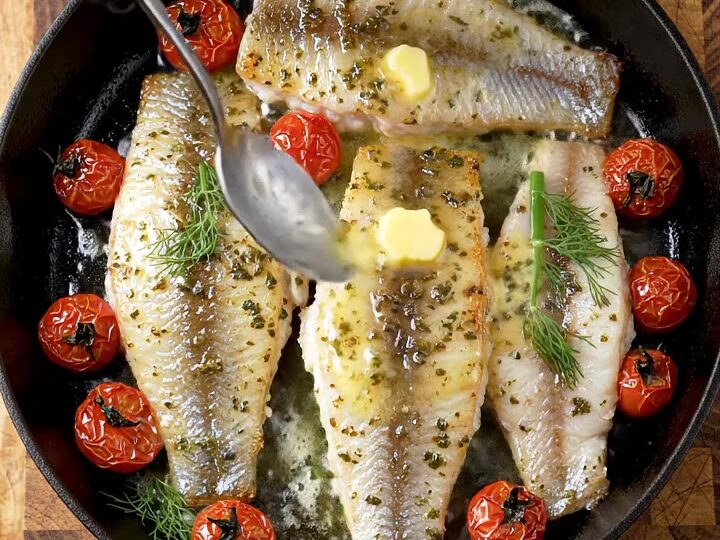
When basting, tilt the pan so the butter pools, and use a large spoon to continuously scoop the foaming butter over the fish. This keeps the top moist and infuses it with flavor.
Add the Parmigiano-Reggiano at the very end, just before serving, so it melts into the sauce without separating. If the butter starts to brown too much, lower the heat — you want it foaming, not burnt.
Variations
- Lemon-Herb Butter: Replace the dill with a mix of fresh thyme and parsley, and add 1 teaspoon of lemon zest to the butter. Finish with a squeeze of lemon juice over the fish before serving.
- Spicy Tomato Butter: Add a pinch of red pepper flakes or a minced fresh chili to the butter along with the garlic. The heat balances the richness of the butter and the sweetness of the tomatoes.
- Caper and Shallot: Add 1 tablespoon of drained capers and 1 finely chopped shallot to the butter when basting. The briny capers and sweet shallot add a new layer of flavor.
- Herb Crust: Before searing, press the scored skin into a mixture of fresh breadcrumbs and grated Parmigiano-Reggiano for an extra crunchy crust. Reduce the searing time slightly to avoid burning.
Storage and make-ahead
- Fridge
- Store leftovers in an airtight container in the refrigerator for up to 2 days. The skin will soften, but the flavor remains.
- Freezer
- Not recommended — the delicate texture of the fish and the crisp skin do not survive freezing.
- Reheat
- Reheat gently in a skillet over medium-low heat with a little extra butter, just until warmed through, about 3-4 minutes.
Leftover Arctic Char can be stored in an airtight container in the refrigerator for up to 2 days. The skin will lose its crispness, so it's best to reheat gently in a skillet over medium-low heat, or enjoy cold in a salad. The tomato butter sauce can be stored separately and spooned over the fish when reheating.
The fish can be scored and seasoned up to 4 hours in advance; keep it refrigerated and pat dry again before cooking. The garlic and dill can be prepped a day ahead and stored in the refrigerator. The Parmigiano-Reggiano can be grated in advance as well. The actual cooking is quick, so it's best done just before serving.
Serving ideas
Serve the Arctic Char immediately after cooking, with the blistered tomatoes and all the garlic dill butter from the pan spooned over the top.
A side of crusty bread is perfect for soaking up the sauce, and a light green salad or steamed asparagus rounds out the meal. For a low-effort side, toss some baby potatoes in the pan after the fish is done to absorb the remaining butter.
This dish pairs beautifully with a crisp white wine like Sauvignon Blanc or a light Pinot Noir if you prefer red. For a non-alcoholic option, sparkling water with lemon is refreshing.
Garnish with a few extra fresh dill sprigs if you like, though the fish is already full of flavor. The key is to serve it hot, straight from the skillet, so the skin stays crisp and the butter is still foaming.
Frequently asked questions
Can this recipe be made with salmon instead of Arctic Char?
Why does the skin stick to the pan?
Can the Parmigiano-Reggiano be omitted?
How do you know when the fish is done?
Can this be made ahead for a dinner party?
Crispy Skillet Arctic Char with Garlic Dill Butter
Ingredients
- 2 Arctic Char fillets (6 oz each), skin on
- 1 tsp kosher salt
- 1/2 tsp freshly ground black pepper
- 1/4 cup grated Parmigiano-Reggiano cheese
- 2 tbsp fresh dill, chopped
- 3 cloves garlic, minced
- 3 tbsp unsalted butter
- 1 cup cherry tomatoes
Instructions
- Pat the Arctic Char fillets dry with paper towels. Using a sharp knife, score the skin in a crosshatch pattern, cutting just through the skin and into the fat, not the flesh. Season both sides with kosher salt and black pepper. Grate the Parmigiano-Reggiano on the fine side of a box grater to make a fine pile of Parmesan snow. Chop the fresh dill and mince the garlic.
- Place a cast iron skillet over medium-high heat and let it get hot — about 2 minutes. Add a splash of neutral oil (or use a little of the butter) and swirl to coat the bottom. The skillet should be hot enough that a drop of water sizzles instantly, but not smoking.
- Lay the fillets skin-side down in the hot skillet, pressing gently with a spatula for 5 seconds to keep them flat. Cook undisturbed for 4-5 minutes, until the skin is deep golden and shatteringly crisp. The flesh will turn opaque from the bottom up, but the top will still look translucent. Do not move the fillets during this time.
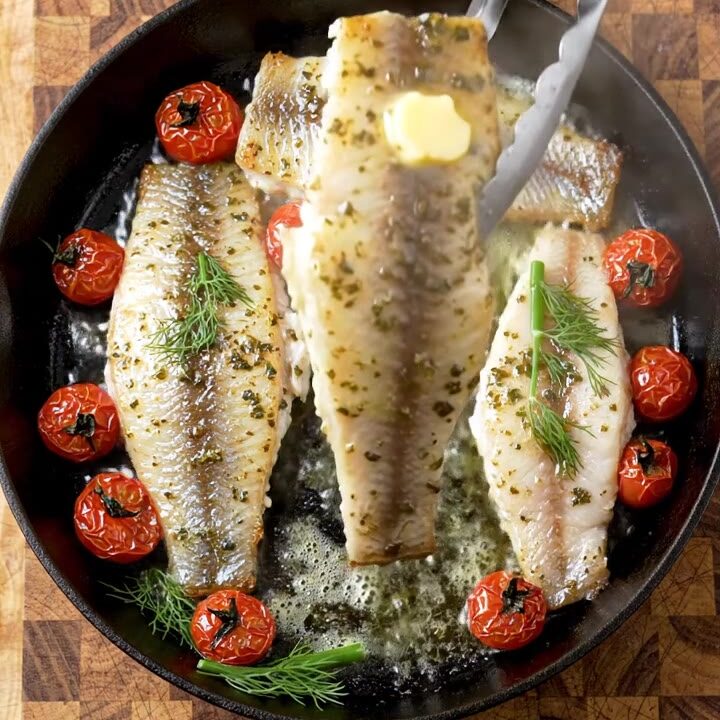
- Carefully flip the fillets with a fish spatula. Add the cherry tomatoes to the skillet around the fish. Cook for 2 minutes, letting the tomatoes blister and soften in the rendered fat. The fish will finish cooking on the flesh side, reaching an internal temperature of 145°F (63°C) when done.
- Reduce the heat to medium-low. Add the butter, minced garlic, and half of the chopped dill to the skillet. Tilt the pan slightly so the butter pools, and use a spoon to baste the fish continuously for 1-2 minutes. The butter will foam and turn lightly golden, infusing the fish with garlic and dill.
- Sprinkle the grated Parmigiano-Reggiano over the fish and tomatoes. Add the remaining fresh dill. Spoon the blistered tomato and garlic butter sauce over the top of each fillet. The cheese will melt into the butter, creating a rich, savory glaze. Serve immediately, spooning extra sauce from the pan over each portion.
Estimated nutrition per serving
- Calories
- 450
- Protein
- 35 g
- Carbohydrates
- 4 g
- Fat
- 32 g
Next recipe

One-Skillet Butternut Sage Lasagna with Brown Butter Fontina
See the recipe → →This recipe is based on a short cooking video and is published under the pen name Clara Weller. It was checked before publication, but errors can slip through. Nutrition, when shown, is an estimate. Read more in our editorial policy and on our food safety page.
More recipes to try

One-Pan Coconut Curry Prawns with Thai Basil
Total time: 25 min
Skillet Zucchini Lasagna Rolls with Ricotta and Mozzarella
Total time: 55 min
Parmesan Crusted Cod with Lemon Garlic Butter
Total time: 25 min
Seared Swordfish with Burst Tomato Caper Sauce
Total time: 25 min
Honey Gochujang Shrimp and Charred Octopus Skillet
Total time: 30 min