Dinner · Part 1 of 3: Ingredients
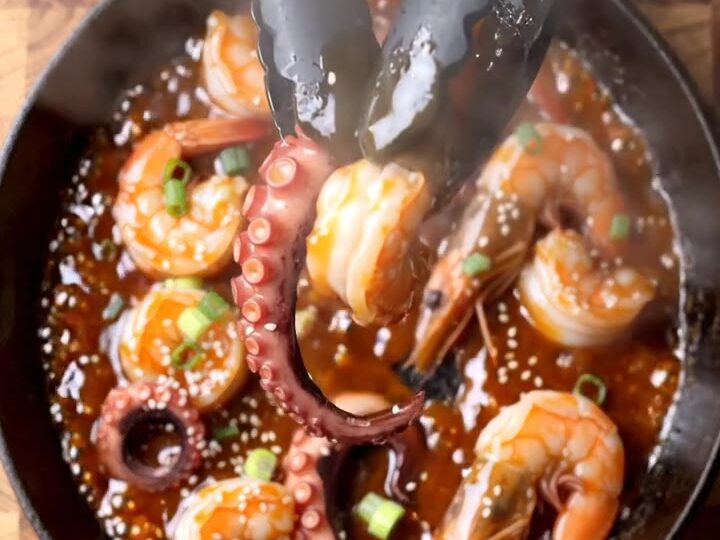
Honey Gochujang Shrimp and Charred Octopus Skillet
- Prep
- Cook
- Total
- Serves
- 4
This one-pan skillet dinner brings together charred octopus and jumbo shrimp in a glossy, spicy-sweet gochujang honey garlic butter.
The sauce is thick, savory, and just a little fiery, while the lime and sesame add a bright finish. It's a restaurant-style seafood dish that comes together quickly on a weeknight, with minimal cleanup and maximum flavor.
The combination of tender octopus and juicy shrimp in a sticky, caramelized sauce is a showstopper. The key is to get a good sear on the seafood, then let it soak up the buttery, gochujang-spiked glaze.
Serve it straight from the skillet with rice or crusty bread to soak up every last drop. This recipe is perfect for when you want something a little special but don't want to spend hours in the kitchen.
Ingredients
- 1 lb octopus tentacles, cleaned
- 1 lb jumbo shrimp, peeled and deveined
- 2 tbsp fresh ginger, grated
- 2 tbsp gochujang
- 2 tbsp honey
- 4 cloves garlic, minced
- 4 tbsp unsalted butter
- 4 scallions, sliced
- 1 tbsp toasted sesame seeds
- 1 lime, cut into wedges
Why this recipe works
The high-heat sear creates a deep, smoky char on the octopus and shrimp, which adds a layer of complexity that you can't get from just sautéing.
The caramelization of the gochujang and honey in the butter creates a glossy, sticky glaze that coats every piece of seafood. This technique ensures the seafood is juicy and flavorful, not dry or bland.
The gochujang provides a fermented, slightly funky heat that is balanced by the sweetness of honey and the richness of butter.
The ginger and garlic add aromatic depth, while the lime juice and scallions cut through the richness with brightness. The result is a well-rounded sauce that clings to the seafood and makes every bite satisfying.
Notes and substitutions
Gochujang is a Korean chili paste that has a deep, complex flavor. It's available in most Asian markets and many supermarkets. If you can't find it, a mix of sriracha and miso can work as a substitute. The octopus can be found fresh or frozen; if using frozen, thaw it thoroughly and pat dry before cooking.
For the best sear, make sure your skillet is screaming hot before adding the seafood. Use a cast iron pan if you have one, as it holds heat well. The shrimp should be large or jumbo so they don't overcook. The lime wedges are essential for squeezing over the top just before serving – don't skip them.
- gochujang: Use 1 tablespoon sriracha mixed with 1 teaspoon miso paste for a similar fermented heat.
- octopus tentacles: Substitute with squid or extra shrimp if octopus is unavailable.
- honey: Maple syrup or brown rice syrup can replace honey for a different sweetness.
- unsalted butter: Use ghee or a neutral oil like avocado oil for a dairy-free version.
Equipment
- Cast iron skillet
- Box grater
- Chef's knife
- Cutting board
- Tongs
- Measuring spoons
- Small bowl
Up next · Part 2 of 3
6 steps · 15 min of cooking · what to look for at each stage
Step-by-step instructions (Part 2)