Dinner · Part 3 of 3: Tips & recipe card
Crispy Red Snapper with Saffron Garlic Butter and Fennel Tips, FAQ & printable recipe
- Prep
- Cook
- Total
- Serves
- 2
Tips for success
For the crispiest skin, ensure the fish is thoroughly dried before seasoning. Use paper towels to pat the fillets dry, and let them sit at room temperature for 10 minutes before cooking.
This helps the skin crisp up faster and more evenly. Also, don't be afraid to press down on the fillet with a spatula for the first few seconds to ensure full contact with the hot pan.
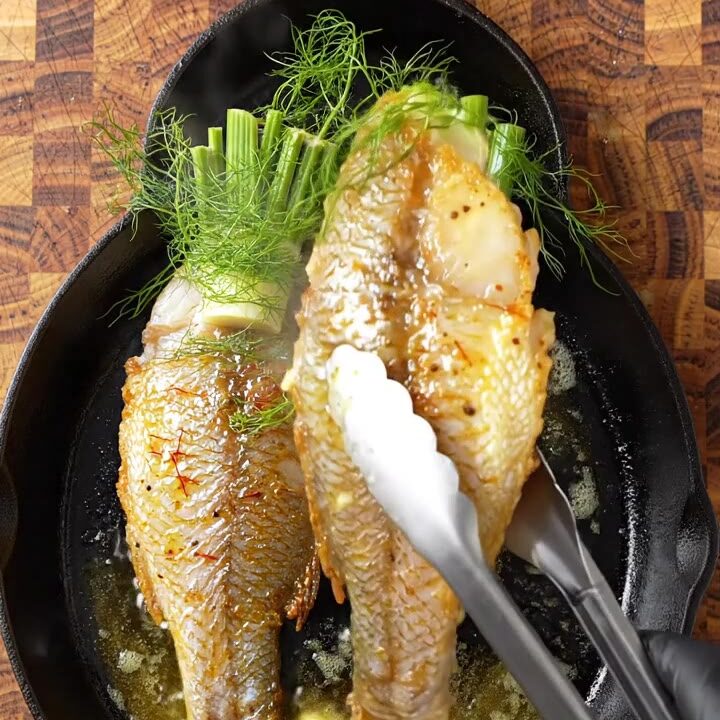
When basting, tilt the skillet slightly so the butter pools at one side, then spoon it over the fish. This technique keeps the flesh moist and infuses it with flavor without overcooking. If the butter starts to brown too much, lower the heat. The fennel can be sliced ahead of time, but keep it in cold water to prevent browning.
Variations
- Citrus Herb Variation: Replace the saffron with a teaspoon of fresh thyme leaves and add orange zest to the butter. Use orange wedges instead of lemon for a sweeter citrus note. The fennel and manchego remain the same, creating a bright, herby version.
- Spicy Variation: Add a pinch of red pepper flakes to the saffron butter along with the garlic. Serve with a drizzle of hot honey or a sprinkle of smoked paprika for extra heat. The fennel and manchego balance the spice nicely.
- Nutty Brown Butter Variation: Skip the saffron and use brown butter instead. Cook the butter until it smells nutty and turns golden brown, then add the garlic. The nutty flavor pairs beautifully with the manchego and fennel, creating a rich, savory dish.
- Vegetable-Forward Variation: Add thinly sliced leeks or shallots along with the fennel for extra sweetness. You can also include a handful of cherry tomatoes, halved, during the last minute of cooking. This adds color and a burst of acidity.
Storage and make-ahead
- Fridge
- Store leftovers in an airtight container in the fridge for up to 2 days. Reheat gently in a skillet to preserve texture.
- Freezer
- Not recommended for freezing, as the fish and sauce will lose quality.
- Reheat
- Reheat in a skillet over medium heat with a little butter or oil until warmed through, about 2-3 minutes per side.
Store leftover cooked fish and fennel in an airtight container in the refrigerator for up to 2 days. The skin will lose its crispness upon reheating. To reheat, place the fish in a skillet over medium heat with a little butter or oil, warming gently until heated through. Avoid microwaving, as it can make the fish rubbery.
The saffron garlic butter can be made up to 2 days ahead and stored in the refrigerator. Reheat gently before using. The fennel can be sliced a day in advance and kept in a bowl of cold water in the fridge.
The fish is best cooked fresh, but you can season and score the fillets a few hours ahead and refrigerate until ready to cook.
Serving ideas
Serve the crispy red snapper immediately after cooking, with the fennel and butter spooned over the top. The manchego and lemon should be added just before serving to preserve their textures.
A side of crusty bread is perfect for soaking up the saffron butter. Pair with a crisp white wine like Sauvignon Blanc or a light Pinot Grigio.
For a complete meal, add a simple green salad or roasted potatoes on the side. The dish is satisfying on its own, but the butter sauce is so good you'll want something to sop it up.
Garnish each plate with extra fennel fronds and a wedge of lemon for squeezing. This recipe is elegant enough for a dinner party yet quick enough for a weeknight.
Frequently asked questions
Can this recipe be made with other types of fish?
Why does the fish stick to the pan?
Can the saffron garlic butter be made ahead?
What can be used instead of manchego?
Is it necessary to score the fish skin?
Crispy Red Snapper with Saffron Garlic Butter and Fennel
Ingredients
- 2 fillets red snapper, skin on (about 6 oz each)
- 1 medium fennel bulb, thinly sliced
- 2 oz aged manchego cheese, grated
- 2 tbsp olive oil
- 1/4 tsp saffron threads
- 3 cloves garlic, minced
- 4 tbsp unsalted butter, cut into pieces
- 1/2 lemon, cut into wedges
- Fennel fronds, for garnish, to taste
- Kosher salt, to taste
- Black pepper, freshly ground, to taste
Instructions
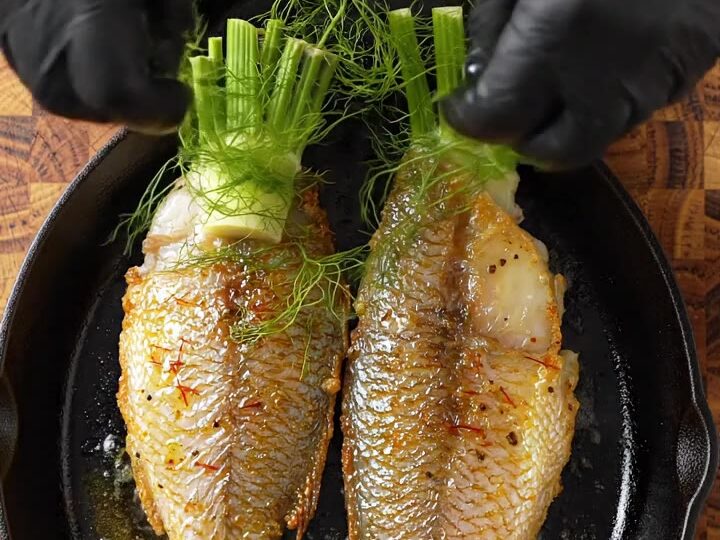
- Pat the red snapper fillets dry with paper towels. Using a sharp knife, score the skin in a few diagonal slashes, about 1 inch apart, being careful not to cut into the flesh. Season both sides with kosher salt and black pepper. Thinly slice the fennel bulb using a mandoline or a sharp chef's knife. Grate the manchego on the large holes of a box grater.
- In a small bowl, combine the saffron threads with 1 tablespoon of warm water and let bloom for 5 minutes. In a separate small pan or microwave-safe bowl, melt the butter with the minced garlic and the saffron mixture. Stir to combine and keep warm.
- Heat a large cast iron skillet over medium-high heat. Add the olive oil and swirl to coat. Place the snapper fillets skin-side down in the skillet. Press gently with a spatula for a few seconds to ensure even contact. Cook without moving for 3-4 minutes, until the skin is deeply golden and crisp.
- Scatter the sliced fennel around the fish in the skillet. Pour the saffron garlic butter over the fish and fennel. Continue to cook for 2-3 minutes, basting the fish with the butter using a spoon. The fennel should soften slightly but retain some crunch.
- Continue to cook the fish for another 2-3 minutes, basting frequently, until the fish is opaque and flakes easily with a fork. The internal temperature should reach 145°F (63°C) when measured with an instant-read thermometer inserted into the thickest part.
- Remove the skillet from the heat. Scatter the grated manchego over the fish and fennel. Squeeze fresh lemon juice over everything. Garnish with fennel fronds. Serve immediately, spooning any extra butter from the pan over the top.
Estimated nutrition per serving
- Calories
- 520
- Protein
- 35 g
- Carbohydrates
- 8 g
- Fat
- 38 g
Next recipe

Honey Pepper Jumbo Prawns with Charred Pineapple Skillet
See the recipe → →This recipe is based on a short cooking video and is published under the pen name Clara Weller. It was checked before publication, but errors can slip through. Nutrition, when shown, is an estimate. Read more in our editorial policy and on our food safety page.
More recipes to try

Crispy Truffle Potato Gratin with Gruyere Cream
Total time: 1 h 30 min
Crispy Saffron-Butter Snapper with Manchego and Fennel
Total time: 30 min
Crispy Potato Gnocchi Skillet with Spicy Vodka Sauce and Burrata
Total time: 40 min
Garlic Butter Lobster Skillet with Asparagus and Parmesan
Total time: 22 min
Honey Pepper Jumbo Prawns with Charred Pineapple Skillet
Total time: 30 min