Dinner · Part 1 of 3: Ingredients
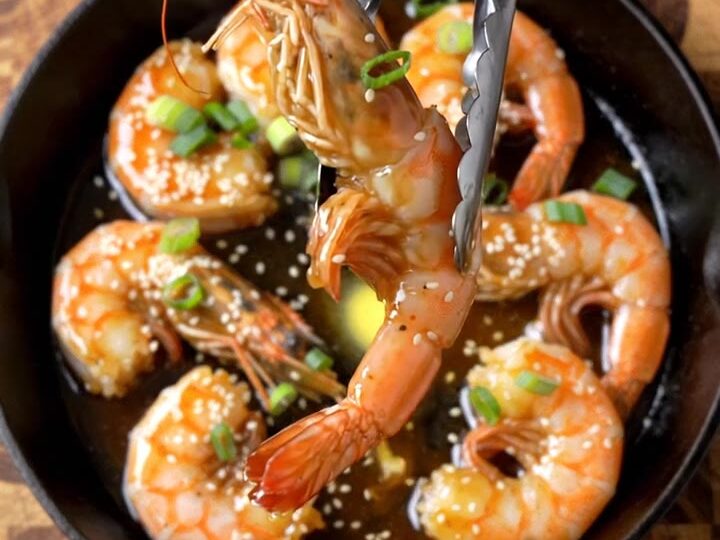
Honey Pepper Jumbo Prawns with Charred Pineapple Skillet
- Prep
- Cook
- Total
- Serves
- 4
This one-pan honey pepper jumbo prawns and charred pineapple skillet is a showstopper dinner that comes together in under 30 minutes. Butterflied jumbo tiger prawns are seared until caramelized, then tossed with golden pineapple chunks and a bubbling black pepper honey soy glaze.
Fresh grated coconut and ginger add a fragrant, tropical note, while a scattering of scallions and sesame seeds gives a crunchy finish. Serve this glossy, sweet-spicy dish straight from the cast iron skillet for a meal that feels both special and effortless.
This recipe celebrates the contrast of sweet, spicy, and savory flavors with a gorgeous presentation. The prawns are butterflied to cook quickly and evenly, while the pineapple chars beautifully in a hot cast iron skillet, developing a deep caramelized flavor.
The honey soy glaze, spiked with coarsely ground black pepper, turns glossy and clings to every piece. Fresh coconut and ginger, grated just before cooking, perfume the dish with a bright, tropical aroma. Finished with scallions and sesame seeds, this skillet is a complete, satisfying dinner that's perfect for a weeknight or a special occasion.
Ingredients
- 1 1/2 lb jumbo tiger prawns, peeled, deveined, and butterflied
- 2 cups golden pineapple chunks (about 1/2-inch dice)
- 4 scallions, thinly sliced (white and green parts separated)
- 1/2 cup fresh white coconut, grated
- 2 tbsp fresh ginger root, grated
Glaze
- 1/4 cup honey
- 3 tbsp soy sauce
- 1 1/2 tsp coarsely ground black pepper
- 1 tsp toasted sesame oil
- 2 tbsp vegetable oil, for searing
- 1 tbsp sesame seeds, for garnish
Why this recipe works
The high heat of a cast iron skillet is key to achieving a beautiful char on both the prawns and the pineapple. This dry-heat cooking method caramelizes the natural sugars in the fruit and creates a crust on the prawns that locks in moisture. The butterflying technique ensures the prawns cook through quickly without becoming rubbery, while the cut surface exposes more area to the heat, maximizing browning and flavor.
The honey pepper soy glaze is a masterclass in balance. The honey provides sweetness that caramelizes and turns glossy, the soy sauce adds savory depth, and the coarsely ground black pepper gives a spicy kick that cuts through the richness.
Adding the glaze at the end and letting it bubble briefly allows it to thicken and coat each piece without overcooking the prawns, resulting in a sticky, flavorful finish that clings beautifully.
Notes and substitutions
Choose jumbo tiger prawns (16/20 count) for the best texture and presentation. If using frozen, thaw them overnight in the refrigerator and pat dry thoroughly before searing. Fresh golden pineapple is ideal; look for one that is fragrant and slightly soft at the base.
If you can't find golden pineapple, regular pineapple works well. The coconut should be fresh for the best aroma, but unsweetened shredded coconut can be substituted in a pinch.
A 12-inch cast iron skillet is essential for getting a good sear without overcrowding. If your skillet is smaller, cook in batches to avoid steaming the prawns. The glaze can be prepared ahead of time, but the dish is best served immediately after cooking. For a milder pepper flavor, use less black pepper or grind it more finely. For a spicier kick, add a pinch of red pepper flakes.
- jumbo tiger prawns: jumbo shrimp (16/20 count) can be used; adjust cooking time slightly if smaller.
- fresh coconut: unsweetened shredded coconut, rehydrated in warm water for 10 minutes and drained, works in a pinch.
- soy sauce: coconut aminos for a soy-free version; note that the glaze will be slightly less salty.
- golden pineapple: fresh regular pineapple is fine; avoid canned as it won't char as well.
Equipment
- Box grater
- Cast iron skillet (12-inch)
- Chef's knife
- Cutting board
- Small bowl for glaze
- Tongs
- Spatula
Up next · Part 2 of 3
5 steps · 10 min of cooking · what to look for at each stage
Step-by-step instructions (Part 2)