Dinner · Part 3 of 3: Tips & recipe card
Crispy Japanese Pork Katsu Curry with Rice and Pickled Radish Tips, FAQ & printable recipe

- Prep
- Cook
- Total
- Serves
- 4
Tips for success
For an extra-crispy crust, double-coat the pork: after the first dip in egg and panko, dip again in egg and panko. This creates a thicker, crunchier shell.
Make sure the oil is at the correct temperature—too low and the breading absorbs oil, too high and it burns before the pork cooks through. Use a thermometer for accuracy.
When slicing the katsu, use a sharp chef's knife and a gentle sawing motion to avoid crushing the crust.
Serve the curry sauce on the side if you prefer to dip each bite, rather than pouring it over the entire cutlet, to keep the crispiness longer. Leftover curry sauce can be refrigerated and reheated gently.
Variations
- Chicken Katsu Curry: Use boneless, skinless chicken thighs or breasts instead of pork. Pound to even thickness and cook to 165°F (74°C). The rest of the recipe stays the same.
- Vegetable Katsu: For a meatless version, use thick slices of eggplant, zucchini, or sweet potato. Coat in panko and fry until golden. Serve with the same curry sauce.
- Spicy Curry: Add a teaspoon of chili powder or a dash of cayenne to the curry sauce while simmering. You can also use hot Japanese curry roux for extra heat.
- Gluten-Free Version: Use gluten-free panko breadcrumbs and a gluten-free curry roux. Ensure the soy sauce in the roux is gluten-free or substitute with tamari.
Storage and make-ahead
- Fridge
- Store leftovers separately in airtight containers for up to 3 days. Reheat the curry on the stovetop, and the katsu in a toaster oven or air fryer to crisp up.
- Freezer
- The curry sauce freezes well for up to 2 months. Freeze in portions for quick meals.
- Reheat
- Reheat the curry gently on the stovetop, adding a splash of broth if needed.
Store leftover pork katsu and curry separately in airtight containers in the refrigerator for up to 3 days. The katsu will lose its crispness, but you can reheat it in a toaster oven or air fryer to restore some texture. The curry sauce freezes well for up to 2 months.
You can prepare the curry sauce up to 2 days ahead and refrigerate it. The pork can be breaded a few hours before frying and kept in the refrigerator, but it's best to fry just before serving.
Cooked katsu can be made ahead and reheated, though it will not be as crispy.
Serving ideas
Serve the pork katsu curry immediately after assembling to enjoy the contrast of crispy cutlet and hot sauce. The rice should be freshly steamed and fluffy.
Place the fukujinzuke on the side so each person can add as much as they like. This dish is best enjoyed right away, as the crust softens over time.
For a complete meal, consider adding a simple side salad or a bowl of miso soup. The pickled radish provides a refreshing crunch that balances the rich curry. If you prefer a less saucy bowl, serve the curry on the side and dip each piece of katsu.
Frequently asked questions
Can this recipe be made ahead of time?
What is the best oil for deep frying?
Can you use pork tenderloin instead of loin chops?
What is fukujinzuke and can you substitute it?
How do you keep the katsu crispy?
Crispy Japanese Pork Katsu Curry with Rice and Pickled Radish
Ingredients
- 2 lb thick-cut boneless pork loin chops (pounded to 1/2 inch)
- 1/2 cup all-purpose flour
- 1 large egg, beaten
- 1 cup panko breadcrumbs
- 2 cups neutral oil (such as canola or vegetable), for deep frying
- 1 medium onion, diced
- 1 medium carrot, diced
- 1 medium potato, peeled and diced
- 2 cups chicken or vegetable broth
- 2 blocks Japanese curry roux (about 3.5 oz total)
- 2 cups steamed short-grain rice
- 1/4 cup fukujinzuke (pickled radish)
Instructions
- In a large pot, combine the diced onion, carrot, potato, and broth. Bring to a simmer over medium heat and cook until the vegetables are tender, about 10 minutes. Add the Japanese curry roux blocks and stir until melted and the sauce is thick and velvety. Keep warm on low heat while preparing the pork.
- Place the pork loin chops between two sheets of plastic wrap and pound with a meat mallet or rolling pin to an even 1/2-inch thickness. Season lightly with salt and pepper.
- Set up a breading station: place the flour in one shallow dish, the beaten egg in another, and the panko in a third. Dredge each pork chop in flour, shaking off excess, then dip in the egg, and finally press firmly into the panko to coat completely. Set aside on a plate.
- Pour the oil into a large skillet or deep fryer to a depth of about 1 inch. Heat over medium-high until it reaches 340°F (170°C). If you don't have a thermometer, test by dropping a panko breadcrumb into the oil—it should sizzle immediately.
- Carefully place the breaded pork chops into the hot oil, one or two at a time, without crowding. Fry for about 2-3 minutes per side, until golden amber and cooked through. The internal temperature should reach 145°F (63°C). Use tongs to turn occasionally for even browning. Let it rest for 3 minutes before slicing.
- Transfer the fried cutlets to a wire rack set over a baking sheet. Let them rest for at least 3 minutes before slicing. This allows the juices to redistribute and keeps the crust crisp.
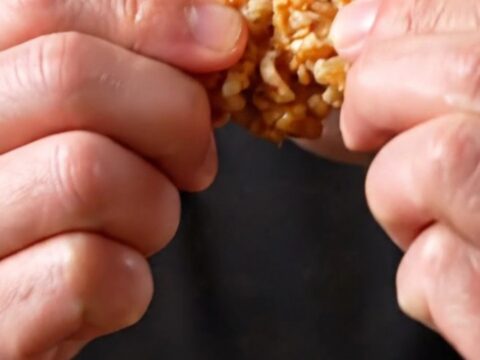
- Using a sharp knife, slice the rested pork cutlets into 1-inch-wide strips, cutting against the grain. The crust should crackle loudly as you cut through it.
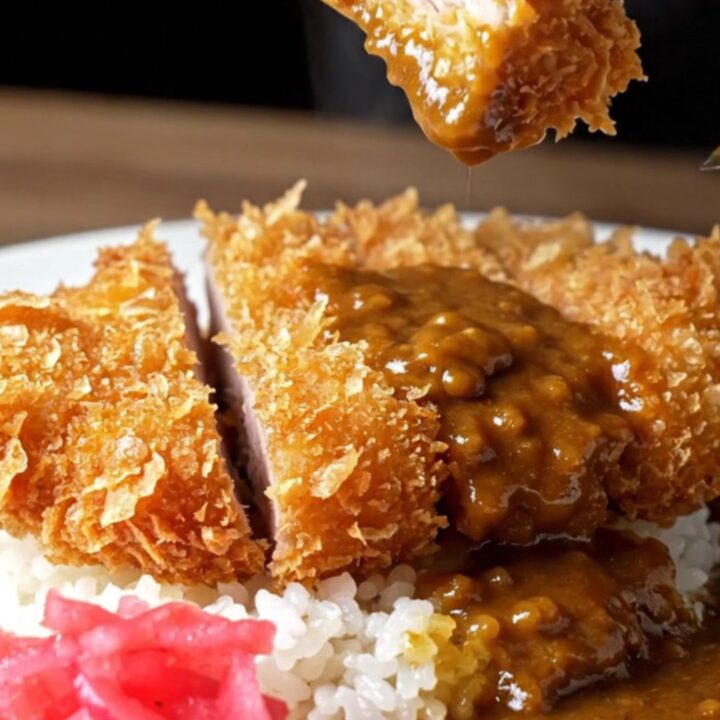
- Divide the steamed rice among four bowls. Fan the sliced katsu over the rice, then ladle the hot curry sauce generously around the cutlets. Top with a small mound of fukujinzuke pickled radish on the side.
Estimated nutrition per serving
- Calories
- 850
- Protein
- 40 g
- Carbohydrates
- 80 g
- Fat
- 40 g
Next recipe

Giant Stuffed Mozzarella & Pepperoni Meatball Sub
See the recipe → →This recipe is based on a short cooking video and is published under the pen name Clara Weller. It was checked before publication, but errors can slip through. Nutrition, when shown, is an estimate. Read more in our editorial policy and on our food safety page.
More recipes to try

Turkish Kuru Fasulye with Pastırma & Butter Pilaf
Total time: 1 h 30 min
Crispy Smashed Red Potatoes with Roasted Garlic Herb Butter
Total time: 50 min
Crispy Air-Fried Lemon Pepper Wings with Garlic Aioli
Total time: 35 min
Ultra-Creamy Wild Mushroom & Gorgonzola Risotto
Total time: 50 min
Crispy Nashville Hot Chicken Tenders with Buttermilk Waffles
Total time: 1 h