Dinner · Part 1 of 3: Ingredients
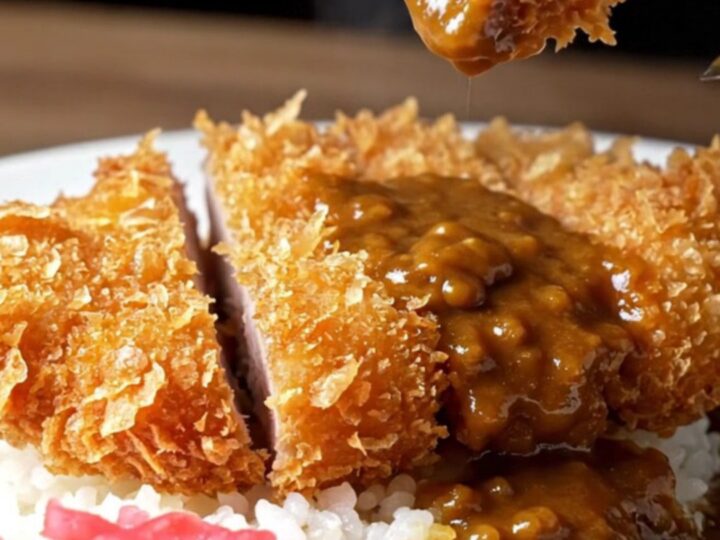
Crispy Japanese Pork Katsu Curry with Rice and Pickled Radish
- Prep
- Cook
- Total
- Serves
- 4
Crispy, golden pork katsu over steamed rice, smothered in a rich, savory Japanese curry sauce—this is the ultimate comfort food bowl. The panko crust shatters with every bite, while the curry is thick, velvety, and deeply fragrant.
A tangy side of pickled radish cuts through the richness, making each spoonful balanced and satisfying. Ready in about an hour, this recipe brings the flavors of a Japanese diner to your home kitchen.
Japanese pork katsu curry is a beloved dish that combines a crunchy, juicy cutlet with a warming curry sauce. The key to its irresistible texture is the panko breadcrumb coating, which fries up airy and crisp. The curry sauce, made with onion, carrot, and potato simmered in broth and finished with Japanese curry roux, is thick and comforting.
Served over steamed short-grain rice and topped with pickled fukujinzuke, it's a complete meal that feels both indulgent and homey. This recipe walks through each step, from pounding the pork to achieving the perfect golden crust.
Ingredients
For the Pork Katsu
- 2 lb thick-cut boneless pork loin chops (pounded to 1/2 inch)
- 1/2 cup all-purpose flour
- 1 large egg, beaten
- 1 cup panko breadcrumbs
For Frying
- 2 cups neutral oil (such as canola or vegetable), for deep frying
For the Curry Sauce
- 1 medium onion, diced
- 1 medium carrot, diced
- 1 medium potato, peeled and diced
- 2 cups chicken or vegetable broth
- 2 blocks Japanese curry roux (about 3.5 oz total)
For Serving
- 2 cups steamed short-grain rice
- 1/4 cup fukujinzuke (pickled radish)
Why this recipe works
Pounding the pork loin chops to an even thickness ensures they cook quickly and evenly, staying juicy inside while the crust turns golden.
The panko breadcrumbs are larger and flakier than regular breadcrumbs, creating a light, shattering crust that stays crisp even when paired with the sauce. Frying at the right temperature—340°F (170°C)—seals the crust quickly, preventing it from absorbing excess oil.
The curry sauce is built on a base of slowly simmered vegetables that soften and release their sweetness into the broth. Adding the Japanese curry roux at the end thickens the sauce to a velvety consistency and infuses it with a complex blend of spices. The sauce is intentionally made ahead of frying the pork, so everything comes together at the last minute.
Notes and substitutions
Use thick-cut boneless pork loin chops, about 1 inch thick, and pound them to 1/2 inch for the best texture. Japanese curry roux is sold in blocks at most supermarkets; it comes in mild, medium, and hot varieties—choose according to preference. For the rice, short-grain varieties like sushi rice or Calrose are ideal because they are slightly sticky and hold up well under the sauce.
If you don't have a deep fryer, a heavy-bottomed skillet with about an inch of oil works perfectly. Use a neutral oil with a high smoke point, such as canola or vegetable oil.
The pickled fukujinzuke is a classic accompaniment, but if unavailable, any crunchy pickle will do. For a gluten-free version, use gluten-free panko and ensure the curry roux is gluten-free (some brands contain wheat).
- pork loin chops: boneless chicken thighs or breasts (adjust cooking time to ensure doneness)
- chicken broth: vegetable broth for a vegetarian version
- fukujinzuke: pickled daikon radish or cucumber pickles
- panko: crushed cornflakes for extra crunch (gluten-free if needed)
Equipment
- Large skillet or deep fryer
- Meat mallet or rolling pin
- Wire rack
- Large pot for curry sauce
- Cutting board and knife
Up next · Part 2 of 3
8 steps · 40 min of cooking · what to look for at each stage
Step-by-step instructions (Part 2)