Dinner · Part 2 of 3: Instructions
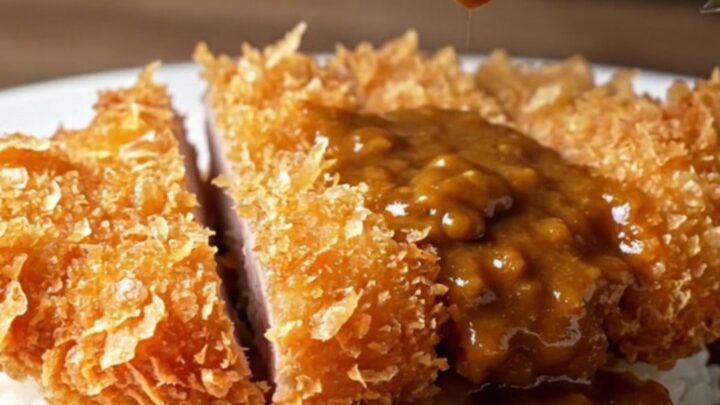
Crispy Japanese Pork Katsu Curry with Rice and Pickled Radish Step-by-step instructions
- Prep
- Cook
- Total
- Serves
- 4
Before you start
Before starting, gather all ingredients and set up a breading station with three shallow dishes. Cook the rice according to package directions and keep it warm.
Begin the curry sauce first, as it can simmer while you prepare the pork. Have a wire rack ready for resting the fried cutlets, and line a baking sheet with paper towels for draining excess oil.
Ingredients at a glance (12)
- 2 lb thick-cut boneless pork loin chops (pounded to 1/2 inch)
- 1/2 cup all-purpose flour
- 1 large egg, beaten
- 1 cup panko breadcrumbs
- 2 cups neutral oil (such as canola or vegetable), for deep frying
- 1 medium onion, diced
- 1 medium carrot, diced
- 1 medium potato, peeled and diced
- 2 cups chicken or vegetable broth
- 2 blocks Japanese curry roux (about 3.5 oz total)
- 2 cups steamed short-grain rice
- 1/4 cup fukujinzuke (pickled radish)
Instructions
Build the Curry and Bread the Pork
- Prepare the Curry SauceIn a large pot, combine the diced onion, carrot, potato, and broth. Bring to a simmer over medium heat and cook until the vegetables are tender, about 10 minutes. Add the Japanese curry roux blocks and stir until melted and the sauce is thick and velvety. Keep warm on low heat while preparing the pork.Look for The sauce should be thick enough to coat the back of a spoon and smell deeply fragrant.Tip If the sauce becomes too thick, add a splash of broth or water to thin it to your liking.
- Pound the PorkPlace the pork loin chops between two sheets of plastic wrap and pound with a meat mallet or rolling pin to an even 1/2-inch thickness. Season lightly with salt and pepper.Look for The pork should be uniform in thickness for even cooking.Tip Pounding not only tenderizes but also helps the cutlets cook quickly and evenly.
- Bread the CutletsSet up a breading station: place the flour in one shallow dish, the beaten egg in another, and the panko in a third. Dredge each pork chop in flour, shaking off excess, then dip in the egg, and finally press firmly into the panko to coat completely. Set aside on a plate.Look for The coating should be thick and even, with no bare spots.Tip Press the panko firmly so it adheres well during frying.
The curry sauce should be thick, glossy, and fragrant, with softened vegetables. The pork cutlets are pounded to an even thickness and coated with a generous layer of panko that feels dry to the touch. The breading station is set up and ready for frying.
Fry to Golden Perfection
- Heat the OilPour the oil into a large skillet or deep fryer to a depth of about 1 inch. Heat over medium-high until it reaches 340°F (170°C). If you don't have a thermometer, test by dropping a panko breadcrumb into the oil—it should sizzle immediately.Look for The oil should shimmer and a crumb dropped in should sizzle and float.Tip Maintaining the right oil temperature is key to a crispy, not greasy, crust.
- Fry the PorkCarefully place the breaded pork chops into the hot oil, one or two at a time, without crowding. Fry for about 2-3 minutes per side, until golden amber and cooked through. The internal temperature should reach 145°F (63°C). Use tongs to turn occasionally for even browning. Let it rest for 3 minutes before slicing.Look for The crust should be deep golden brown and very crisp; the pork should feel firm but not hard.Safe temperature 145°F (63°C) internal temperature (steaks, chops and roasts)Tip Do not overcrowd the pan—fry in batches if needed to keep the oil temperature steady.
- Rest the CutletsTransfer the fried cutlets to a wire rack set over a baking sheet. Let them rest for at least 3 minutes before slicing. This allows the juices to redistribute and keeps the crust crisp.Look for The cutlets will release steam and the crust will stay crunchy.Safe temperature 160°F (71°C) internal temperature (egg dishes)Tip Resting on a rack prevents the bottom from becoming soggy.
The oil is at 340°F (170°C) and the cutlets are frying with a steady sizzle. They turn a deep amber color and float when done.
The crust is crackling and crisp, and the internal temperature reads 145°F (63°C) on the thermometer. The cutlets rest on a wire rack, releasing steam.
Slice and Serve
- Slice the KatsuUsing a sharp knife, slice the rested pork cutlets into 1-inch-wide strips, cutting against the grain. The crust should crackle loudly as you cut through it.Look for The slices should be clean and the crust should remain intact.Tip A rocking motion with the knife helps cut through the crispy coating without crushing it.
- Assemble the BowlsDivide the steamed rice among four bowls. Fan the sliced katsu over the rice, then ladle the hot curry sauce generously around the cutlets. Top with a small mound of fukujinzuke pickled radish on the side.Look for The curry should be steaming and the rice fluffy; the pickles add a bright, crunchy contrast.Tip Serve immediately while the katsu is still crisp.
The rested cutlets slice with a loud crunch, revealing juicy, tender pork. The rice is fluffy and warm, and the curry sauce is ladled around the cutlets. The pickled radish adds a bright, tangy contrast. The bowls are assembled and ready to serve immediately.
Common mistakes
One common mistake is overcrowding the pan when frying, which lowers the oil temperature and results in soggy, greasy cutlets. Fry in batches if necessary. Another pitfall is not pounding the pork evenly, leading to uneven cooking.
Be sure to press the panko firmly onto the meat so it adheres well; otherwise, the coating may fall off during frying. Also, do not skip resting the cutlets—this keeps them juicy.
How to tell it’s done
The pork is done when it reaches an internal temperature of 145°F (63°C) on an instant-read thermometer. The crust should be deep golden brown and very crisp. Let the cutlets rest for at least 3 minutes after frying to allow the juices to redistribute.
The curry sauce should be thick enough to coat the back of a spoon and the vegetables tender. If the sauce is too thin, simmer longer; if too thick, add a splash of broth.
- Steaks, chops and roasts: 145°F (63°C) in the thickest part, then a 3-minute rest
- Egg dishes: 160°F (71°C) in the thickest part
Up next · Part 3 of 3
4 variations · storage & make-ahead · 5 answers · printable card
Tips, FAQ & printable recipe (Part 3)← Back to the ingredients (Part 1)