Dinner · Part 3 of 3: Tips & recipe card
Crispy 100-Layer Lasagna Bolognese with Shattering Golden Edges Tips, FAQ & printable recipe
- Prep
- Cook
- Total
- Serves
- 6
Tips for success
Work the layering like an assembly line rather than a deliberation: béchamel, sheet, ragù, cheese, repeat, with the ingredients in a row and a damp towel over the sheet stack. Speed matters because thin sheets dry out fast, and dry sheets crack when the block compresses.
Press down gently after every fifth layer or so; firm contact now means a solid block later. Keep the sauces scant and even, and save the last of the Parmigiano for the top crust, where it browns into the crispiest layer of all.
The sear rewards patience with heat. Get the skillet genuinely hot before the first block goes in, and listen: a proper sear sounds like a steady sizzle from the first second. If the butter foams violently and darkens immediately, pull back slightly; if it barely whispers, wait.
Sear only the cut faces and the top, leaving the baked bottom intact, and drain briefly on a rack so the crust stays glassy rather than greasy. Serve within minutes of searing, since the crust softens as it sits.
Variations
- Mushroom ragù: Swap the meat Bolognese for a finely chopped mushroom-and-lentil ragù simmered to the same thick consistency. Keep the weight identical so the layers stay balanced, and add a splash of soy sauce for the deep savory base the meat normally provides.
- White lasagna blocks: Replace the Bolognese with a thick sausage-free spinach-ricotta filling and keep the béchamel. The pale strata look striking against the green pasta, and the sear works exactly the same on the chilled blocks.
- Spicy arrabbiata sear: Warm the serving marinara with a pinch of crushed red pepper and a spoon of the searing butter. The gentle heat against the crispy, buttery crust gives the classic dish a livelier finish without touching the build.
- Half-batch snack size: Layer everything in two mini loaf pans instead of one large one, reduce the bake to 35 minutes, and cut each smaller block into three slabs. Same drama, smaller commitment, ideal for a first attempt at the technique.
Storage and make-ahead
- Fridge
- Refrigerate cooled blocks in an airtight container up to 3 days, marinara stored separately.
- Freezer
- Freeze unseared baked blocks wrapped well up to 2 months; thaw overnight in the refrigerator before searing.
- Reheat
- Re-crisp faces in a buttered skillet over medium-high heat, 3 minutes per side, until hot through and glass-crisp again.
Refrigerate leftover blocks in an airtight container once they have cooled, within 2 hours of cooking. They keep 3 days, though the seared crust softens under refrigeration; plan to re-crisp before serving. Store the marinara separately so the blocks do not sit in sauce and lose their texture. Reheat only the number of servings needed, since repeated warming degrades both the crust and the tender layers.
Build the project a day ahead for stress-free entertaining. The Bolognese and béchamel keep 2 days refrigerated, and the pasta dough can rest overnight wrapped tightly. The full layered, baked block actually improves with an overnight chill: the strata set harder, the slices cut cleaner, and the sear goes faster.
Hold the unbaked assembled pan, covered, in the refrigerator up to 24 hours, then bake weighted straight from the cold, adding 10 to 15 minutes to reach temperature. Slice and sear just before serving.
Serving ideas
Plate each seared block over a shallow pool of warm marinara, crispy face up, so the first cut happens in front of the diner and the crackle is part of the experience. A final dusting of grated Parmigiano at the table sharpens the flavors, and a grind of black pepper balances the béchamel's sweetness. Because the blocks are rich and dense, keep the sides lean and bright.
A sharply dressed green salad with a lemony vinaigrette cuts through the richness, and blistered broccolini or garlicky green beans do the same job warm. For wine, a medium-bodied red with bright acidity stands up to the Bolognese without weighing down the plate.
Serve the blocks on warmed plates, since a cold plate dulls the crisp crust quickly, and bring the extra marinara to the table in a small warmed pitcher for anyone who wants more.
Frequently asked questions
Can the layered block be made ahead of the searing step?
Why does the block need to be baked with a weight on top?
How thin should the pasta sheets actually be rolled?
Can store-bought fresh lasagna sheets be used instead of homemade?
What is the safe internal temperature for the Bolognese?
Crispy 100-Layer Lasagna Bolognese with Shattering Golden Edges
Ingredients
- 3 cups 00 flour, plus more for dusting
- 4 large eggs
- 5 oz spinach, wilted and squeezed very dry
- 1/2 tsp kosher salt
- 28 oz (800 g) Bolognese sauce, pork-and-beef, made ahead or good-quality store-bought
- 2 cups (500 ml) béchamel sauce, made ahead, nutmeg-scented
- 7 oz (200 g) Parmigiano-Reggiano, finely grated
- 4 tbsp unsalted butter
- Marinara sauce, warmed, for serving
Instructions
- Blitz the wilted, squeezed-dry spinach in a food processor with the eggs until smooth. Add the flour and kosher salt, pulsing until shaggy clumps form, then knead with the dough hook on medium speed for 8 minutes, dusting with flour only if the dough sticks. The dough should feel smooth, firm, and slightly elastic, like firm modeling clay, with no wet spots.
- Wrap the dough tightly in plastic and let it rest at room temperature for 30 minutes, no longer. This rest relaxes the gluten so the sheets roll thin without springing back or tearing. Meanwhile, set the Bolognese, béchamel, and grated Parmigiano on the counter so assembly moves quickly once the sheets are ready.
- Divide the dough into four pieces and keep them covered. Roll each piece through a pasta roller, starting at the widest setting and working down one notch at a time, until the sheets are thin enough to read print through. Cut into rectangles sized to the loaf pan, trimming ragged edges, until you have 35 sheets stacked under a damp towel.
- Line a 9x5-inch loaf pan with parchment, leaving overhang on the long sides. Spread a thin veil of béchamel on the bottom, then build: pasta sheet, a scant spoon of béchamel, a spoon of Bolognese, a pinch of Parmigiano, repeating. Finish with a pasta sheet, remaining béchamel, and the last of the Parmigiano, pressing gently after every few layers to remove air pockets.
- Heat the oven to 350°F (175°C). Cover the pan with parchment, set a second loaf pan or a foil-wrapped brick on top to compress the layers, and bake 45 minutes. The weight is what fuses the strata into a single sliceable block. Check that the center reaches 160°F (71°C) so the Bolognese is heated through safely.
- Transfer the pan to a wire rack, keep the weight on, and let it cool 20 minutes, then refrigerate at least 1 hour until fully cold and firm. Chilling is not optional: a warm block slumps and smears when cut, while a cold one slices into clean, thick architectural slabs with crisp, defined strata.
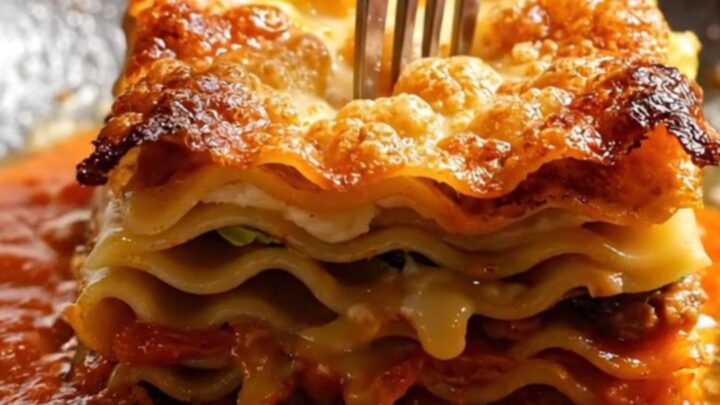
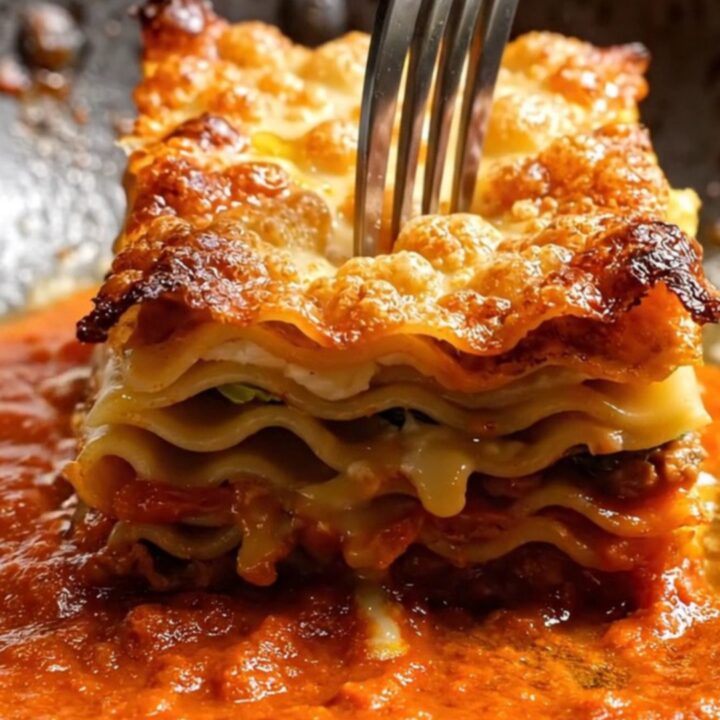
- Lift the cold block from the pan using the parchment overhang and set it on a cutting board. With a long, sharp knife, cut straight down into thick slabs about 1 1/2 inches wide, wiping the blade between cuts. Aim for 6 even blocks, each showing the full cross-section of alternating pasta, ragù, and béchamel.
- Melt the butter in a heavy skillet over medium-high heat, about 400°F (200°C) at the surface. Sear the cut faces of each block 2 to 3 minutes per side, until deep golden and glass-crisp, then sear the top briefly. Work in batches without crowding, adding butter as needed, and drain the blocks briefly on a rack.
- Spoon warm marinara into shallow bowls or onto plates and set a seared block on top, crispy face up so the first bite breaks through the shattering crust. Serve immediately while the edges crackle and the interior stays steaming and tender. Pass extra grated Parmigiano at the table for anyone who wants a sharper, saltier finish.
Estimated nutrition per serving
- Calories
- 720
- Protein
- 34 g
- Carbohydrates
- 58 g
- Fat
- 38 g
- Fiber
- 4 g
- Sodium
- 980 mg
Next recipe

Montreal Duck-Fat Poutine with Bone-Marrow Gravy
See the recipe → →This recipe is based on a short cooking video and is published under the pen name Clara Weller. It was checked before publication, but errors can slip through. Nutrition, when shown, is an estimate. Read more in our editorial policy and on our food safety page.
More recipes to try

Crockpot Creamy Dill Pork Chops and Potatoes — One-Pot Dinner
Total time: 6 h 13 min
Crockpot Italian Sausage and Green Beans in Red Sauce — One Pot, Zero Fuss
Total time: 4 h 10 min
Crockpot Cream Cheese Taco Chicken, Set It and Forget It
Total time: 4 h 10 min
Crockpot Cheddar Scalloped Potatoes: Easy One-Pot Comfort Food
Total time: 4 h 15 min
Slow Cooker Pork Chop Potato Tot Casserole for Easy Dinners
Total time: 4 h 13 min