Dinner · Part 3 of 3: Tips & recipe card
Coconut Curry Prawns in One Skillet: Quick, Glossy and Ready in 30 Minutes Tips, FAQ & printable recipe
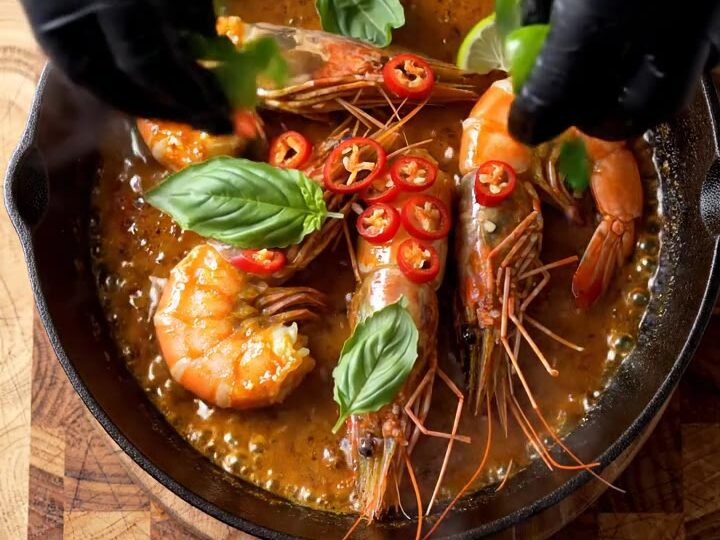
- Prep
- Cook
- Total
- Serves
- 4
Tips for success
Dry the prawns thoroughly with paper towels before seasoning them. Surface moisture steams the prawns in the pan, so they lose their golden color and their firm bite. A quick pat-dry takes seconds and makes the searing noticeably better.
Taste the sauce before you add the prawns back, then adjust the salt and the heat. Red curry pastes vary in strength, so a small pinch of salt or a spoon of extra coconut cream can balance the flavor. Add the lime juice only at the end, after the pan comes off the heat, so the citrus stays bright.
Variations
- Extra vegetables: Add thinly sliced zucchini or snap peas to the skillet with the peppers. Cook them briefly until just tender, so they keep their crunch against the creamy coconut sauce and prawns.
- Chicken version: Replace the prawns with thinly sliced boneless chicken thighs. Sear them until golden and cooked through to 165°F (74°C), then add the sauce and peppers as directed.
- Milder heat: Use a smaller amount of Thai red curry coconut cream and remove the seeds from the red chili. The sauce keeps its color and creaminess, with a gentler warmth that suits children and mild palates.
- Tofu version: Swap the prawns for firm tofu cut into cubes and pressed dry. Sear the tofu until golden on each side, then follow the sauce steps. Check the label on the curry paste for shrimp, since some pastes contain it.
Storage and make-ahead
- Fridge
- Refrigerate leftovers in an airtight container within 2 hours and use them within two days for the best texture and flavor.
- Reheat
- Reheat gently in a small pan over medium-low heat, stirring until just hot, and add a splash of water if the sauce thickens too much.
Leftovers keep well when you cool them quickly. Spread the prawns and sauce into a shallow container within 2 hours of cooking, so the food does not sit at room temperature for long. Cover the container and refrigerate it promptly.
Stored this way, the prawns stay tender and the sauce keeps its texture for up to two days. Keep the basil and lime separate if you plan to store leftovers, since the herbs wilt and the lime loses its brightness over time. Discard any prawns that smell sour or look dull.
You can prepare most of this dish in advance. Slice the peppers, butterfly the prawns and grate the coconut and ginger up to a day ahead, keeping each component in its own covered container in the refrigerator. Keep the prawns cold until the skillet is hot.
The sauce itself is best made fresh, because the coconut cream can separate slightly when reheated. Tear the basil and cut the lime only just before serving so the herbs stay fragrant and the lime tastes fresh at the table.
Serving ideas
Serve the coconut curry prawns straight from the cast iron skillet at the table, so the sauce stays hot and bubbling. Spoon the prawns and peppers over steamed jasmine rice, which soaks up the crimson coconut sauce well.
Warm naan or crusty bread also works for scooping up every spoonful of sauce, and a simple cucumber salad with lime adds a cool contrast to the spice.
Garnish each plate with extra torn Thai basil, a few more slices of red chili and a lime wedge for squeezing.
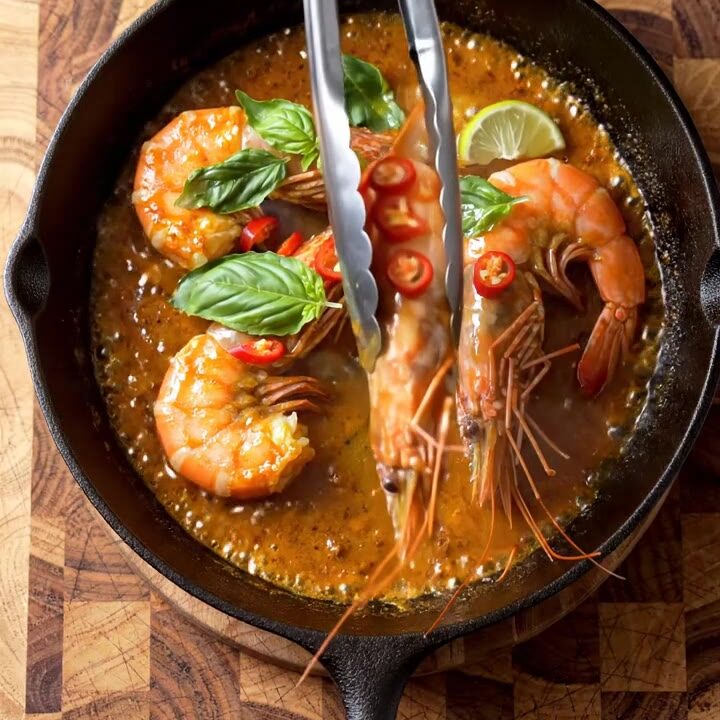
Present the skillet with a glistening piece of butter-basted prawn lifted on a spoon, so guests see the glossy sauce. Offer extra lime wedges on the side so everyone can adjust the brightness to taste.
Frequently asked questions
Can the prawns be cooked with the shell on?
Why does the coconut sauce look grainy or separate?
What can replace creamed coconut in this recipe?
How spicy is this dish, and how can the heat be adjusted?
What should the prawns look like when they are ready?
Coconut Curry Prawns in One Skillet: Quick, Glossy and Ready in 30 Minutes
Ingredients
- 1 lb jumbo tiger prawns, peeled, deveined and butterflied
- 2 red bell peppers, sliced into strips
- 2 oz creamed coconut, grated on a box grater
- 1 inch fresh ginger, peeled and grated
- 1 tbsp neutral cooking oil
- 2 tbsp unsalted butter
- 1 cup Thai red curry coconut cream
- 1/4 cup Thai basil leaves, torn
- 1 red chili, thinly sliced
- 1 lime, juiced, for serving
- kosher salt to taste
Instructions
- Slice the red bell peppers into thin strips. Butterfly the jumbo tiger prawns by cutting along the back and opening them flat, then season lightly with kosher salt. Keep the prawns in the refrigerator until the skillet is hot.
- Grate the solid block of creamed coconut and the fresh ginger on a box grater, into a fresh loose pile of shredded coconut and ginger. Set it aside next to the stove so it is ready for the sauce.
- Heat the cast iron skillet over medium-high heat and add the oil. Sear the butterflied prawns in a single layer until they just turn pink, then move them to a plate. Add the peppers to the same skillet and cook until they begin to char at the edges.
- Lower the heat to medium. Add the grated coconut and ginger and stir for one minute until fragrant. Pour in the Thai red curry coconut cream and simmer, stirring often, until the sauce thickens and coats a spoon.
- Return the prawns and peppers to the skillet with the sauce and toss gently. Add the butter and spoon it over the prawns, basting for one to two minutes until glossy and the prawns reach 145°F (63°C).
- Scatter the torn Thai basil leaves and the sliced red chili over the top of the skillet. Squeeze fresh lime juice over everything just before serving.
- Bring the skillet to the table while the sauce is still bubbling. Lift a glistening piece of butter-basted prawn with a spoon or tongs to show the glossy sauce, then serve with rice or warm bread.
Estimated nutrition per serving
- Calories
- 420
- Protein
- 28 g
- Carbohydrates
- 18 g
- Fat
- 27 g
- Fiber
- 3 g
- Sugar
- 7 g
- Sodium
- 780 mg
Next recipe
Honey Gochujang Charred Octopus and Shrimp Skillet in One Pan
See the recipe → →This recipe is based on a short cooking video and is published under the pen name Clara Weller. It was checked before publication, but errors can slip through. Nutrition, when shown, is an estimate. Read more in our editorial policy and on our food safety page.
More recipes to try

Cheesy Polenta Fries with Marinara: Crispy, Gooey and Ready in One Skillet
Total time: 30 min
French Onion Rigatoni with Gruyère in One Skillet
Total time: 1 h 20 min
Coconut-Crusted Mahi-Mahi with Mango Salsa in One Skillet
Total time: 27 min
Creamy Polenta with Garlic Butter Mushrooms and Melted Cheese
Total time: 1 h
Garlic Herb Butter Pan-Seared Arctic Char with Crispy Skin
Total time: 27 min