Dinner · Part 2 of 3: Instructions
Coconut Curry Prawns in One Skillet: Quick, Glossy and Ready in 30 Minutes Step-by-step instructions
- Prep
- Cook
- Total
- Serves
- 4
Before you start
Gather everything before you turn on the heat, because the dish moves quickly once the prawns hit the pan. Slice the red bell peppers into thin strips and butterfly the jumbo tiger prawns, then return the prawns to the refrigerator while you work. Grate the solid block of creamed coconut and the fresh ginger on a box grater, and keep the shreds in a small bowl.
Tear the Thai basil leaves just before serving so they stay bright and fragrant. Slice the red chili thinly and cut the lime. Set out the Thai red curry coconut cream, the butter, a tablespoon of oil and a spoon for basting. Keep the cast iron skillet on the stove, ready to heat. Working with prepared ingredients keeps the prawns from sitting out too long and makes the sauce come together without interruption.
Ingredients at a glance (11)
- 1 lb jumbo tiger prawns, peeled, deveined and butterflied
- 2 red bell peppers, sliced into strips
- 2 oz creamed coconut, grated on a box grater
- 1 inch fresh ginger, peeled and grated
- 1 tbsp neutral cooking oil
- 2 tbsp unsalted butter
- 1 cup Thai red curry coconut cream
- 1/4 cup Thai basil leaves, torn
- 1 red chili, thinly sliced
- 1 lime, juiced, for serving
- kosher salt to taste
Instructions
Prepare and sear the seafood
- Prepare the peppers and prawnsSlice the red bell peppers into thin strips. Butterfly the jumbo tiger prawns by cutting along the back and opening them flat, then season lightly with kosher salt. Keep the prawns in the refrigerator until the skillet is hot.Look for Peppers are in even strips and the prawns lie flat, opened along the back.Tip Pat the prawns dry so they sear rather than steam in the hot skillet.
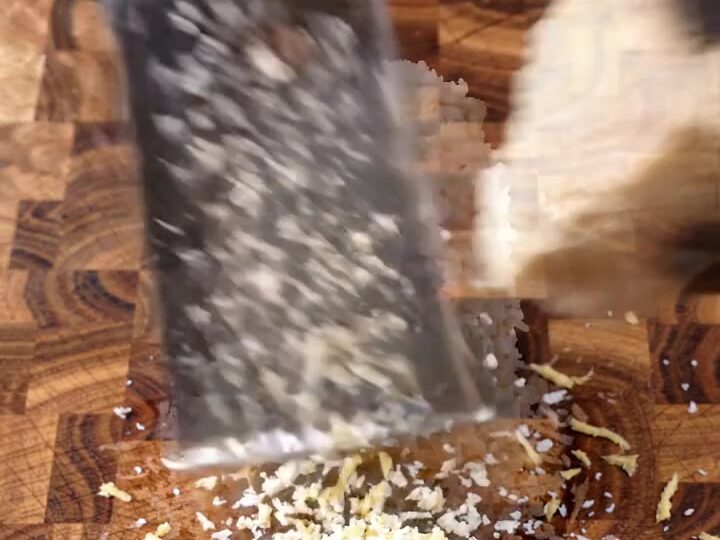
- Grate the coconut and gingerGrate the solid block of creamed coconut and the fresh ginger on a box grater, into a fresh loose pile of shredded coconut and ginger. Set it aside next to the stove so it is ready for the sauce.Look for The coconut falls as soft, pale shreds and the ginger as a fragrant pulp.Tip Chill the creamed coconut for 10 minutes first to make grating easier.
The prawns have turned opaque and pink on the outside, and the peppers show light charring along the edges. The skillet is hot but not smoking, and the prawns are set aside on a plate. Before going on, check that the prawns are cooked through and that the peppers still hold their shape.
Pale, glossy prawns that look slightly translucent in the center need another short minute of heat. Also check that the pan is not crowded, because a crowded pan steams the seafood instead of searing it, and that the peppers have not gone limp.
Simmer the red curry coconut sauce
- Sear the prawns and peppersHeat the cast iron skillet over medium-high heat and add the oil. Sear the butterflied prawns in a single layer until they just turn pink, then move them to a plate. Add the peppers to the same skillet and cook until they begin to char at the edges.Look for Prawns turn opaque pink and the peppers show light charring at the edges.Safe temperature 145°F (63°C) internal temperature (shellfish)Tip Work in two batches so the prawns sear instead of crowding the pan.
- Build the red curry coconut sauceLower the heat to medium. Add the grated coconut and ginger and stir for one minute until fragrant. Pour in the Thai red curry coconut cream and simmer, stirring often, until the sauce thickens and coats a spoon.Look for The sauce is deep crimson, bubbling gently and coats the back of a spoon.Tip Keep the heat moderate so the coconut cream does not scorch on the bottom.
- Return the prawns and add butterReturn the prawns and peppers to the skillet with the sauce and toss gently. Add the butter and spoon it over the prawns, basting for one to two minutes until glossy and the prawns reach 145°F (63°C).Look for The sauce is glossy and the prawns are opaque and curled.Safe temperature 145°F (63°C) internal temperature (shellfish)Tip Spoon the butter over the prawns as they finish to give a rich shine.
The grated coconut and ginger smell warm and fragrant, and the Thai red curry coconut cream has reduced into a deep crimson sauce that coats the back of a spoon. Bubbles should break slowly across the surface rather than boil hard. Before adding the seafood back, check the thickness by drawing a spoon through the sauce; the line should hold for a moment before filling in. If the sauce is still thin, let it simmer a little longer, stirring often so the bottom does not scorch.
Finish the prawns and basil
- Finish with basil, chili and limeScatter the torn Thai basil leaves and the sliced red chili over the top of the skillet. Squeeze fresh lime juice over everything just before serving.Look for Basil leaves wilt slightly in the hot sauce and the chili shows bright red.Tip Add the lime juice at the very end to keep the flavor fresh and sharp.
- Serve from the skilletBring the skillet to the table while the sauce is still bubbling. Lift a glistening piece of butter-basted prawn with a spoon or tongs to show the glossy sauce, then serve with rice or warm bread.Look for The skillet is glossy, fragrant and the sauce still moves when tilted.Tip Serve immediately while the prawns are tender and the sauce is hot.
The prawns are curled and glossy, coated in butter and crimson sauce, and the peppers are tender but still bright. The basil leaves have wilted slightly in the heat and the chili has turned a vivid red. Before serving, check that the prawns are opaque all the way through and reached 145°F (63°C). The sauce should look shiny, not separated or oily at the edges. Taste it and adjust the salt, then add the lime juice at the very end for brightness.
Common mistakes
The most common mistake is overcooking the prawns, which turns them tough and rubbery within a minute or two of going past opaque. Remove them from the pan as soon as they are pink and return them only at the end, so they finish gently in the sauce. Another mistake is crowding the skillet, which lowers the temperature and makes the prawns steam, leaving them pale and watery.
Cook in two batches if the pan is small. Avoid adding the lime juice too early, because heat dulls its freshness. Finally, do not let the coconut sauce boil hard, since high heat can make it grainy and cause the fat to separate. Keep the simmer gentle, stir often, and taste before serving.
How to tell it’s done
The prawns are done when they are opaque and pink all the way through, curled into a loose C shape, and firm to the touch. For food safety, cook them until the thickest part reaches 145°F (63°C). The sauce is ready when it is thick, crimson and glossy, and it coats the back of a spoon with a clean line.
The peppers should be tender and slightly charred at the edges. When the basil is wilted and the chili is bright red, the dish is finished and should be served right away, while the sauce is still hot and the prawns are at their most tender and juicy.
- Shellfish: 145°F (63°C) in the thickest part
Up next · Part 3 of 3
4 variations · storage & make-ahead · 5 answers · printable card
Tips, FAQ & printable recipe (Part 3)← Back to the ingredients (Part 1)