Dinner · Part 3 of 3: Tips & recipe card
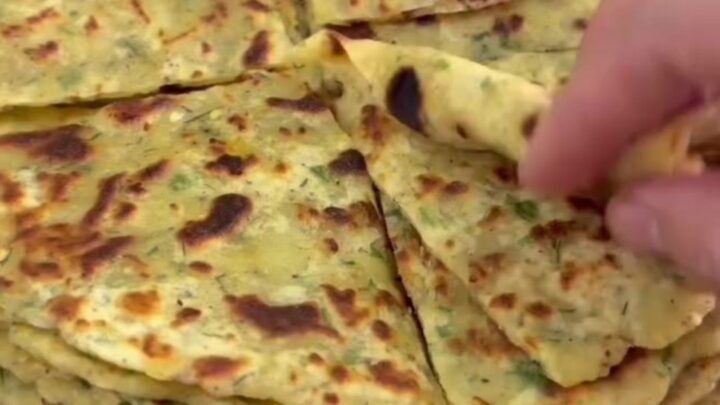
Cheesy Potato Lavaş Flatbreads Tips, FAQ & printable recipe
- Prep
- Cook
- Total
- Serves
- 4
Tips for success
For the best texture, use starchy potatoes like Russets or Yukon Golds, as they mash more smoothly and absorb flavors well. Make sure to drain the potatoes thoroughly after boiling to avoid excess moisture in the dough.
If the dough feels sticky, dust your work surface generously with flour, but avoid adding too much, as it can make the flatbreads dense.
When shaping the flatbreads, roll them as thin as you can without tearing—about 1/4-inch thick is ideal. This allows them to cook quickly and puff up beautifully.
If you have a tortilla press, you can use it to get perfectly even rounds. For a richer flavor, you can also brush the flatbreads with garlic-infused butter or sprinkle with a little flaky salt before serving.
Variations
- Herb and Garlic: Add 2 minced garlic cloves and an extra tablespoon of chopped fresh herbs, such as dill or chives, to the dough. This adds a fragrant, savory note that pairs well with grilled meats or salads.
- Spicy Kick: Mix in 1/2 teaspoon of red pepper flakes or a pinch of cayenne pepper with the cheese. For extra heat, brush the cooked flatbreads with a mixture of melted butter and a few drops of hot sauce.
- Cheese Swap: Replace the kaşar cheese with an equal amount of shredded mozzarella, provolone, or a blend of Italian cheeses. The flavor will be slightly different but equally delicious and melty.
- Whole Wheat: Substitute half of the all-purpose flour with whole wheat flour for a nuttier flavor and a bit more fiber. The dough may need a little extra water, so add it gradually until the right consistency is reached.
Storage and make-ahead
- Fridge
- Store cooked flatbreads in an airtight container in the refrigerator for up to 3 days. Reheat in a dry skillet or toaster oven until warm.
- Freezer
- Freeze cooked flatbreads in a single layer on a baking sheet, then transfer to a freezer bag for up to 2 months.
- Reheat
- Reheat frozen or refrigerated flatbreads in a dry skillet over medium heat for 1–2 minutes per side, or in a toaster oven at 350°F (175°C) for 5–7 minutes.
Store leftover flatbreads in an airtight container at room temperature for up to 2 days. To keep them soft, place a sheet of parchment paper between each flatbread.
Reheat them in a dry skillet over medium heat for 1–2 minutes per side, or in a toaster oven until warm and slightly crisp. They are best enjoyed fresh, but they still taste great reheated.
The dough can be prepared up to a day in advance. After kneading, wrap it tightly in plastic wrap and refrigerate. When ready to cook, let the dough come to room temperature for about 30 minutes before shaping. You can also cook the flatbreads completely, let them cool, and store them in the refrigerator for up to 3 days. Reheat as described above.
Serving ideas
Serve these flatbreads warm, either as a side to soups, stews, or grilled meats, or as a snack on their own. They are delicious dipped in yogurt, hummus, or a simple garlic sauce.
For a heartier meal, stuff them with grilled vegetables, roasted chicken, or a fresh salad. The buttery, cheesy flavor pairs well with both savory and tangy accompaniments.
To present them nicely, arrange the flatbreads on a platter, folded or cut into wedges, and garnish with a sprinkle of fresh parsley or a drizzle of extra melted butter. They are best eaten fresh out of the pan, but they can be kept warm in a low oven (200°F / 95°C) for up to 30 minutes. Enjoy them as a versatile and satisfying addition to any meal.
Frequently asked questions
Can this flatbread dough be made ahead of time?
What can be used instead of kaşar cheese?
Why does the dough stick to the rolling pin?
Can these flatbreads be gluten-free?
How do you reheat leftover flatbreads without drying them out?
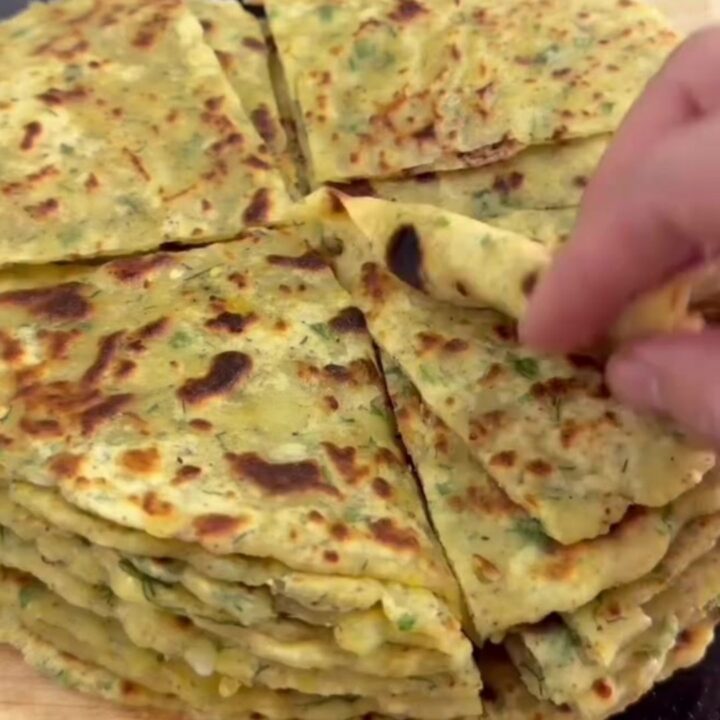
Cheesy Potato Lavaş Flatbreads
Ingredients
- 6 medium boiled potatoes, peeled
- 200 g grated kaşar cheese
- 1/4 cup fresh parsley, finely chopped
- 2 cups all-purpose flour
- 1 tsp salt
- 1/4 cup melted butter, for brushing
Instructions
- Place the boiled potatoes in a large bowl and mash them until velvety smooth and free of lumps. Use a potato masher or a fork, working through any stubborn pieces. The smoother the mash, the more cohesive the dough will be.
- Add the grated kaşar cheese, chopped parsley, and salt to the mashed potatoes. Stir with a spatula until the cheese begins to soften from the warmth of the potatoes and the herbs are evenly distributed.
- Gradually add the all-purpose flour to the potato-cheese mixture. Use your hands to bring the mixture together into a soft, cohesive dough. Knead gently for 1–2 minutes, just until the flour is absorbed and the dough holds together without being sticky.
- Turn the dough out onto a lightly floured surface. Divide it into 4 equal portions. Roll each portion into a ball, then flatten each ball with your hands or a rolling pin into a thin, round flatbread about 1/4-inch thick.
- Place a large dry skillet or griddle over medium-high heat. Let it heat for a couple of minutes until a drop of water sizzles and evaporates immediately. Do not add any oil or butter to the skillet.
- Carefully place one flatbread onto the hot dry skillet. Cook for 1–2 minutes until the bottom is golden with blisters and the top begins to puff. Flip with a spatula and cook the other side for another 1–2 minutes, until golden spots appear and the bread is cooked through.
- Transfer the cooked flatbread to a cutting board. Immediately brush one side generously with melted butter, then flip and brush the other side. The butter should melt into the warm crust, making it glossy and fragrant.
- Fold the buttered flatbread in half or into quarters, as desired. Serve warm, either whole or cut into wedges. Repeat with the remaining dough and butter, keeping cooked flatbreads covered to stay warm.
Estimated nutrition per serving
- Calories
- 420
- Protein
- 12 g
- Carbohydrates
- 55 g
- Fat
- 16 g
- Fiber
- 3 g
- Sugar
- 2 g
Next recipe

Turkish Crown Pizza Ring with Spicy Sucuk
See the recipe → →This recipe is based on a short cooking video and is published under the pen name Clara Weller. It was checked before publication, but errors can slip through. Nutrition, when shown, is an estimate. Read more in our editorial policy and on our food safety page.
More recipes to try

Smash Burger with Caramelized Onions
Total time: 22 min
Crispy Chicken Caesar Wraps
Total time: 40 min
Cheesy Potato Herb Flatbreads: Quick Stovetop Comfort
Total time: 40 min
One-Pan Whole Vegetable Tagliatelle
Total time: 30 min
Baked Chipotle Beef Tacos
Total time: 40 min