Dinner · Part 1 of 3: Ingredients
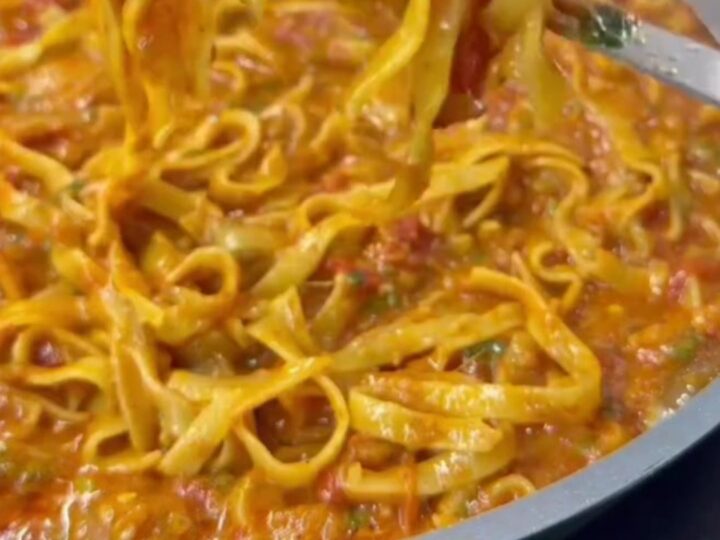
One-Pan Whole Vegetable Tagliatelle
- Prep
- Cook
- Total
- Serves
- 4
This one-pan whole vegetable tagliatelle turns a handful of whole vegetables into a velvety, deeply flavorful sauce with almost no prep. The vegetables simmer gently in olive oil until they collapse into a creamy, naturally sweet sauce that clings to every ribbon of fresh egg pasta. It's a streamlined, satisfying dinner that feels both rustic and elegant.
This recipe celebrates the beauty of whole vegetables. Instead of chopping, dicing, and sautéing each component separately, you simply nestle whole tomatoes, zucchini, eggplant, and onions into a skillet with olive oil and let them simmer until they become meltingly tender.
The result is a chunky, velvety sauce that tastes far more complex than the effort suggests. Fresh egg tagliatelle is the perfect partner, its tender ribbons catching every bit of the silky vegetable cream. Finished with a shower of Parmesan, this is a pasta dinner that comes together in under 30 minutes and feels like a special occasion.
Ingredients
- 1/4 cup extra-virgin olive oil
- 4 whole ripe tomatoes
- 2 medium zucchini
- 1 small eggplant
- 2 yellow onions, peeled
- 1 tsp kosher salt
- 1/2 tsp black pepper
- 10 oz fresh egg tagliatelle
- 1/2 cup grated Parmesan cheese
Why this recipe works
Cooking the vegetables whole preserves their structure and natural juices. As they simmer in olive oil, the vegetables release their moisture and slowly break down, creating a sauce that is both creamy and chunky without any added cream or stock.
The low, gentle heat allows the sugars in the vegetables to caramelize and deepen, building a rich, sweet flavor that you simply can't get from quick sautéing.
The one-pan method also means less cleanup and more flavor. As the vegetables cook, their juices mingle with the olive oil and seasonings, creating a fragrant, aromatic base.
When the pasta is tossed into the skillet, it absorbs those juices, and the starch from the pasta helps thicken the sauce, making it cling beautifully to every noodle. This is cooking at its most efficient and delicious.
Notes and substitutions
Use the ripest, most flavorful tomatoes you can find; they are the backbone of the sauce. If tomatoes are out of season, cherry tomatoes work well and cook even faster. The zucchini and eggplant should be firm and glossy.
Choose small to medium ones, as they tend to be less watery and have better texture. The onions should be yellow or sweet, as they mellow and sweeten during the long simmer.
Fresh egg tagliatelle is preferred for its delicate texture and quick cooking time, but dried tagliatelle or fettuccine can be substituted; just adjust the cooking time according to the package. Parmesan should be freshly grated for the best melt and flavor. The recipe is forgiving: feel free to add a pinch of red pepper flakes for heat, or a handful of fresh basil at the end if you have it.
- fresh egg tagliatelle: Use dried tagliatelle or fettuccine; cook according to package directions until al dente, then proceed with the recipe.
- Parmesan cheese: Substitute Pecorino Romano or Grana Padano for a slightly different salty, nutty flavor.
- zucchini: Yellow summer squash works equally well and adds a pretty color contrast.
- yellow onions: Sweet onions or shallots can be used for a milder, slightly sweeter sauce.
Equipment
- Large skillet with lid
- Tongs
- Large pot for pasta
- Colander
- Chef's knife
- Cutting board
- Measuring cups and spoons
Up next · Part 2 of 3
6 steps · 20 min of cooking · what to look for at each stage
Step-by-step instructions (Part 2)