Dinner · Part 2 of 3: Instructions
One-Pan Whole Vegetable Tagliatelle Step-by-step instructions
- Prep
- Cook
- Total
- Serves
- 4
Before you start
Before you begin, make sure you have all the vegetables ready: wash the tomatoes, zucchini, and eggplant; peel the onions. No chopping needed, but you should have a large skillet with a lid, a large pot for boiling pasta, and a colander.
Bring a large pot of salted water to a boil just before you start cooking the pasta. Have the Parmesan grated and ready to go. The entire dish comes together quickly once the vegetables have simmered, so having everything within reach makes the process smooth.
Ingredients at a glance (9)
- 1/4 cup extra-virgin olive oil
- 4 whole ripe tomatoes
- 2 medium zucchini
- 1 small eggplant
- 2 yellow onions, peeled
- 1 tsp kosher salt
- 1/2 tsp black pepper
- 10 oz fresh egg tagliatelle
- 1/2 cup grated Parmesan cheese
Instructions
Simmer the Vegetables
- Prepare the VegetablesPlace the whole tomatoes, zucchini, eggplant, and peeled onions into a large skillet with the olive oil. Season with salt and pepper. Turn the heat to medium-high and bring the oil to a gentle sizzle. Cover the skillet and reduce the heat to medium-low.Look for The vegetables will start to sizzle gently and release their juices.Tip Choose vegetables that are similar in size so they cook evenly.
- Simmer CoveredSimmer the vegetables covered for 15 minutes, until they are completely tender and the skins begin to loosen. The tomatoes should be soft enough that the skins can be lifted easily. Use tongs to transfer the tomatoes to a cutting board and peel away the skins with your fingers or a paring knife.Look for The tomato skins will slide off easily, revealing soft, steaming red pulp.Tip Be gentle when peeling to keep the tomatoes intact if you prefer a chunkier sauce.
- Blend the SauceReturn the peeled tomatoes to the skillet with the other vegetables. Use a potato masher or the back of a spoon to break up the vegetables into a rustic, chunky sauce. Stir to combine and keep warm over low heat.Look for The sauce will be thick and creamy with visible pieces of vegetables.Tip For a smoother sauce, use an immersion blender directly in the skillet.
After 15 minutes of covered simmering, the vegetables should be very tender. The tomatoes will have split and their skins will be wrinkled and loose. The zucchini and eggplant will be soft and slightly collapsed.
The onions will be translucent and giving off a sweet aroma. The skillet will be fragrant with olive oil and vegetable juices. Check that the vegetables are easily pierced with a fork before moving on.
Cook and Combine Pasta
- Cook the PastaBring a large pot of salted water to a boil. Add the fresh tagliatelle and cook for 2 to 3 minutes, until al dente. Reserve about 1/2 cup of the pasta water, then drain the pasta.Look for The pasta will be tender but still firm to the bite.Tip Fresh pasta cooks quickly, so keep a close eye on it.
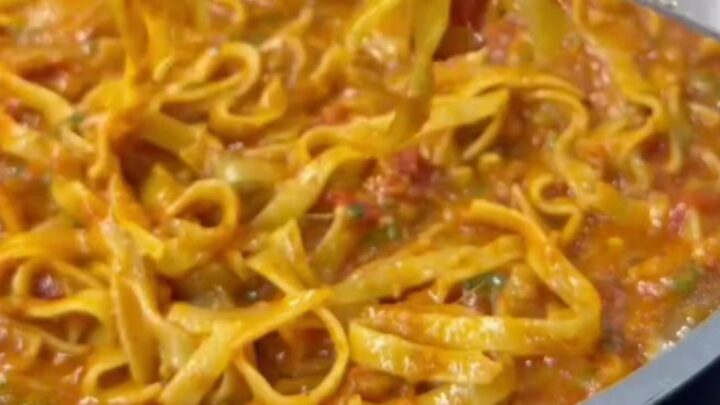
- Combine Pasta and SauceAdd the drained tagliatelle to the skillet with the vegetable sauce. Sprinkle the grated Parmesan over the top. Use tongs to toss everything together, allowing the pasta ribbons to coat evenly with the creamy sauce. If the sauce seems thick, add a splash of the reserved pasta water to loosen it.Look for The pasta will be glossy and evenly coated with the vegetable cream.Tip Tossing over low heat helps the sauce cling to the pasta.
The tagliatelle should be al dente, with a slight resistance in the center. When added to the skillet, the pasta should start to absorb the sauce and turn glossy. The cheese will begin to melt, creating a creamy coating. The aroma will be rich and savory. Check that the pasta is well coated and there is no excess liquid pooling at the bottom of the skillet.
Finish and Serve
- Finish and ServeContinue to toss the pasta over low heat for 1 to 2 minutes, until the cheese is melted and the sauce is silky. Taste and adjust seasoning with salt and pepper. Remove from heat and serve immediately, twirling the tagliatelle into tall nests on plates.Look for The cheese will melt into the sauce, creating a velvety texture.Safe temperature 160°F (71°C) internal temperature (egg dishes)Tip Use tongs to twirl the pasta into neat portions for a beautiful presentation.
The final dish should look vibrant and glossy, with the pasta twirled into tall nests. The sauce should be thick enough to cling to the pasta without being dry. The Parmesan should be fully melted, adding a salty, nutty note. The vegetables should be soft but still identifiable. Serve immediately to enjoy the best texture and flavor.
Common mistakes
One common mistake is not simmering the vegetables long enough; they need a full 15 minutes to become soft and release their juices. Another is overcrowding the skillet, which can cause the vegetables to steam rather than sauté; use a large skillet and arrange the vegetables in a single layer.
When adding the pasta, be careful not to overcook it, as fresh pasta can turn mushy quickly. Finally, don't skip the pasta water; it's the secret to a silky, cohesive sauce.
How to tell it’s done
The dish is done when the vegetables are completely tender and have collapsed into a chunky sauce, the pasta is al dente, and the cheese is melted and fully incorporated. The sauce should be thick and creamy, coating the pasta ribbons evenly.
If using fresh egg tagliatelle, the pasta will be tender but still have a slight bite. The internal temperature of the pasta and sauce should reach at least 160°F (71°C) to ensure the eggs in the pasta are fully cooked.
- Egg dishes: 160°F (71°C) in the thickest part
Up next · Part 3 of 3
4 variations · storage & make-ahead · 5 answers · printable card
Tips, FAQ & printable recipe (Part 3)← Back to the ingredients (Part 1)