Dinner · Part 2 of 3: Instructions
Cheesy Potato Lavaş Flatbreads Step-by-step instructions
- Prep
- Cook
- Total
- Serves
- 4
Before you start
Before starting, boil the potatoes until they are fork-tender, then drain and peel them while they are still warm. Grate the kaşar cheese and finely chop the parsley. Have the flour and salt measured and ready.
Place a large skillet or griddle over medium-high heat so it can get hot while you prepare the dough. Keep a pastry brush and the melted butter nearby for the final step.
Ingredients at a glance (6)
- 6 medium boiled potatoes, peeled
- 200 g grated kaşar cheese
- 1/4 cup fresh parsley, finely chopped
- 2 cups all-purpose flour
- 1 tsp salt
- 1/4 cup melted butter, for brushing
Instructions
Preparing the Dough
- Mash the PotatoesPlace the boiled potatoes in a large bowl and mash them until velvety smooth and free of lumps. Use a potato masher or a fork, working through any stubborn pieces. The smoother the mash, the more cohesive the dough will be.Look for The potatoes should be creamy and lumpless, like a thick puree.Tip For an even smoother texture, pass the potatoes through a ricer.
- Add Cheese and HerbsAdd the grated kaşar cheese, chopped parsley, and salt to the mashed potatoes. Stir with a spatula until the cheese begins to soften from the warmth of the potatoes and the herbs are evenly distributed.Look for The cheese should start to melt slightly, and the mixture should smell savory and fresh.Tip If the potatoes have cooled, the cheese won't melt as easily—that's fine, it will melt during cooking.
- Knead in the FlourGradually add the all-purpose flour to the potato-cheese mixture. Use your hands to bring the mixture together into a soft, cohesive dough. Knead gently for 1–2 minutes, just until the flour is absorbed and the dough holds together without being sticky.Look for The dough should be soft but not sticky, and it should hold together when pressed.Tip If the dough is too sticky, add a little more flour, a tablespoon at a time.
At this point, the dough should be smooth, soft, and pliable, with no dry patches. The mashed potatoes and cheese should be well combined, and the flour should be fully incorporated.
The dough should not stick to your hands, and it should hold its shape when shaped into a ball. If it feels too dry, add a small amount of water; if too wet, add a bit more flour.
Cooking the Flatbreads
- Divide and ShapeTurn the dough out onto a lightly floured surface. Divide it into 4 equal portions. Roll each portion into a ball, then flatten each ball with your hands or a rolling pin into a thin, round flatbread about 1/4-inch thick.Look for The flatbreads should be evenly thin and round, without cracks at the edges.Tip Keep the unrolled dough balls covered with a kitchen towel to prevent drying.
- Heat the SkilletPlace a large dry skillet or griddle over medium-high heat. Let it heat for a couple of minutes until a drop of water sizzles and evaporates immediately. Do not add any oil or butter to the skillet.Look for The skillet should be hot enough to sear but not smoking.Tip A cast-iron skillet works particularly well for even browning.
- Cook the FlatbreadCarefully place one flatbread onto the hot dry skillet. Cook for 1–2 minutes until the bottom is golden with blisters and the top begins to puff. Flip with a spatula and cook the other side for another 1–2 minutes, until golden spots appear and the bread is cooked through.Look for The flatbread should puff up with steam and develop golden-brown blisters on both sides.Tip Press gently with the spatula if the bread doesn't puff on its own.
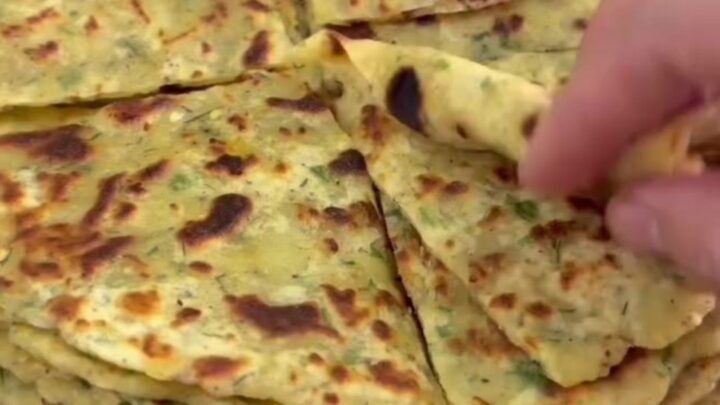
The flatbreads should be golden brown with blisters on both sides, and they should puff up slightly as they cook. The aroma will be toasty and buttery. The bread should feel firm but springy when pressed, and it should not have any raw doughy spots. Keep an eye on the heat to prevent burning—adjust the temperature if needed.
Finishing with Butter
- Brush with ButterTransfer the cooked flatbread to a cutting board. Immediately brush one side generously with melted butter, then flip and brush the other side. The butter should melt into the warm crust, making it glossy and fragrant.Look for The butter sizzles and soaks into the bread, leaving a shiny, golden surface.Tip Brush while the bread is still hot for the best absorption.
- Fold and ServeFold the buttered flatbread in half or into quarters, as desired. Serve warm, either whole or cut into wedges. Repeat with the remaining dough and butter, keeping cooked flatbreads covered to stay warm.Look for The flatbreads are soft, foldable, and glistening with butter.Tip For a softer texture, stack the cooked flatbreads and cover with a clean towel.
After brushing with butter, the flatbreads should be glossy and fragrant. The butter should have melted into the surface, leaving a shiny, appetizing sheen. The bread should be soft and foldable, with a slight crispness at the edges. Serve them warm, and enjoy the delightful combination of crispy exterior and soft, cheesy interior.
Common mistakes
One common mistake is making the dough too sticky, which makes it hard to roll and shape. Add flour gradually until the dough is smooth and manageable. Another issue is cooking the flatbreads over too low heat, which can make them dry and tough instead of soft and puffy.
Make sure the skillet is hot enough to create blisters quickly. Also, avoid overcrowding the skillet—cook one at a time to ensure even heat distribution. Finally, don't skip the butter brushing; it adds essential flavor and moisture.
How to tell it’s done
The flatbreads are done when they are golden brown on both sides, puffed in places, and cooked through. The surface should have attractive blisters and darker spots from the hot skillet.
When you press the center, it should feel firm but springy, not doughy. The internal temperature should be at least 165°F (74°C) if you want to be precise, but the visual cues of golden color and a cooked-through texture are reliable indicators.
Up next · Part 3 of 3
4 variations · storage & make-ahead · 5 answers · printable card
Tips, FAQ & printable recipe (Part 3)← Back to the ingredients (Part 1)