Desserts · Part 3 of 3: Tips & recipe card
Butterscotch Pecan Layer Cake with Brown Butter Praline Buttercream Tips, FAQ & printable recipe
- Prep
- Cook
- Total
- Serves
- 12
Tips for success
Start with a level, cool cake base, because every later step depends on it. Trim the domed tops of the layers with a long knife so they stack evenly, and brush away loose crumbs before you spread the first coat of buttercream. A clean base makes the collar sit flat and keeps the sides straight.
Work on a turntable and turn it steadily while you spread the frosting, using the offset spatula in long, smooth strokes from the center outward. Keep a small bowl of warm water nearby to dip the spatula in between passes, which helps create a smooth surface. Chill the cake after the crumb coat so the second coat goes on cleanly and does not tear the layers beneath. These small habits make a large difference to the final look.
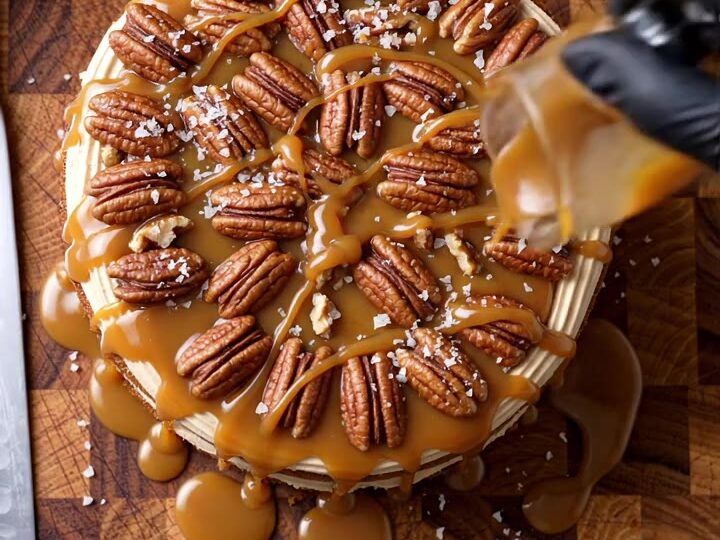
When you add the butterscotch sauce, pour it in the center and let it spread on its own, rather than pushing it with the spatula. Warm sauce moves easily, and a light hand keeps the amber layer even. Work quickly but calmly, and keep the squeeze bottle close to the cake so you can control the flow. Once the collar is removed, add the pecan crown and extra sauce between the nuts, then finish with flaky salt and shavings. Keep the shavings chilled until the last moment, since warmth makes them soften and lose their curl. Taking these steps in order gives you a cake that looks as polished as it tastes.
Variations
- Extra praline crunch: Stir a few tablespoons of finely chopped toasted pecans into the buttercream for extra texture. The crunch contrasts with the smooth frosting and deepens the nutty flavor in every slice.
- Deeper brown butter note: Brown the butter gently in a light-colored pan until it smells nutty and the milk solids turn golden. Cool it until it is soft and spreadable, then use it in the buttercream for a richer flavor.
- Smaller two-layer cake: Bake the layers in two pans and stack them for a shorter cake. Use the same buttercream and sauce amounts, and keep the pecan crown and shavings for a simpler finish with fewer servings.
- Extra sauce on the side: Serve the warm butterscotch sauce in a small pitcher alongside each slice. This lets guests add more amber sauce to their taste while keeping the cake tidy and the drips intact on the plate.
Storage and make-ahead
- Fridge
- Store covered in the refrigerator for up to five days, and bring slices close to room temperature before serving.
Store the finished cake in the refrigerator in a covered cake carrier or loosely wrapped in plastic wrap so the buttercream does not absorb other flavors. Keep the cake chilled while it is stored, and bring slices close to cool room temperature before serving so the buttercream is soft and the cake is tender.
Leftover slices should be stored in an airtight container in the refrigerator, and any cake left out at room temperature should be refrigerated within two hours. The sauce and buttercream keep their flavor well for several days when chilled, although the pecan crown and shavings are best eaten within a day, since they lose their crunch and curl over time. Check the cake before serving and discard any slices that look dry, weeping or off in aroma.
This cake is well suited to planning ahead. You can make the praline buttercream up to two days before assembling and store it in an airtight container in the refrigerator. Bring it to room temperature and beat it briefly before using so it spreads smoothly. Toast and chop the pecans a day ahead, keeping the whole pecans for the top in a sealed container.
Warm the butterscotch sauce just before pouring. Grate the butterscotch block shortly before decorating, since the shavings hold their curl best when freshly cut. Assemble the cake on the day you plan to serve it, leaving time for chilling between the crumb coat, sauce and decoration. Planning in stages keeps the work manageable and gives you a cake that looks freshly made.
Serving ideas
Serve the cake at cool room temperature, when the buttercream is soft enough to taste fully but still holds its shape. Cut slices with a long knife that you have warmed in hot water and dried, which gives neat edges and keeps the drips intact. Place each slice on a plate with a small amount of extra sauce pooled alongside, so guests can see the glossy amber layers and the pecan crown on top. A simple pot of coffee or a cup of black tea pairs well with the sweet, toasty flavors of the butterscotch and praline. The cake works equally well for a holiday table, a birthday or a relaxed dinner party, because its look is elegant and its flavor is familiar.
For a more polished presentation, arrange the slices on a cake stand or large platter and scatter a few extra grated shavings across the plate just before serving. Keep flaky sea salt nearby so each guest can add a small pinch to their slice, if they like a sharper contrast to the sweetness.
Use a cake server to lift each slice cleanly, and wipe the server between cuts so the plating stays neat. Serve the cake with a light hand on the sauce, since it is rich, and let the buttercream and butterscotch speak for themselves. A chilled cake will hold together well if your gathering runs longer than planned, so keep it in the refrigerator until shortly before the first slice.
Frequently asked questions
Can this cake be made ahead?
Why does the butterscotch sauce run off the sides too fast?
What is the best way to grate the butterscotch?
Can the pecans be replaced with another nut?
How do you keep the cake layers from drying out?
Butterscotch Pecan Layer Cake with Brown Butter Praline Buttercream
Ingredients
- 3 butterscotch layer cake layers, store-bought or made ahead
- 1 cup pecan halves, toasted and chopped, plus extra whole toasted pecans for the top
- 1 cup packed brown sugar
- 1/2 cup butterscotch candy pieces
- 1 cup (2 sticks) unsalted butter, softened
- 3 cups confectioners' sugar, sifted
- 2 tbsp heavy cream
- 1 tsp vanilla extract
- 1/4 tsp kosher salt
- 2 oz block of butterscotch, chilled, for grating
- 1 cup butterscotch sauce, warm, plus more for the top
- flaky sea salt for serving
Instructions
- Toast the pecans in a dry skillet over medium heat until fragrant and shades darker, then let them cool. Chop about half of them finely, and set the whole pecans aside for the crown. Keep the chopped pecans with the brown sugar and candy pieces for the praline.
- Combine the chopped pecans, brown sugar and butterscotch candy pieces in a food processor and pulse until finely ground. Beat the softened butter until creamy, then add the praline mixture, confectioners' sugar, cream, vanilla and salt. Beat until smooth and pale brown.
- Chill the block of butterscotch until firm. Hold it over a sheet of parchment on the cutting board and grate it with a box grater, producing fine curls and shavings. Keep the shavings chilled until you are ready to decorate the cake.
- Place the first cake layer on a turntable inside an acetate collar set on a cake board. Spread a thin, even layer of praline buttercream over it. Repeat with the second layer, then top with the third layer and cover the top and sides with a thin crumb coat of buttercream.
- Warm the butterscotch sauce until pourable. Pour it from a squeeze bottle over the top of the buttercream, letting it spread to the edge and run down the sides of the collar in a glossy amber layer. Chill briefly so the sauce sets.
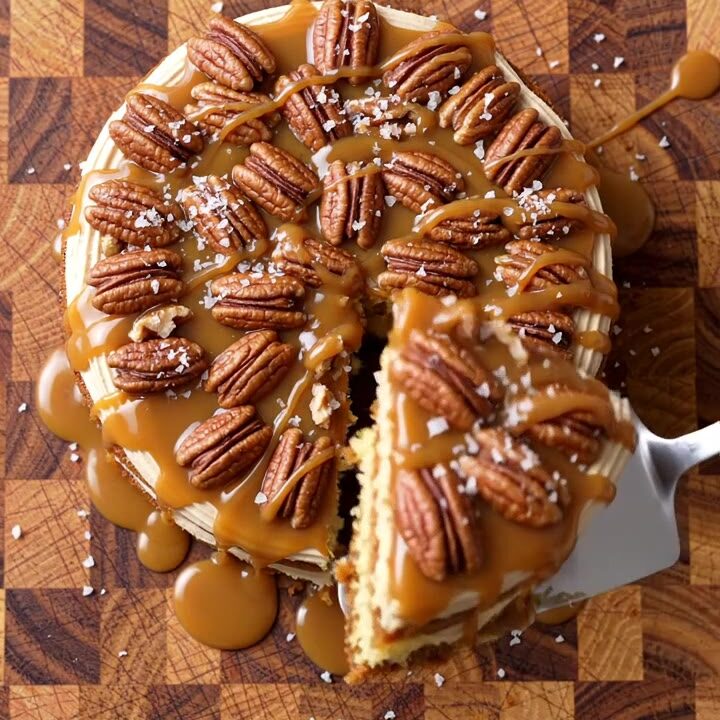
- Carefully remove the acetate collar so the caramel drips cascade down the sides. Arrange the whole toasted pecans in a ring across the top. Spoon additional butterscotch sauce between the pecans, sprinkle flaky sea salt over the top, and scatter the grated shavings.
- Refrigerate the finished cake for about 30 minutes so the drips and buttercream firm up. Bring it back to cool room temperature before slicing with a long, warm knife. Lift each slice with a cake server to serve.
Estimated nutrition per serving
- Calories
- 780
- Protein
- 7 g
- Carbohydrates
- 96 g
- Fat
- 42 g
- Fiber
- 2 g
- Sugar
- 78 g
- Sodium
- 380 mg
Next recipe
Passionfruit Macadamia White Chocolate Cheesecake for Dessert
See the recipe → →This recipe is based on a short cooking video and is published under the pen name Clara Weller. It was checked before publication, but errors can slip through. Nutrition, when shown, is an estimate. Read more in our editorial policy and on our food safety page.
More recipes to try
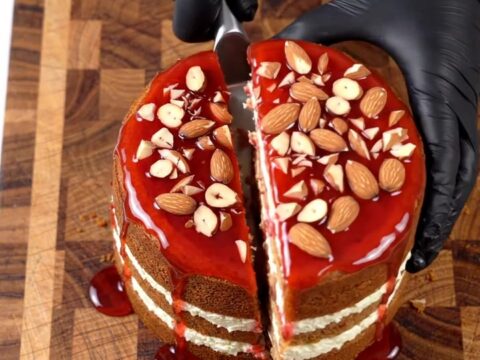
Blood Orange Ricotta Almond Cake with Glossy Glaze
Total time: 1 h 55 min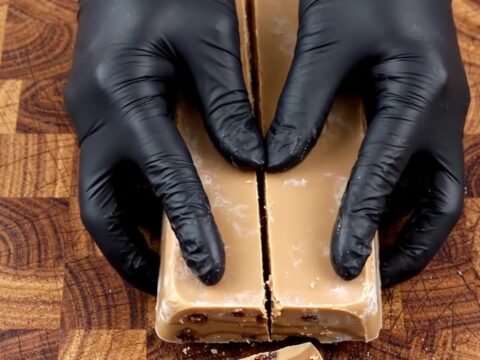
Blonde Chocolate Crunch Bars with Cookie Butter and Pecans
Total time: 1 h 30 min
Lemon Blackberry Ricotta Puff Pastry Pinwheels in 30 Minutes
Total time: 48 min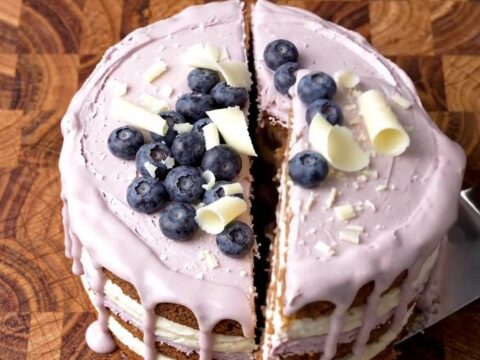
Blueberry Earl Grey Honey Mascarpone Layer Cake with White Chocolate Curls
Total time: 4 h 20 min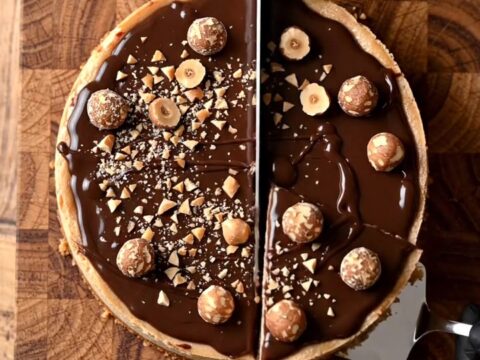
Hazelnut Chocolate Cheesecake with Ganache and Praline Balls
Total time: 7 h 45 min