Desserts · Part 1 of 3: Ingredients
Butterscotch Pecan Layer Cake with Brown Butter Praline Buttercream
- Prep
- Cook
- Total
- Serves
- 12
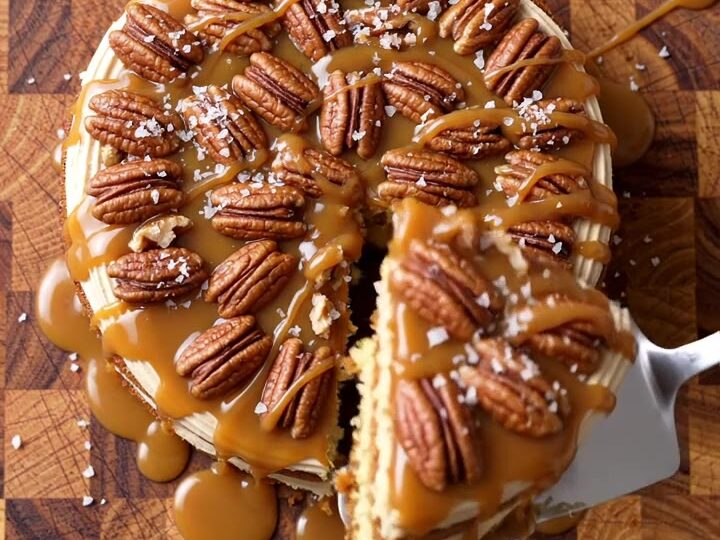
Few cakes look as inviting as a tall butterscotch layer cake with glossy amber drips running down the sides. Its praline buttercream is pale and smooth, and a crown of toasted pecans finishes the top. Every slice carries sweet, nutty flavor with a buttery finish that rewards a slow, careful build.
This butterscotch pecan layer cake, also known as a brown butter praline layer cake, brings together three layers of golden butterscotch cake, a spreadable praline buttercream and a warm butterscotch sauce. The method is built around a turntable and an acetate collar, which give you clean sides and a tidy top. You start by toasting and chopping pecans, then make the buttercream with brown sugar and butterscotch candy.
Next you grate a block of butterscotch into fine shavings for decoration. The cake is assembled in layers, finished with sauce and then decorated with whole pecans, flaky salt and grated shavings. Plan for a little time for chilling, because the cake needs to set before you cut it. The result is a showpiece dessert that still tastes like a homey, classic American cake.
Ingredients
Cake
- 3 butterscotch layer cake layers, store-bought or made ahead
Pecans
- 1 cup pecan halves, toasted and chopped, plus extra whole toasted pecans for the top
Praline buttercream
- 1 cup packed brown sugar
- 1/2 cup butterscotch candy pieces
- 1 cup (2 sticks) unsalted butter, softened
- 3 cups confectioners' sugar, sifted
- 2 tbsp heavy cream
- 1 tsp vanilla extract
- 1/4 tsp kosher salt
Garnish
- 2 oz block of butterscotch, chilled, for grating
Butterscotch sauce
- 1 cup butterscotch sauce, warm, plus more for the top
Garnish
- flaky sea salt for serving
Why this recipe works
The method works because each element has a clear job. The praline buttercream adds toasted pecan flavor and brown sugar depth, while the butterscotch sauce gives a glossy, slightly salty contrast that runs down the sides. Building the cake in an acetate collar keeps the layers aligned and lets the sauce settle into a neat amber band rather than spreading unevenly across the board.
Chilling between steps is the reason the cake looks crisp and clean when it is finished. Buttercream stays firm enough to hold its shape, so the drips stay where you placed them. Toasting the pecans first deepens their flavor, which then carries through the buttercream and the decorative crown. Grating the butterscotch rather than chopping it gives fine curls that melt lightly on the tongue, adding texture without overwhelming the cake.
Taking time at the turntable matters more than speed. Spreading thin, even coats and using a crumb coat keeps the cake from showing crumbs in the finished layers. Working with a cool cake and warm sauce is the key pairing: the sauce should be fluid enough to pour, but not so hot that it slides off the sides too fast.
Each part of the method is designed to keep the cake sturdy, the sauce glossy and the decoration precise, so the finished cake matches the look of a professional bakery layer cake.
Notes and substitutions
Choose a butterscotch cake base that is sturdy enough to stack, and let it cool completely before you start. Store-bought or made-ahead layers are a practical choice here, because the buttercream and sauce are where the cake gains its character. Look for a butterscotch block that is firm and easy to grate, since soft butterscotch smears instead of forming shavings. Use unsalted butter so you can control the salt in the buttercream, and taste the frosting before you add more salt.
For equipment, an 8-inch cake pan or cake ring, a turntable and an acetate collar are the most useful tools. A box grater makes the decorative shavings, and a squeeze bottle lets you place the sauce precisely. An offset spatula helps spread the buttercream evenly over the layers.
If you do not have a squeeze bottle, a spoon can work, though the drips will be less controlled. Use the substitutions listed below if an ingredient is hard to find, and keep the amounts close to the quantities given so the buttercream sets properly.
- butterscotch candy pieces: additional butterscotch chips, melted and cooled
- heavy cream: whole milk, one tablespoon at a time until smooth
- flaky sea salt: fine sea salt, used sparingly
Equipment
- 8-inch cake pan or cake ring
- Turntable
- Acetate cake collar
- Offset spatula
- Squeeze bottle
- Box grater
- Long chef's knife
Up next · Part 2 of 3
7 steps · 45 min of cooking · what to look for at each stage
Step-by-step instructions (Part 2)