Desserts · Part 3 of 3: Tips & recipe card
Blood Orange Ricotta Almond Cake with Glossy Red Glaze Tips, FAQ & printable recipe
- Prep
- Cook
- Total
- Serves
- 10
Tips for success
Use a light touch when folding the dry ingredients into the batter. Stop as soon as the flour disappears, because overmixing makes the crumb tough and dense. A few small streaks are fine.
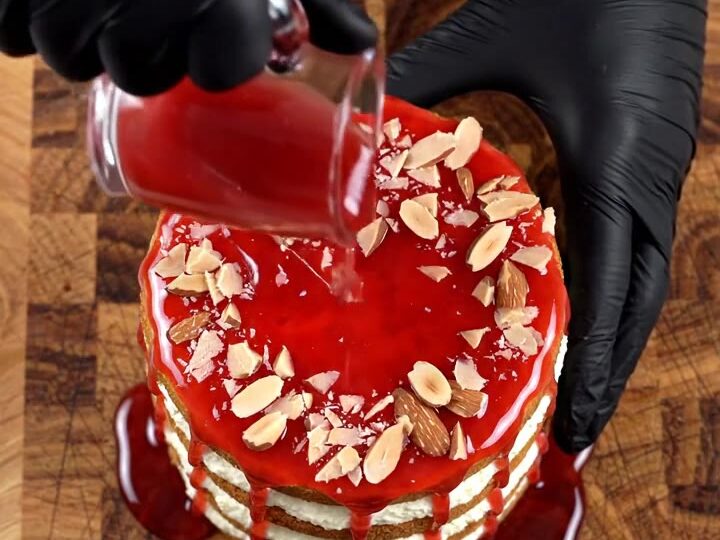
Warm the glaze gently and keep it over low heat, since overheating dulls the color. Strain it before brushing so the red stays clear and the almond pieces stay on top. Cooling the cake fully before glazing keeps the cream layer smooth and the drips even.
Variations
- Lemon Version: Swap the blood oranges for two lemons and use lemon zest and juice in the batter and glaze. The cake turns sharper and sunnier, while the almonds and ricotta keep it soft and balanced.
- Raspberry Glaze: Replace the apricot jam with seedless raspberry jam, strained for a clear finish. The glaze becomes a deeper red with a brighter berry note that pairs well with the citrus slices.
- Chocolate Almond: Fold 1/3 cup finely chopped dark chocolate into the batter before baking. The chocolate melts into the crumb and adds a rich contrast to the orange and almond flavors.
- Plain Almond Top: Skip the orange slices and rosemary for a simpler finish, and cover the cream layer with a thick scatter of toasted sliced almonds. Keep the glaze for shine and a clean, bakery-style look.
Storage and make-ahead
- Fridge
- Store covered in the refrigerator for up to five days, and bring slices to room temperature before serving for the best texture.
- Freezer
- Wrap the unglazed cake base tightly in plastic wrap and foil, then freeze for up to two months.
Keep the finished cake at cool room temperature under a cake dome for up to two days, or in the refrigerator for up to five days.
Cover the cut edges with plastic wrap so the crumb does not dry out. The ricotta cream and the glaze both hold well when chilled.
Bring slices to room temperature for about 20 minutes before serving so the crumb softens and the flavor opens up. Do not leave the cake out for more than two hours in a warm kitchen, since the ricotta layer should stay chilled.
You can bake the cake base a day ahead, wrap it tightly once fully cooled and keep it at room temperature. Toast the almonds the same day so they stay crisp, and store them in an airtight container.
Make the glaze up to two days ahead, refrigerate it and warm it gently before brushing. Assemble and glaze the cake on the day you plan to serve it, so the orange slices look fresh and the topping stays bright.
Serving ideas
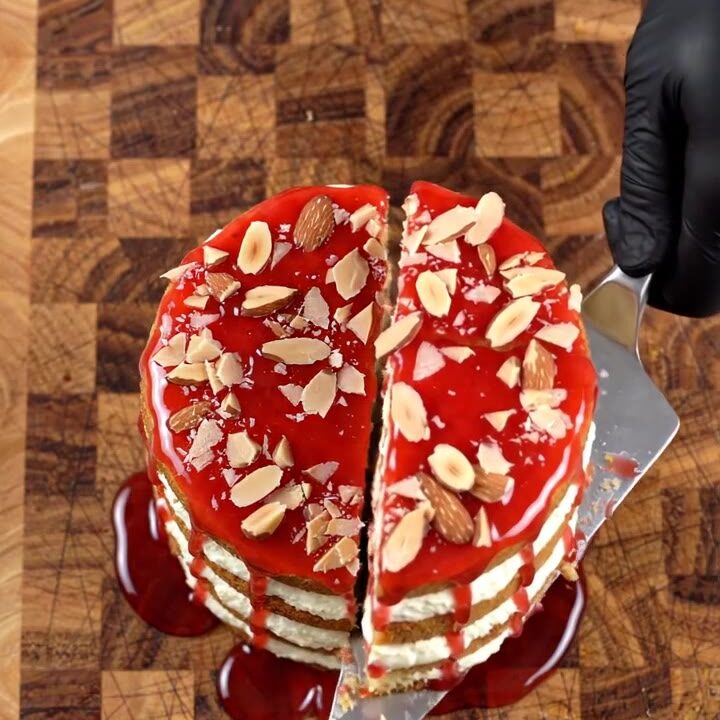
Serve the cake at room temperature with a cake server, cutting thin slices so the layers and orange rounds show clearly.
A cup of coffee or a glass of sparkling water pairs well with the citrus and almond flavors. Add a spoonful of plain ricotta or lightly whipped cream on the side for a soft contrast to the glaze.
For a special occasion, set the cake on a wooden board or a simple white plate and add a few extra rosemary sprigs around the base for color. Arrange the slices on small dessert plates with the glaze facing up, so the red and gold tones catch the light.
Frequently asked questions
Can this cake be made ahead?
Why does the glaze slide off the cake?
Can you use a different citrus instead of blood oranges?
How do you know the cake is fully baked?
Why does the ricotta need to be drained?
Blood Orange Ricotta Almond Cake with Glossy Red Glaze
Ingredients
- 3 blood oranges, sliced into thin rounds
- 1/2 cup whole almonds
- 2 sprigs fresh rosemary
- 1/4 cup firm hard cheese, finely grated (such as Pecorino Romano)
- 1 1/4 cups all-purpose flour
- 2 tsp baking powder
- 3/4 cup granulated sugar
- 3 large eggs, at room temperature
- 1 1/2 cups whole-milk ricotta, drained
- 6 tbsp unsalted butter, melted and cooled
- 1 tbsp blood orange zest
- 1/2 tsp almond extract
- 1/3 cup apricot jam
- 2 tbsp blood orange juice
- 1/4 cup sliced almonds, toasted
- 1/4 tsp fine salt
Instructions
- Heat the oven to 350°F (175°C). Line the bottom of a 9-inch springform pan with parchment paper and grease the sides. Slice the blood oranges into thin rounds, reserve the best slices for the top, and set the whole almonds and rosemary sprigs beside the board.
- Grate the firm hard cheese on the fine side of a stainless steel box grater until you have a fine pile of shreds. In a large bowl, whisk the flour, baking powder, salt and grated cheese. In another bowl, beat the sugar, eggs, drained ricotta, melted butter, zest and almond extract until smooth.
- Fold the dry ingredients into the ricotta mixture until just combined. Spread about half of the batter evenly in the prepared pan, then arrange the remaining batter on top in a smooth layer. Bake for 45 to 50 minutes, until the top is golden and a toothpick comes out clean.
- Let the cake cool in the pan for 20 minutes, then release the sides. Spread a smooth, pale layer of drained ricotta mixed with a little sugar across the surface. Arrange the thin blood orange slices around the outer edge of the cake.
- Toast the whole almonds in a dry pan over medium heat for 4 to 5 minutes, stirring often, until fragrant. Chop them coarsely, then scatter the toasted sliced almonds over the creamy top of the cake.
- Warm the apricot jam with the blood orange juice in a small saucepan over low heat, stirring until smooth. Strain the glaze through a fine-mesh sieve. Remove the cake from the pan and brush or pour the glaze over the top so it drips down the sides.
- Sprinkle the remaining toasted almonds on top of the glazed cake and add the rosemary sprigs for garnish. Let the glaze set for 15 minutes, then lift the cake onto a serving plate. Slice it with a sharp knife and serve with a cake server.
Estimated nutrition per serving
- Calories
- 390
- Protein
- 10 g
- Carbohydrates
- 46 g
- Fat
- 18 g
- Fiber
- 2 g
- Sugar
- 30 g
- Sodium
- 230 mg
Next recipe

Maple Walnut Toffee Dark Chocolate Butter Crunch Bark
See the recipe → →This recipe is based on a short cooking video and is published under the pen name Clara Weller. It was checked before publication, but errors can slip through. Nutrition, when shown, is an estimate. Read more in our editorial policy and on our food safety page.
More recipes to try
Pistachio Kataifi Croissant with Dubai Chocolate: Crisp, Rich and Ready in One Dish
Total time: 40 min
Matcha Black Sesame Burnt Basque Cheesecake with Green Tea Chocolate
Total time: 4 h 15 min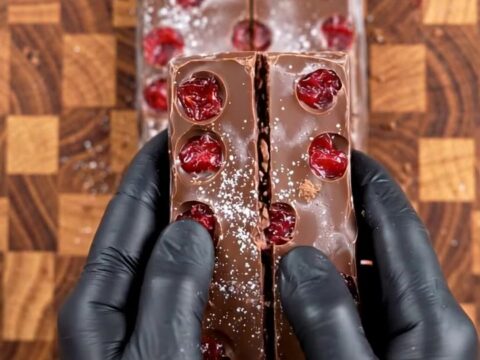
Black Forest Cherry Almond Dark Chocolate Bark
Total time: 1 h 30 min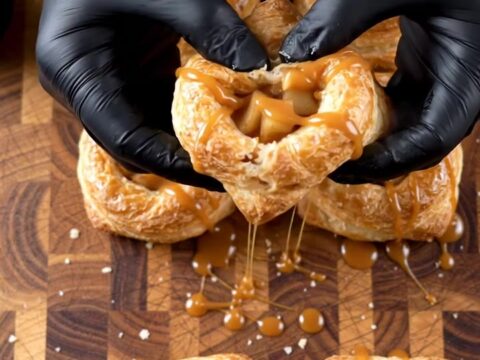
Caramel Apple Turnovers: Flaky Puff Pastry Hand Pies in 40 Minutes
Total time: 50 min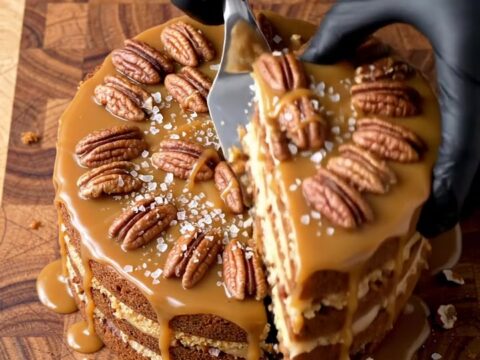
Butterscotch Pecan Layer Cake with Praline Crunch and Sea Salt
Total time: 1 h 25 min