Breakfast · Part 3 of 3: Tips & recipe card
Blistered Sourdough Boule with Crackling Crust Tips, FAQ & printable recipe
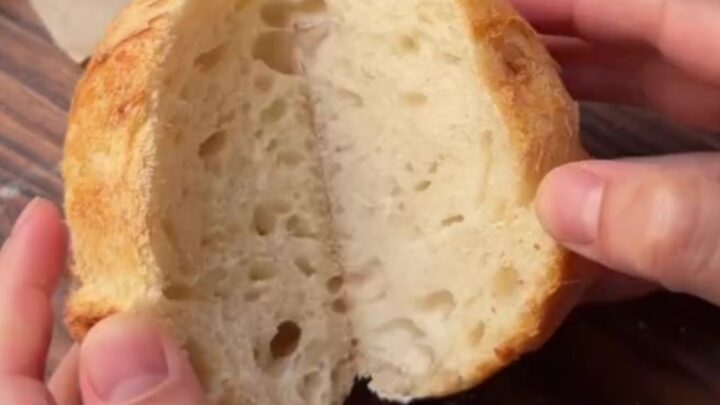
- Prep
- Cook
- Total
- Serves
- 10
Tips for success
For the best crust, make sure your Dutch oven is fully preheated. A cold pot will not produce the same blistering effect. Also, do not skip the cold proof—it not only develops flavor but makes the dough easier to score.
If your dough is too sticky to handle, wet your hands slightly rather than adding more flour, which can make the bread dense.
To get a dramatic 'blistering ear,' score the dough at a shallow angle, not straight down. The slash should be about 1/4 inch deep and run across the top.
This allows the dough to expand upward and create a crispy lip. If you want a more even crumb, you can do a few more folds during the bulk ferment. Always let the bread cool completely before slicing to preserve the texture.
Variations
- Seeded Crust: After shaping, brush the dough lightly with water and roll it in a mixture of sesame seeds, poppy seeds, and sunflower seeds before the final proof. The seeds toast in the oven, adding crunch and nutty flavor.
- Whole Wheat Blend: Replace 100 grams of the bread flour with whole wheat flour. The loaf will be slightly denser and more nutritious, with a deeper, earthy flavor. Increase the water by 25 grams to compensate for the whole wheat's absorption.
- Herb and Garlic: Add 2 tablespoons of finely chopped fresh rosemary and 2 cloves of minced garlic to the dough along with the salt. The herbs infuse the bread with aromatic flavor, perfect for serving with olive oil.
- Cheese and Jalapeño: Fold 1 cup of shredded sharp cheddar cheese and 2 finely chopped jalapeños into the dough during the last set of folds. The cheese melts into pockets of savory goodness, and the jalapeños add a gentle heat.
Storage and make-ahead
- Fridge
- Store the bread at room temperature in a paper bag or wrapped in a kitchen towel for up to 3 days. Do not refrigerate, as this dries out the crumb.
- Freezer
- Freeze the fully baked bread, wrapped tightly in plastic wrap and foil, for up to 3 months.
- Reheat
- Reheat slices or the whole loaf in a 350°F (175°C) oven for 5-10 minutes to revive the crust's crackle.
Store the bread at room temperature in a paper bag or wrapped in a kitchen towel for up to 3 days. The crust will soften slightly but can be refreshed by reheating in a 350°F (175°C) oven for 5-10 minutes. Do not store in plastic, as this will make the crust chewy and damp.
The dough can be shaped and refrigerated for up to 24 hours before baking, which improves flavor and makes baking day easier. You can also bake the bread fully and freeze it. To serve, thaw at room temperature and reheat in a 350°F (175°C) oven for 10 minutes to restore the crust's crackle.
Serving ideas
This sourdough boule is best served warm, with the crust crackling as you slice it. Spread generously with salted butter, which melts into the airy crumb.
It also pairs beautifully with olive oil and balsamic vinegar for dipping, or with soups and stews. The crust's crackle is the star—serve it fresh so the contrast between the shattering exterior and the soft interior is at its peak.
For a more substantial meal, use this bread for sandwiches or toast. The open crumb holds up well to hearty fillings, and the crisp crust adds texture. Leftover bread makes excellent croutons or breadcrumbs.
If the bread becomes stale, it is perfect for panzanella or bread pudding. The possibilities are endless, but the simplest—warm bread and butter—is often the best.
Frequently asked questions
Why is the crust not blistered?
Can this recipe be made without a Dutch oven?
Why is the crumb gummy?
How can the dough be shaped without it sticking?
Can the dough be proofed at room temperature instead of in the fridge?
Blistered Sourdough Boule with Crackling Crust
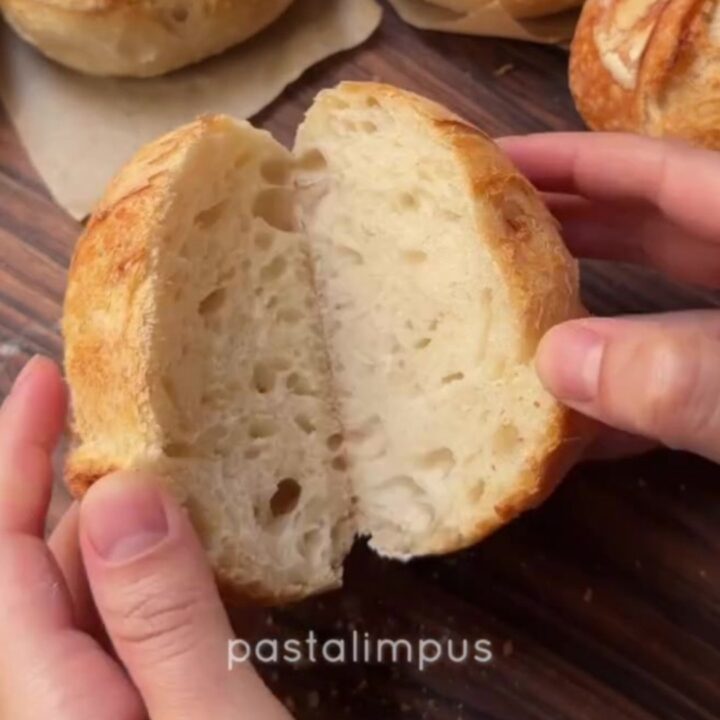
Ingredients
- 100 g active bubbly sourdough starter
- 350 g warm water
- 500 g bread flour
- 10 g sea salt
- salted butter, softened, for serving
Instructions
- In a large mixing bowl, combine the active bubbly sourdough starter and warm water. Stir gently with a spoon or your hand until the starter disperses and the liquid looks milky. Add the bread flour and sea salt. Mix with a spatula or your hand until no dry flour remains and a shaggy, sticky dough forms. Cover the bowl with a damp kitchen towel and let it rest for 30 minutes.
- Over the next 2 hours, perform a series of stretch-and-folds. Every 30 minutes, wet your hand, reach under one side of the dough, stretch it up and over the center, then rotate the bowl a quarter turn and repeat. Do this 4 to 6 times total. The dough will become smoother, stronger, and more elastic with each fold. Cover and let it rest at room temperature between folds.
- After the bulk ferment, turn the dough out onto a lightly floured surface. Gently shape it into a round by folding the edges toward the center, then flipping it seam-side down and rotating it with cupped hands to build surface tension. Place the shaped dough seam-side up into a floured proofing basket or a bowl lined with a floured kitchen towel. Cover and refrigerate for at least 12 hours, or up to 24 hours, for a deeper flavor and easier handling.
- About 45 minutes before baking, place a Dutch oven with its lid in the oven and preheat to 450°F (230°C). Let the pot heat for at least 45 minutes so it is screaming hot. Meanwhile, cut a piece of parchment paper large enough to line the pot with overhang.
- Remove the dough from the refrigerator. Carefully turn it out onto the parchment paper, seam-side down. Using a razor blade or a very sharp knife, score the top with a single swift slash at a 45-degree angle, about 1/4 inch deep. The slash should run across the top, slightly off-center, to allow the dough to expand in the oven.
- Carefully lift the parchment paper with the dough and lower it into the preheated Dutch oven. Put the lid on and bake for 20 minutes. The covered environment traps steam, which helps the crust stay pliable and the crumb become open and airy.
- Remove the lid and continue baking for 25 to 30 minutes, until the crust is deep golden brown and blistered. The internal temperature should reach 200°F (93°C) for a fully baked loaf. The crust will feel hard and sound hollow when tapped on the bottom.
- Transfer the bread to a cooling rack. Let it cool for at least 1 hour before slicing—this allows the crumb to set and the crust to crisp. When ready to serve, slice with a serrated knife and spread with salted butter while still warm, if desired.
Estimated nutrition per serving
- Calories
- 210
- Protein
- 7 g
- Carbohydrates
- 42 g
- Fat
- 2 g
Next recipe

Crispy Garlic Parmesan Hashbrowns
See the recipe → →This recipe is based on a short cooking video and is published under the pen name Clara Weller. It was checked before publication, but errors can slip through. Nutrition, when shown, is an estimate. Read more in our editorial policy and on our food safety page.
More recipes to try

Quick Homemade Croissants in Under an Hour
Total time: 1 h
Turkish Braided Feta Buns: Soft and Pillowy
Total time: 1 h 45 min
Two-Tone Chocolate Croissant Buns: Quick Pull-Apart Pastry
Total time: 1 h 47 min
Flower-Shaped Turkish Brioche Buns, Pillowy Soft
Total time: 1 h 45 min
Golden Turkish Breakfast Cake with Feta and Herbs
Total time: 45 min