Breakfast · Part 1 of 3: Ingredients
Two-Tone Chocolate Croissant Buns: Quick Pull-Apart Pastry
- Prep
- Cook
- Total
- Serves
- 12
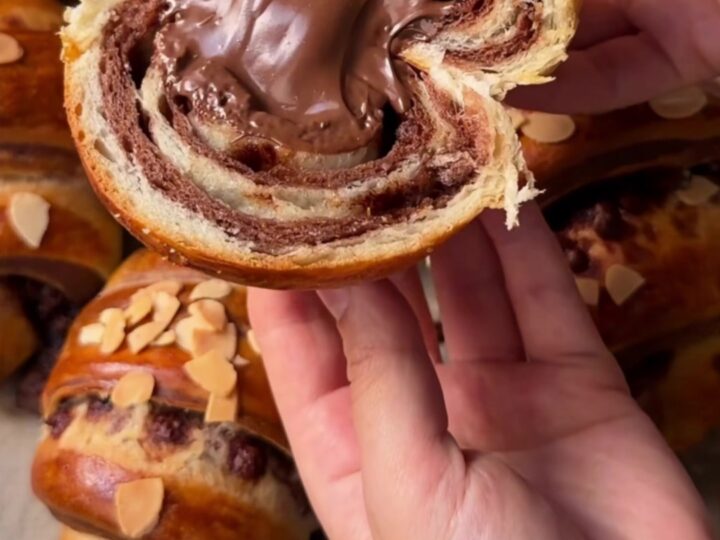
These two-tone chocolate croissant buns are the kind of pastry that makes a weekend morning feel special. A soft, buttery yeast dough is divided and colored with Dutch cocoa, then layered and rolled into a dramatic zebra spiral.
When baked, the buns puff into golden crescents with a deep chocolate swirl running through every bite. Brushed with a simple sugar syrup, they get a glossy, bakery-style finish. Pull them apart while they're warm and watch the steam rise from the flaky layers.
This recipe turns a simple yeast dough into stunning two-tone croissant buns that are as fun to make as they are to eat. The dough comes together in one bowl with warm milk, water, oil, and yeast, then is split into two parts: one plain, one enriched with Dutch cocoa. The two doughs are stacked, rolled, and folded to create a marbled spiral that bakes into a beautiful zebra pattern.
The buns are soft, buttery, and just sweet enough, with a delicate flakiness from the rolling process. They're perfect for breakfast, brunch, or an afternoon treat with coffee. The video shows every step, from mixing the dough to brushing the baked buns with syrup, and this recipe follows that exact method.
Ingredients
- 1 cup warm milk
- 1 cup warm water
- 1/2 cup vegetable oil
- 2 1/4 tsp active dry yeast (one packet)
- 3 tbsp granulated sugar
- 4 cups all-purpose flour, plus more for dusting
- 1/2 tsp salt
- 3 tbsp Dutch cocoa powder
- 2 tbsp milk
- 3 tbsp unsalted butter, melted
- 1/4 cup simple sugar syrup (for brushing)
Why this recipe works
The method relies on a simple yeast dough enriched with oil and sugar, which creates a tender, pliable dough that's easy to roll and shape. The addition of warm milk and water activates the yeast quickly, producing a soft, airy crumb.
By dividing the dough and coloring one portion with Dutch cocoa, you get two distinct flavors and colors that stay separate during shaping, creating the dramatic spiral.
Rolling the stacked doughs together and folding them several times creates multiple thin layers. When baked, these layers separate slightly, giving the buns a flaky, croissant-like texture without the time-consuming lamination of traditional croissants. The final brush of sugar syrup adds moisture and shine, locking in a glossy finish that makes the buns look professionally baked.
Notes and substitutions
Use Dutch cocoa powder for the deepest color and richest chocolate flavor; regular cocoa will work but the color will be lighter. The dough should be soft and slightly tacky but not sticky.
If it's too wet, add a little more flour; if too dry, add a splash of warm water. The yeast needs to be fresh and active—if the mixture doesn't froth after 5 minutes, start over with new yeast.
You can use instant yeast instead of active dry; no need to proof it first, just mix it into the flour. The oil can be any neutral oil like vegetable, canola, or melted coconut. For the sugar syrup, equal parts sugar and water heated until the sugar dissolves works perfectly. If you prefer a less sweet finish, skip the syrup or use a light honey glaze.
- Dutch cocoa powder: Regular unsweetened cocoa powder (the color will be slightly less deep, but the flavor is fine)
- Vegetable oil: Canola oil or melted coconut oil
- Active dry yeast: Instant yeast (use the same amount, no need to proof in liquid first)
- Simple sugar syrup: Honey or maple syrup thinned with a little water
Equipment
- Large mixing bowl
- Whisk
- Wooden spoon or spatula
- Pizza cutter or sharp knife
- Baking sheet
- Parchment paper
- Pastry brush
Up next · Part 2 of 3
6 steps · 22 min of cooking · what to look for at each stage
Step-by-step instructions (Part 2)