Dinner · Part 3 of 3: Tips & recipe card
Argentine Smash Burger with Chimichurri and Crispy Provolone Tips, FAQ & printable recipe
- Prep
- Cook
- Total
- Serves
- 1
Tips for success
An instant-read thermometer removes all guesswork: ground beef is safely cooked at 160°F (71°C), and with smash-thin patties that temperature arrives quickly, so start checking at the seventy-five-second mark. Work in batches if the griddle is small — two patties and two cheese rounds fill a standard skillet — and keep the first batch warm in a low oven, uncovered, so the crust stays crisp.
Never cover the burgers with foil; trapped steam softens the crust within minutes and undoes the whole point of the smash. If the pan looks dark and cruddy between batches, wipe it quickly with a dry paper towel.
Treat the chimichurri as a sauce for everything, not just this burger. Leftovers are excellent spooned over grilled chicken, stirred through cooked potatoes, or drizzled over crusty bread with fresh cheese.
For the burger itself, timing matters more than quantity: the sauce should go on at the very last moment, right before the top of the roll, so the vinegar never has time to wilt the herbs against the hot cheese. If the sauce sits and the oil separates, a quick stir with a spoon brings it right back together with no harm done.
Variations
- Steak version: Swap the smash patties for thin slices of grilled flank or skirt steak and keep everything else identical — the crispy provolone and chimichurri turn steak into a sandwich with the same contrast of crackle and herbs.
- Double provolone: Fry four provolone rounds instead of two and layer two between the patties and two on top. The extra cheese adds saltiness and snap; use the chimichurri slightly sparingly so the sauce does not overwhelm the balance.
- Extra hot: Leave the chili seeds in and add a second chili, or a pinch of dried red pepper flakes to the finished sauce. The heat builds slowly against the cool parsley, so start small and taste as the sauce rests.
- Open-face asado style: Skip the top of the roll and serve the stacked patties on the toasted bottom half only, chimichurri pooling over the cheese. It eats like the grilled provolone course at an Argentine asado, with a fork and plenty of napkins.
Storage and make-ahead
- Fridge
- Refrigerate patties, provolone, and chimichurri in separate airtight containers for up to 3 days; keep a film of oil on the sauce.
- Freezer
- Freeze cooked patties wrapped tightly for up to 2 months; chimichurri and provolone are best made fresh, as the sauce darkens and the cheese softens.
- Reheat
- Re-crisp patties and provolone in a 400°F (200°C) oven or a hot skillet for a few minutes; bring the chimichurri to room temperature before serving.
Store the components separately so nothing surrenders its texture. Once the cooked patties and provolone have cooled for no more than two hours, refrigerate them in an airtight container for up to three days; the chimichurri keeps in a jar for the same time, with a thin layer of olive oil poured over the top to protect the color and flavor.
Keep the roll at room temperature, wrapped in paper rather than plastic, and toast it fresh when rebuilding the burger so the crumb stays crisp against the sauce.
The chimichurri is the natural make-ahead component: it can be chopped and mixed up to three days in advance and actually improves overnight as the garlic mellows, though the green fades slightly. Bring it to room temperature and stir well before serving.
The beef can be portioned into balls a day ahead and kept covered in the refrigerator — let them sit out for no more than thirty minutes before cooking. Everything else, from the provolone rounds to the toasted roll, is best done in the moment, right at the griddle.
Serving ideas
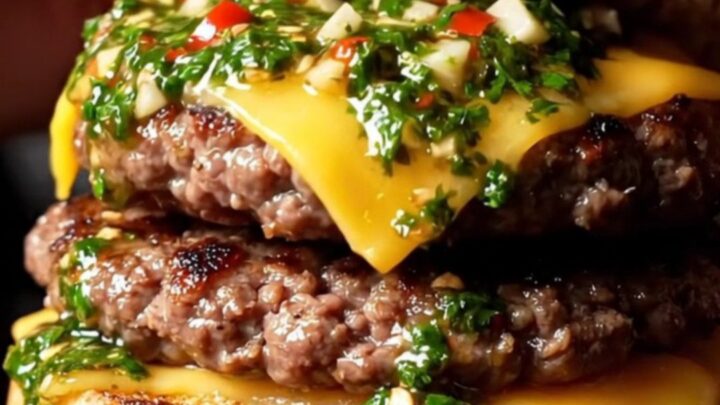
Serve the burger whole, with a small bowl of extra chimichurri alongside for dipping the inevitable crumbs, and nothing more elaborate than a pile of salt-and-vinegar chips or simple oven fries. Cold drinks are the traditional pairing — this is asado-adjacent food, made for a napkin-stuffed, elbows-on-the-table meal. Cut the burger in half on the diagonal if serving it on a board; the cross-section of green sauce, crackling cheese, and lacy-edged beef is genuinely part of the appeal.
For a different presentation, skip the top half of the roll and serve the stacked patties open-face, chimichurri pooling over the cheese and onto the plate. If feeding more than one person, multiply the beef and cheese freely — the chimichurri recipe makes roughly three-quarters of a cup, enough for three or four burgers — but keep the batches small on the griddle, two patties at a time, so every burger gets the same hard sear the first one enjoyed.
Frequently asked questions
Can the chimichurri be made ahead?
Can this be cooked without a cast-iron pan?
Why did the provolone melt instead of crisping?
Can a leaner ground beef be used?
How spicy is the chimichurri?
Argentine Smash Burger with Chimichurri and Crispy Provolone
Ingredients
- 1/2 cup flat-leaf parsley, finely chopped
- 4 cloves garlic, finely chopped
- 1 red chili, finely chopped
- 2 tbsp red wine vinegar
- 1/3 cup extra-virgin olive oil
- 8 oz ground beef (80/20), divided into two 4-oz balls
- 2 thick rounds aged provolone (about 1/2 inch each)
- 1 large crusty roll, split
Instructions
- On a cutting board, finely chop the flat-leaf parsley, the garlic cloves, and the red chili, removing the seeds first if a milder sauce is preferred. Aim for a fine, even mince so every spoonful of chimichurri distributes flavor evenly rather than delivering bites of raw garlic. Scrape everything into a small mixing bowl as you go.
- Stir the red wine vinegar into the chopped herbs, then pour in the extra-virgin olive oil and mix until the sauce looks glossy and emerald green. Let the chimichurri sit at room temperature while the griddle heats and the burgers cook, so the garlic mellows and the flavors marry.
- Set a cast-iron griddle or heavy skillet over medium-high heat for a full five minutes, until a drop of water skitters and evaporates on contact. The target is around 470°F (243°C); without a thermometer, judge by a faint shimmer across the surface and the first light wisp of smoke. Do not add oil — the beef brings its own fat.
- Divide the ground beef into two loose 4-ounce balls and place them on the hot griddle. Press each one flat with a sturdy spatula to about 4 1/2 inches wide, then cook undisturbed for 90 seconds until the edges are deep brown and lacy. Flip, and cook about 1 minute more, until the interior reaches 160°F (71°C).
- Slide the patties to a cooler edge of the griddle and set the provolone rounds directly on the hot steel in the open space. Let them fry undisturbed for 60 to 90 seconds, until the undersides are deeply golden and crusted, then lift them off with a thin spatula while they are still pliable enough to drape over the beef.
- Split the crusty roll and set it cut-side down on the griddle for 30 to 45 seconds, just long enough to pick up color and a little rendered beef fat. A toasted interior stands up to the chimichurri without turning soggy, so do not rush this step or skip it entirely, even when the griddle looks crowded.
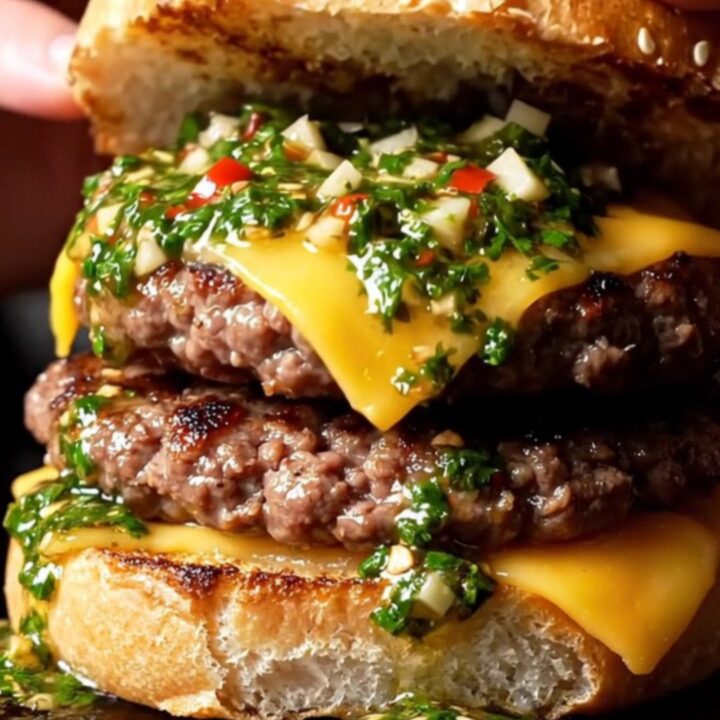
- Set the two smash patties on the bottom half of the roll, overlapping slightly, then lay the crispy provolone rounds on top so they drape over the beef. The residual heat softens the cheese just enough to hug the patties while the crusty edges stay snappy, which is exactly the contrast this burger is built on.
- Spoon the chimichurri generously over the provolone and patties, letting it run down the sides, then cap with the top of the roll. Serve immediately, with any extra sauce in a small bowl alongside for dipping. Bite in while the cheese is still crackling and the herb sauce is at its brightest and greenest.
Estimated nutrition per serving
- Calories
- 1560
- Protein
- 55 g
- Carbohydrates
- 40 g
- Fat
- 130 g
Next recipe
Texas Toast Patty Melt with Pulled Pork and Mac and Cheese
See the recipe → →This recipe is based on a short cooking video and is published under the pen name Clara Weller. It was checked before publication, but errors can slip through. Nutrition, when shown, is an estimate. Read more in our editorial policy and on our food safety page.
More recipes to try
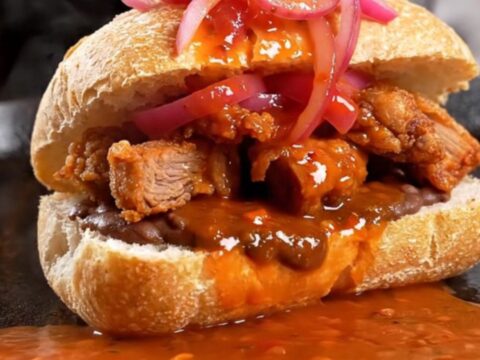
Torta Ahogada: Guadalajara's Drowned Pork Sandwich
Total time: 40 min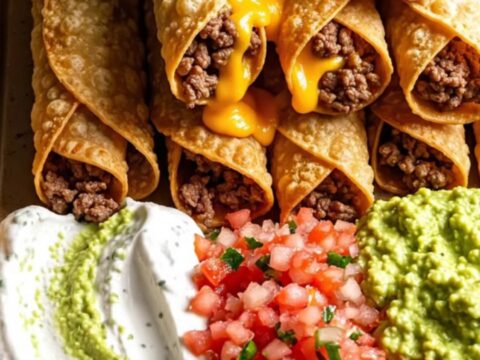
Sheet-Pan Beef and Cheddar Taquitos for a Fast Family Dinner
Total time: 38 min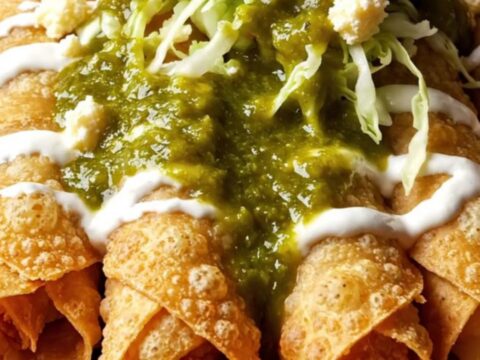
Crispy Potato Flautas Ahogadas Ready in 40 Minutes
Total time: 40 min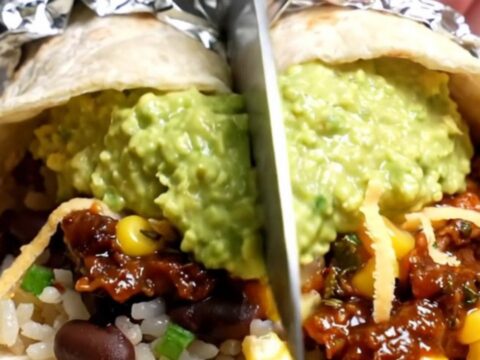
Copycat Chipotle Barbacoa Burrito with Double Meat
Total time: 4 h 10 min
Waffle Iron Quesadilla with Crispy Golden Pockets
Total time: 18 min