Dinner · Part 1 of 3: Ingredients
Crispy Potato Flautas Ahogadas Ready in 40 Minutes
- Prep
- Cook
- Total
- Serves
- 4
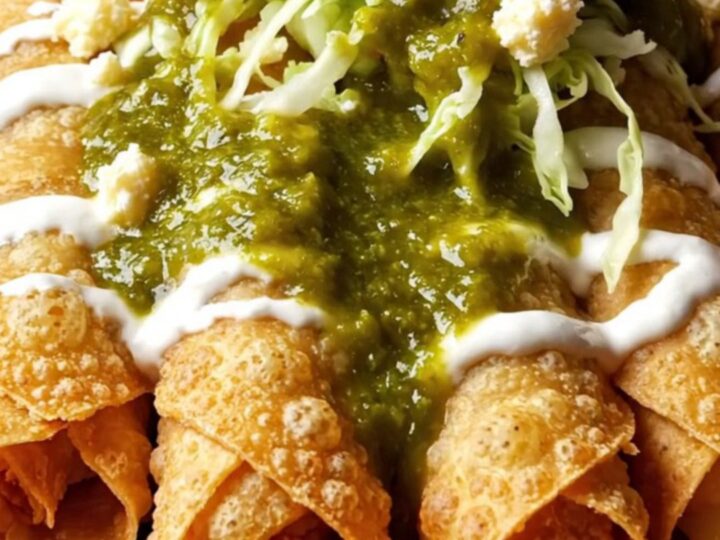
Crispy potato flautas drowned in green salsa and Mexican crema — this is Guadalajara street food at its loudest and its best.
Mashed garlic potatoes and stretchy Oaxaca cheese get rolled tight into corn tortillas, fried until they blister golden and rigid, then flooded with tangy tomatillo salsa, cool crema, crunchy cabbage and salty cotija. Eight flutes, one skillet, about forty minutes, and every bite crackles before it drowns.
Flautas ahogadas are the drowned cousins of everyday flautas: the same tight corn-tortilla flutes, fried hard, then deliberately soaked in salsa so the outside softens just enough while the interior stays crisp. This version stuffs them with mashed russet potatoes and shredded Oaxaca cheese, a filling that is creamy, garlicky and wonderfully stretchy when hot.
The method is simple and forgiving — boil, mash, roll, fry — and the payoff looks far more dramatic than the effort involved. Serve four flautas per person as a main, or split them smaller as a party appetizer. The whole thing comes together in one pot and one skillet, and the toppings do the final seasoning, so the base recipe stays clean and lets the salsa verde, crema and cotija do the talking.
Ingredients
Filling
- 3 russet potatoes, boiled and peeled
- 2 tbsp unsalted butter
- 1 tsp garlic salt
- 1 1/2 cups shredded Oaxaca cheese
Assembly
- 8 long corn tortillas
Frying
- 1/2 inches corn oil, for frying
Toppings
- 1 cup green tomatillo salsa, for drenching
- 1/4 cup Mexican crema
- Shredded cabbage, for serving
- Crumbled cotija, for serving
Why this recipe works
The method works because the filling is built dry enough to survive frying. Russet potatoes are starchy and low in moisture, so the mash holds its shape instead of weeping into the tortilla.
Folding in the cheese after the mash cools slightly keeps the shreds whole, and a tight roll with a toothpick through the seam locks everything in. When the flute hits 375°F oil, the starch on the tortilla surface blisters and sets almost immediately, forming a rigid shell that resists the filling's steam instead of going soggy.
The shallow 1/2 inch of oil is deliberate: deep enough to fry the underside properly, shallow enough to flip with tongs and manage the temperature. Corn oil holds 375°F steadily and adds the faintly sweet, corn-forward note that Mexican street frying is known for. Three minutes per batch is exactly long enough to drive off surface moisture and set the shell without drying the potato inside.
Notes and substitutions
Oaxaca cheese is a stretchy, stringy Mexican cheese sold in balls; pull it apart into shreds by hand along its natural fibers, or buy it pre-shredded. If the market does not carry it, whole-milk mozzarella is the standard substitute.
Mexican crema is pourable and slightly tangy, thinner than sour cream; thin sour cream with a little cream if needed. The tomatillo salsa can be store-bought or homemade — a bright, moderately spicy verde is what you want, since it carries most of the flavor.
Use a heavy skillet, ideally cast iron, so the oil temperature does not swing when the flautas go in. A clip-on thermometer takes the guesswork out of 375°F. Choose corn tortillas that are fresh and pliable; older ones crack when rolled. Long, wide tortillas make longer flutes, which is the point of the name. Keep toothpicks on hand and warn diners that each flute holds one.
- Oaxaca cheese: Whole-milk mozzarella shredded from a low-moisture block melts the same stretchy way; add a pinch of salt to match Oaxaca's light brine.
- Mexican crema: Stir together sour cream with a tablespoon of heavy cream and a squeeze of lime until it drizzles easily off a spoon.
- Cotija: Feta is the closest salty, crumbly stand-in; rinse it briefly and pat dry to soften the saltiness.
- Corn oil: Any neutral oil with a high smoke point works, such as canola or vegetable oil; keep the depth at 1/2 inch.
Equipment
- Large pot
- Potato masher
- Toothpicks
- Large heavy skillet
- Spider or tongs
- Paper towels
- Shallow serving platter
Up next · Part 2 of 3
8 steps · 15 min of cooking · what to look for at each stage
Step-by-step instructions (Part 2)