Dinner · Part 2 of 3: Instructions
Crispy Potato Flautas Ahogadas Ready in 40 Minutes Step-by-step instructions
- Prep
- Cook
- Total
- Serves
- 4
Before you start
Set up everything before the oil heats, because frying moves fast. Peel and chunk the potatoes and get them boiling first — that is the longest step. While they cook, shred the Oaxaca cheese, crumble the cotija, shred the cabbage, and measure the salsa and crema so the finishing toppings are ready to pour the second the flautas come out of the oil. Line a tray with paper towels for draining and set out toothpicks within reach. Warm the corn tortillas briefly so they roll without cracking, and put a clip-on thermometer on the skillet rim.
Ingredients at a glance (10)
- 3 russet potatoes, boiled and peeled
- 2 tbsp unsalted butter
- 1 tsp garlic salt
- 1 1/2 cups shredded Oaxaca cheese
- 8 long corn tortillas
- 1/2 inches corn oil, for frying
- 1 cup green tomatillo salsa, for drenching
- 1/4 cup Mexican crema
- Shredded cabbage, for serving
- Crumbled cotija, for serving
Instructions
Boil, mash and cheese the filling
- Boil the potatoesPeel the russet potatoes and cut them into even 2-inch chunks so they cook at the same rate. Drop them into a large pot of cold, generously salted water, bring it to a boil, and cook until a paring knife slides into the center with no resistance, about 15 minutes. Drain them well and let the steam escape for a minute.Look for A knife slides through the largest chunk with zero drag and the edges look slightly crumbly.Tip Starting in cold water cooks the potatoes evenly; starting hot leaves hard cores wrapped in waterlogged outsides.
- Mash with butter and garlic saltReturn the hot, drained potatoes to the pot off the heat. Add the butter and garlic salt, then mash until completely smooth with no lumps left; the residual heat melts the butter evenly through the mash. Taste and adjust the salt only if needed, remembering that the cheese, salsa and cotija all add saltiness later.Look for The mash pulls away smooth and glossy, holding soft peaks off the masher.Tip A ricer gives the smoothest mash, but a sturdy masher and thirty extra seconds get you there too.
The potatoes are cooked through when a paring knife slides into the largest chunk with no resistance, and the pot smells faintly starchy and sweet. After mashing with butter and garlic salt, the filling should be completely smooth, glossy and thick enough to hold soft peaks — never watery.
Fold in the Oaxaca cheese only after the mash has cooled about five minutes, so the shreds stay visible in the mixture. Taste now, lightly: the final dish gets salt from the salsa and cotija, so the filling should taste just barely seasoned on its own. If anything is lumpy or wet, fix it before rolling; a loose filling is the one thing this recipe cannot survive.
Roll tight, fry hard at 375°F
- Fold in the Oaxaca cheeseLet the mash cool for about 5 minutes so the heat does not melt the cheese into strings before rolling. Fold in the shredded Oaxaca cheese with a few strokes, just until distributed; overmixing breaks the shreds down and makes the filling gummy. The mixture should be thick enough to hold its shape on a spoon.Look for Cheese shreds stay visible in a thick, scoopable filling that does not slump.Tip Cooling first keeps the shreds intact, so each bite pulls with melted cheese instead of blending invisibly.
- Roll and secure the flautasSpoon a generous line of filling down the center of each corn tortilla and roll it tightly into a long flute. Secure each one with a toothpick pushed straight through the seam so it cannot unroll in the oil. Lay the finished flutes seam-side down on a tray while the oil heats.Look for Each flute feels firm and closed, with the seam pinned shut by a single toothpick.Tip Warm the tortillas for 10 seconds in the microwave first so they bend without cracking at the edges.
- Heat the oil to 375°FPour corn oil into a large heavy skillet to a depth of 1/2 inch and set it over medium-high heat. Bring it to 375°F (190°C), checking with a clip-on or candy thermometer. Keep the temperature steady by adjusting the flame; oil that drifts cooler soaks into the tortillas instead of crisping them.Look for The oil shimmers and a breadcrumb dropped in sizzles instantly and rises in a second.Tip Fry in a cast-iron skillet if available; it holds 375°F steady even when cold flautas go in.
- Fry until golden and rigidLower the flautas into the hot oil in a single layer, working in batches so they never crowd. Fry for about 3 minutes per batch, turning once, until deep golden, blistered and rigid like crispy flutes. Lift them out with a spider and drain on paper towels while the next batch fries.Look for Deep golden blisters all over, and the flute feels hard and hollow when tapped with tongs.Tip Listen for a loud, steady sizzle; a quiet pan means the oil dropped and the tortillas are absorbing oil.
Every flute is rolled tight, toothpinned and pale before it hits the shimmering 375°F oil. Listen for a loud, steady sizzle the moment each one goes in; that sound is the surface water flashing to steam and the shell setting. After about three minutes, turning once, the flautas are deep golden, blistered all over and rigid like crispy flutes — tap one with tongs and it should knock rather than bend. Drain on paper towels and let them sit a minute; the shell firms further as it cools. Before moving on, check that no flute is pale or leathery; under-fried flautas cannot stand up to the salsa.
Drown, drizzle and serve fast
- Drown in salsa and cremaArrange the fried flautas on a shallow platter and pour the green tomatillo salsa over them so every flute is thoroughly drenched. Drizzle the Mexican crema in thin ribbons across the top, letting it pool into the salsa. Work quickly so the flautas stay crackly under the sauce.Look for Every flute is coated, with green salsa pooling shallowly around the base of the platter.Tip Warm the salsa briefly before pouring so it does not cool the crisp tortillas on contact.
- Top with cabbage and cotijaScatter shredded cabbage generously over the sauced flautas, then finish with a heavy snowfall of crumbled cotija. Serve immediately, straight from the platter, with extra salsa on the side for anyone who wants their flautas truly ahogadas. Hand out forks; the crisp-then-sauced texture demands fast eating.Look for Cool cabbage and white cheese crumbles contrast against the green-slicked golden flutes.Tip Dress the cabbage with a pinch of salt and a squeeze of lime for a brighter crunch against the rich filling.
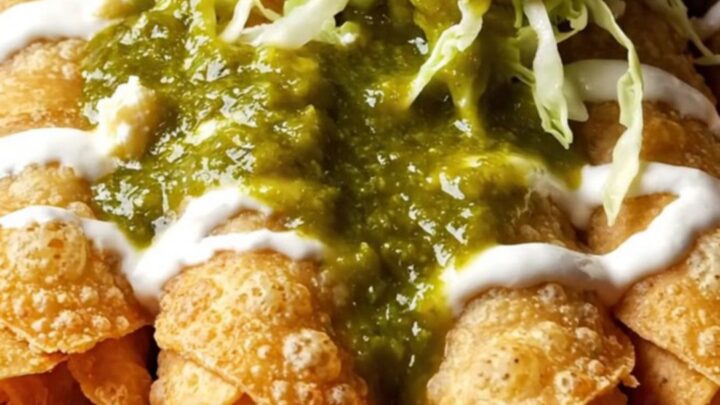
The platter now looks like the street-cart version: golden flutes submerged in bright green tomatillo salsa, streaked with ribbons of Mexican crema, crowned with cool shredded cabbage and a snowfall of crumbled cotija. The salsa should pool shallowly around the flautas so each one is coated but the tops still show texture.
Serve within minutes — the whole appeal is biting into a shell that still crackles before the salsa softens it. Check that every flute got salsa and cheese; a dry flauta on the edge of the platter is a missed opportunity. Hand out forks and warn about the toothpicks before anyone digs in.
Common mistakes
The most common failure is oil that is too cool: below about 350°F, the tortillas drink oil and turn greasy instead of blistering, so use a thermometer and fry in small batches that barely lower the temperature. The second mistake is overfilling; a fat line of potato squeezes out through the seam and burns in the oil.
Roll thin, tight cylinders and pin the seam with a toothpick. Cold tortillas crack when they bend, so warm them first. Do not skip draining on paper towels, and do not drown the flautas minutes before serving — the salsa is poured at the table, right before eating, or the crisp shell you worked for dissolves.
How to tell it’s done
A finished flauta is deep golden with raised blisters across the whole surface, feels rigid and hollow when tapped with tongs, and sounds loud and crackly under a fork before the salsa goes on. Inside, the potato filling is hot and creamy with visible strands of melted Oaxaca; the cheese should be fully melted and the filling steaming.
There is no raw protein in this recipe, so there is no internal temperature to chase — the visual and sound cues are the standard. After drowning, the flautas should still offer resistance on the first bite, softening at the edges but never collapsing into mush.
Up next · Part 3 of 3
4 variations · storage & make-ahead · 5 answers · printable card
Tips, FAQ & printable recipe (Part 3)← Back to the ingredients (Part 1)