Desserts · Part 3 of 3: Tips & recipe card
White Chocolate Mango Bark with Coconut and Nuts Tips, FAQ & printable recipe
- Prep
- Cook
- Total
- Serves
- 12
Tips for success
Work quickly once the chocolate is melted. White chocolate begins to set at room temperature, so spreading, swirling and topping should happen in one continuous motion. If the chocolate starts to thicken before you finish, gently warm it for a few seconds in the microwave and stir it smooth again before spreading the rest.
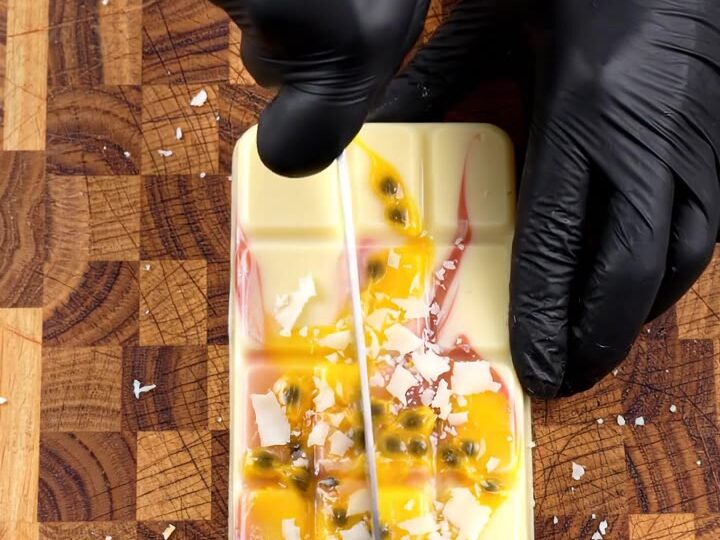
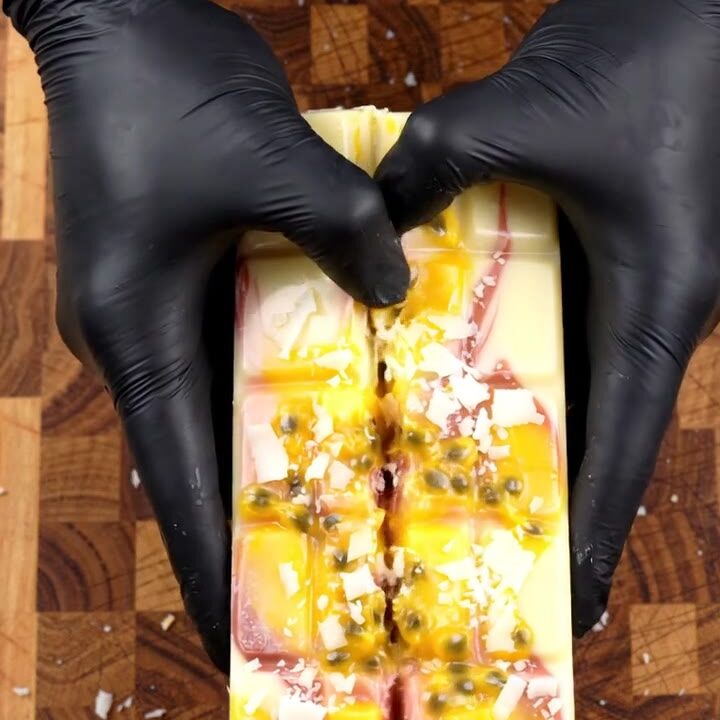
Cut the bark when it is very cold for the cleanest edges. Chill the slab for a few minutes in the refrigerator before slicing, then wipe the cleaver-style knife between cuts. Cutting lengthwise first and then crosswise gives you rectangular bars of even size, and a sharp knife keeps the marbled pattern intact on every piece.
Variations
- Dark chocolate version: Swap the white chocolate for dark chocolate and keep the mango swirl and nut topping. The bitter cocoa contrasts with the bright fruit, giving a more intense, grown-up bark that still shows the orange marbling clearly against the darker base.
- Macadamia and pistachio mix: Replace the almonds and cashews with chopped macadamia nuts and pistachios for a different crunch and color. Macadamias add a buttery richness, while pistachios bring a green accent that pairs nicely with the orange mango streaks and white chocolate.
- Lime zest finish: Add finely grated lime zest to the melted white chocolate or sprinkle it over the topping before the bark sets. The citrus brightens the tropical flavors and sharpens the sweetness of the white chocolate without changing the basic method.
- Apricot swirl: Use apricot purée in place of mango for a softer, more floral marbling. The orange streaks look similar, and the bark keeps the same structure, making it a good option when fresh or dried mango is hard to find at the store.
Storage and make-ahead
- Fridge
- Refrigerate the bark in an airtight container for up to one week, layers separated by parchment, to keep the chocolate firm and the mango color bright.
- Freezer
- The bark can be frozen in an airtight container with parchment between layers for up to one month.
- Reheat
- Bark is served cold or at cool room temperature and does not need reheating. If the surface has softened, chill briefly until firm again before serving.
Store the bark in an airtight container at cool room temperature, away from heat and direct sunlight, with layers separated by parchment paper.
White chocolate can soften and bloom if it gets warm, so a cool pantry or a shelf away from the stove is ideal. Keep the passionfruit off the bark until you serve, because its moisture softens the chocolate and dulls the toppings over time.
Once it is sliced, store the bars in a single layer or with parchment between them to protect the surface and keep the nuts and coconut from shifting. Use the bars within a week for the best texture and bright mango color, since the fruit flavor fades gradually over time.
You can make the bark a day or two before serving, which makes it an easy dessert for a gathering. Prepare the slab completely, let it set firm, and store it in a sealed container in a cool place. Wait to add the fresh passionfruit pulp until just before serving so it stays bright and does not soften the chocolate.
Slice the bars just before serving for the cleanest edges, or slice them ahead and keep them in an airtight container. Make-ahead bark keeps its texture well, and the marbled pattern holds if the slab is not disturbed while it sets and is handled gently when lifted from the tray.
Serving ideas
Serve the bark at cool room temperature or lightly chilled, arranged on a board or platter so the marbled pattern and bright toppings show clearly. Add a spoonful of passionfruit pulp and seeds to each bar just before guests arrive, and sprinkle a few toasted coconut flakes over the top for color and crunch.
The bars pair well with black coffee or unsweetened iced tea, whose bitterness balances the sweetness of the white chocolate and the tropical fruit.
For a relaxed dessert table, stack the bars in small clusters on a platter and leave a few whole nuts and coconut flakes in a bowl nearby so guests can add more toppings if they like. Because the bark is rich, small pieces are enough, and the rectangular bars are easy to pick up with the fingers, which makes them a practical choice for buffets, parties and casual gatherings.
Frequently asked questions
Can this white chocolate bark be made ahead?
Why does the white chocolate look grainy after melting?
Why are your mango streaks blurry instead of bright and clear?
Can you use chocolate chips instead of white chocolate bars?
How do you cut the bark into neat, even bars?
White Chocolate Mango Bark with Coconut and Nuts
Ingredients
- 1/2 cup whole almonds, chopped
- 1/2 cup raw cashews, chopped
- 1/2 cup dried mango pieces, chopped
- 1/2 cup unsweetened shredded coconut, divided
- 12 oz white chocolate bars, grated and melted
- 1/3 cup mango purée
- 2 passionfruit, pulp and seeds
- 2 tbsp toasted coconut flakes
Instructions
- Using a large knife on a wooden board, chop the almonds, cashews and dried mango pieces into small, even bits. Transfer them to a bowl and mix in half of the shredded coconut so the pieces are evenly distributed.
- Grate the white chocolate bars on a box grater over the board, letting the fine shavings and curls fall directly onto the board. Keep the grated chocolate separate from the nut mixture until you melt it.
- Place the grated white chocolate in a heatproof bowl and melt it in the microwave in 20-second bursts, stirring between each, or over barely simmering water. Stop heating when it is just a few lumps away from smooth.
- Line a metal tray with parchment paper and spread the melted white chocolate evenly across it. Drizzle the mango purée over the surface and swirl it through with a knife in a loose rippling pattern, leaving streaks of orange visible.
- Scatter the chopped nut and dried mango mixture over the chocolate while it is still soft, then sprinkle the remaining shredded coconut over the top. Press the toppings lightly so they stick.
- Leave the tray at cool room temperature or in the refrigerator until the chocolate is completely firm to the touch. Keep the tray level so the bark sets evenly without pooling at one end.
- Lift the parchment and slab onto the board. Cut the slab lengthwise and crosswise with a cleaver-style knife into rectangular bars. Top each bar with passionfruit pulp and seeds and toasted coconut flakes before serving.
Estimated nutrition per serving
- Calories
- 390
- Protein
- 5.5 g
- Carbohydrates
- 38 g
- Fat
- 24 g
- Fiber
- 2 g
- Sugar
- 33 g
- Sodium
- 60 mg
Next recipe
Cookies and Cream Dark Chocolate Oreo Cheesecake with Ganache Top
See the recipe → →This recipe is based on a short cooking video and is published under the pen name Clara Weller. It was checked before publication, but errors can slip through. Nutrition, when shown, is an estimate. Read more in our editorial policy and on our food safety page.
More recipes to try
Tropical Mango Passionfruit Puff Pastry Danish in 30 Minutes
Total time: 48 min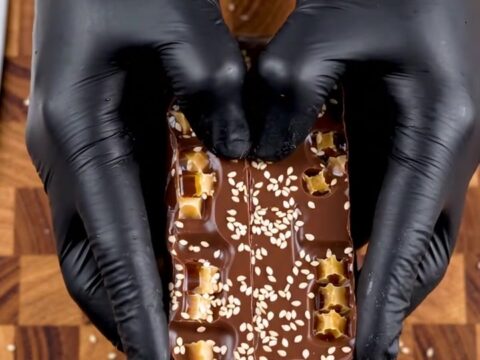
Honeycomb Sesame Dark Chocolate Bark, No-Bake and Ready in Under an Hour
Total time: 50 min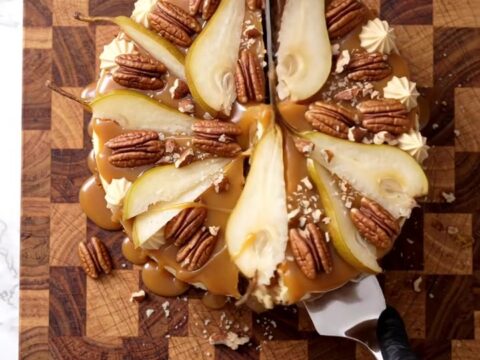
Chai Spiced Pear Cake with Salted Caramel Mascarpone Topping
Total time: 2 h 15 min
Chocolate Almond Braided Danish Ring with Flaky Puff Pastry
Total time: 1 h 10 min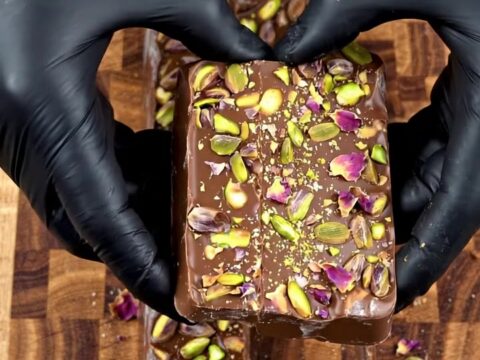
Pistachio Rose Milk Chocolate Bark with Cardamom and Nuts
Total time: 1 h 35 min