Desserts · Part 1 of 3: Ingredients
White Chocolate Mango Bark with Coconut and Nuts
- Prep
- Cook
- Total
- Serves
- 12
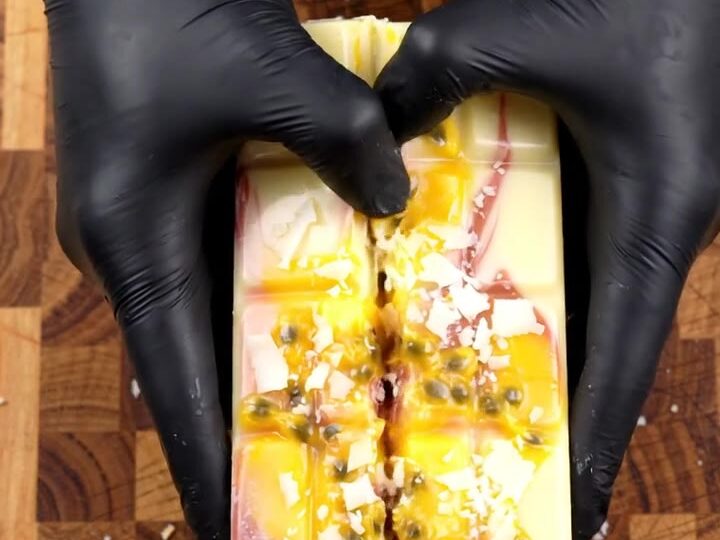
Picture a slab of creamy white chocolate streaked with bright orange mango, crowned with crunchy nuts, toasted coconut and tangy passionfruit. This bark needs no oven and no candy thermometer. Melt, swirl, scatter and chill, and you have a dessert that looks like a bakery display and cuts into neat bars in minutes.
This white chocolate bark brings together tropical flavors and crunchy textures in one easy tray. Chopped almonds, cashews and dried mango are mixed with shredded coconut, then folded into a pale base of melted white chocolate. A ribbon of mango purée is swirled through the surface, so each bar shows bright orange marbling against the cream.
Chopped nuts and coconut go on top, and a spoonful of passionfruit pulp finishes the bars just before they are served. The method is forgiving, the ingredients are easy to find in an American supermarket, and the bark sets firm enough to lift out and slice with a knife. It is a good choice when you want something impressive without turning on the oven.
Ingredients
- 1/2 cup whole almonds, chopped
- 1/2 cup raw cashews, chopped
- 1/2 cup dried mango pieces, chopped
- 1/2 cup unsweetened shredded coconut, divided
- 12 oz white chocolate bars, grated and melted
- 1/3 cup mango purée
- 2 passionfruit, pulp and seeds
- 2 tbsp toasted coconut flakes
Why this recipe works
White chocolate is mostly cocoa butter, milk solids and sugar, which makes it melt smoothly and then set into a firm, glossy slab when it cools. Grating the bars before melting is the key step: small shavings melt faster and more evenly than whole bars, so the chocolate becomes smooth without overheating. Working in short bursts and stirring between them keeps the chocolate glossy rather than grainy.
The mango purée works in a different way. It contains water and fruit sugars, so it does not blend fully into the fat of the chocolate. Instead it forms distinct streaks when swirled, creating the marbled look that makes this bark recognizable.
Because the purée is thick, it holds its shape, and a loose swirl with a knife gives you ribbons rather than a uniform pink or orange color. The toppings are added while the chocolate is still soft so they bond to the surface as it sets.
Notes and substitutions
Choose white chocolate bars or a good-quality white melting wafer rather than a waxy compound coating, because real white chocolate gives a creamier mouthfeel and a cleaner set.
Chopping the nuts and dried mango by hand creates varied pieces that look rustic on top of the bark, and a large chef's knife on a wooden board is ideal for this task. Use unsweetened shredded coconut for the mix and the top so the sweetness stays with the chocolate.
A metal baking tray lined with parchment paper gives the most even set and lets you lift the whole slab in one piece. A box grater is the simplest way to create the fine shavings that melt quickly. Keep a heatproof bowl and a microwave or double boiler nearby for melting. A cleaver-style knife cuts through the firm slab cleanly.
If you do not have a box grater, chop the bars very finely with a knife, though the texture will be slightly less smooth when melted. Substitutions such as macadamia nuts or pistachios work well for the cashews, and passionfruit pulp can be swapped for apricot purée if fresh passionfruit is not available.
- white chocolate bars: good-quality white chocolate chips or white melting wafers
- mango purée: thick passionfruit pulp or apricot purée
- raw cashews: macadamia nuts or pistachios
Equipment
- large chef's knife
- wooden cutting board
- box grater
- metal baking tray or sheet pan
- parchment paper
- heatproof bowl
- cleaver-style knife
- microwave or double boiler
Up next · Part 2 of 3
7 steps · 5 min of cooking · what to look for at each stage
Step-by-step instructions (Part 2)