Desserts · Part 2 of 3: Instructions
White Chocolate Mango Bark with Coconut and Nuts Step-by-step instructions
- Prep
- Cook
- Total
- Serves
- 12
Before you start
Gather everything before you melt the chocolate, because the bark sets quickly once it is spread. Line a metal tray with parchment paper so it lies flat with a little overhang for lifting. Chop the almonds, cashews and dried mango on a wooden board with a large knife, then place them in a bowl with half of the shredded coconut.
Chill the white chocolate bars for about 10 minutes so they grate cleanly on a box grater without smearing. Set out the mango purée, the remaining coconut, the toasted coconut flakes and the passionfruit so they are within reach. Clear a level spot in the refrigerator or a cool area of the counter for the tray, since the bark must rest without being moved.
Ingredients at a glance (8)
- 1/2 cup whole almonds, chopped
- 1/2 cup raw cashews, chopped
- 1/2 cup dried mango pieces, chopped
- 1/2 cup unsweetened shredded coconut, divided
- 12 oz white chocolate bars, grated and melted
- 1/3 cup mango purée
- 2 passionfruit, pulp and seeds
- 2 tbsp toasted coconut flakes
Instructions
Chop, grate and mix the base
- Chop the nuts and dried mangoUsing a large knife on a wooden board, chop the almonds, cashews and dried mango pieces into small, even bits. Transfer them to a bowl and mix in half of the shredded coconut so the pieces are evenly distributed.Look for Pieces should be small and uniform, with no large whole almonds left.Tip Chop on a damp towel under the board so it stays steady while you work.
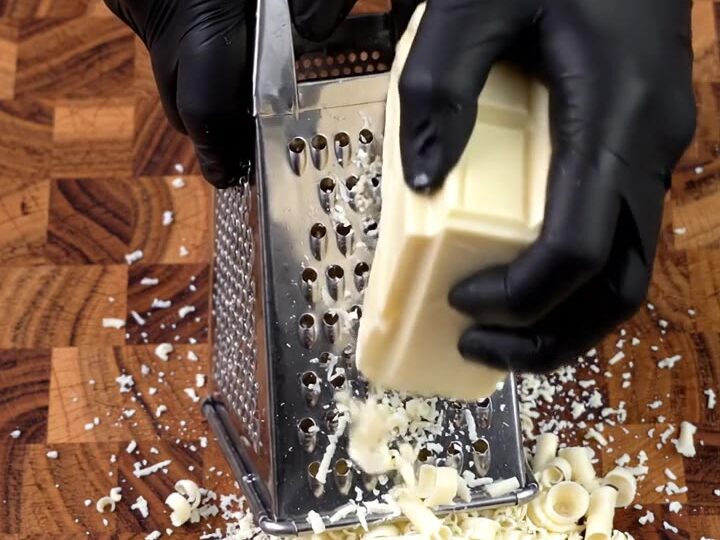
- Grate the white chocolateGrate the white chocolate bars on a box grater over the board, letting the fine shavings and curls fall directly onto the board. Keep the grated chocolate separate from the nut mixture until you melt it.Look for You should see fine shavings and soft curls of chocolate.Tip Chill the bars for 10 minutes first so they grate more cleanly and do not smear.
The chopped almonds, cashews and dried mango should be in small, even pieces, mixed with half the shredded coconut in a bowl. The grated white chocolate should be a pile of fine shavings and soft curls on the board, with no large lumps. Check that the nut and mango mixture is uniform and that the chocolate is finely grated, since big pieces melt unevenly and can make the bark grainy. Also confirm that the tray is lined and level before you move on to melting, because the chocolate will need to be spread quickly once it is ready and an unlined or tilted tray makes the set uneven.
Melt, spread and swirl
- Melt the white chocolatePlace the grated white chocolate in a heatproof bowl and melt it in the microwave in 20-second bursts, stirring between each, or over barely simmering water. Stop heating when it is just a few lumps away from smooth.Look for The chocolate should look glossy and flow easily when stirred.Tip Stir off the heat; residual warmth finishes the melting without scorching.
- Spread and swirl the mangoLine a metal tray with parchment paper and spread the melted white chocolate evenly across it. Drizzle the mango purée over the surface and swirl it through with a knife in a loose rippling pattern, leaving streaks of orange visible.Look for Bright orange streaks should marble through the pale chocolate base.Tip Fewer, longer swirls give cleaner marbling than repeated stirring.
- Scatter the toppingsScatter the chopped nut and dried mango mixture over the chocolate while it is still soft, then sprinkle the remaining shredded coconut over the top. Press the toppings lightly so they stick.Look for Toppings should sit on the surface and not sink out of sight.Tip Press gently with the back of a spoon so the pieces adhere as the bark sets.
The melted white chocolate should look smooth and glossy, flowing easily when you stir it, with no grainy or seized texture. When it is spread across the lined tray, it should cover the surface evenly with no thick spots. The mango purée should sit in distinct orange ribbons on top of the chocolate after a light swirl, not blended in completely. Before going on, check that the chocolate is not too hot to touch comfortably, as very hot chocolate can thin the purée and blur the marbling. Scatter the nut and coconut mixture while the surface is still soft so it adheres when the bark firms up.
Set, slice and finish
- Set the bark until firmLeave the tray at cool room temperature or in the refrigerator until the chocolate is completely firm to the touch. Keep the tray level so the bark sets evenly without pooling at one end.Look for The surface should feel dry and firm, and the slab should lift off the tray in one piece.Tip About 2 hours in the refrigerator gives a firm slab that cuts cleanly.
- Slice into barsLift the parchment and slab onto the board. Cut the slab lengthwise and crosswise with a cleaver-style knife into rectangular bars. Top each bar with passionfruit pulp and seeds and toasted coconut flakes before serving.Look for Bars should break cleanly with a neat edge and show the marbled pattern.Tip Wipe the knife between cuts for clean edges on every bar.
The bark should feel completely firm and dry to the touch, and the slab should lift away from the parchment in a single piece without bending. The marbled streaks should remain clear and bright, and the toppings should be fixed in place without falling off. When you cut, the edges should break cleanly, showing crisp layers of chocolate and nut.
Check that the slab is fully set before slicing, because a soft or warm bark will drag under the cleaver and smear the marbling. Once the bars are cut, add the passionfruit pulp and toasted coconut flakes just before serving so the topping stays fresh and bright.
Common mistakes
The most common mistake is overheating the white chocolate. White chocolate contains milk solids that can scorch or seize if heated too fast or too long, leaving a grainy, thick texture that will not spread smoothly. Melt it in short bursts and stir between them, and stop heating while a few lumps remain, since they will melt in the residual heat. Another frequent error is swirling the mango purée too much.
Repeated stirring blends the orange into the white, turning the bark a uniform pale color instead of showing ribbons. Use a knife in a few long, loose strokes. Adding the toppings after the chocolate has set means they will not stick, so scatter them while the surface is still soft. Finally, do not slice the slab before it is fully firm, as the bars will crack and drag.
How to tell it’s done
The bark is done when the chocolate is completely set, dry and firm to the touch, with no tackiness or softness when you press the surface lightly. The slab should lift off the parchment in one piece and break cleanly when cut. Visually, the mango streaks should be bright and distinct against the cream base, and the toppings should be fixed in place.
White chocolate is not a protein-based dish, so there is no meat or egg temperature to reach. For a precise check, the set is usually reached in about 2 hours in the refrigerator or longer at cool room temperature. If the surface still feels soft or the slab bends, give it more time before slicing.
Up next · Part 3 of 3
4 variations · storage & make-ahead · 5 answers · printable card
Tips, FAQ & printable recipe (Part 3)← Back to the ingredients (Part 1)