Desserts · Part 2 of 3: Instructions
Viral Whole-Lemon Blender Cake with Walnuts Step-by-step instructions
- Prep
- Cook
- Total
- Serves
- 10
Before you start
Before starting, wash the lemon thoroughly and pat it dry. Cut it into wedges, removing any seeds. Measure all ingredients accurately: three eggs, one cup of oil, one cup of milk, and one cup of sugar.
Have the flour, baking powder, and chopped toasted walnuts ready. Preheat the oven to 350°F (175°C) when you begin mixing. Grease and line a 9x5-inch loaf pan with parchment paper, leaving an overhang on two sides for easy removal.
Ingredients at a glance (10)
- 1 whole washed lemon, cut into wedges
- 3 large eggs
- 1 cup vegetable oil
- 1 cup whole milk
- 1 cup granulated sugar
- 2 1/2 cups all-purpose flour
- 2 tsp baking powder
- 1 cup chopped toasted walnuts
- 1 cup powdered sugar
- 2 tbsp fresh lemon juice
Instructions
Blend and Mix
- Blend the Lemon MixturePlace the washed lemon wedges, eggs, vegetable oil, whole milk, and granulated sugar in a blender. Blend on high for 2 minutes until the mixture is completely smooth and silky. The lemon should be fully pureed with no large pieces remaining. Stop the blender and scrape down the sides if needed, then blend again for a few seconds to ensure uniformity.Look for The mixture is pale yellow, smooth, and frothy with no visible lemon chunks.Tip Wash the lemon well before cutting; the entire lemon goes in, so remove any stickers or wax if possible.
- Mix the Dry IngredientsIn a large mixing bowl, whisk together the all-purpose flour and baking powder until well combined. Make a well in the center of the flour mixture. Pour the blended lemon mixture into the well. Use a rubber spatula to fold the wet and dry ingredients together just until no streaks of flour remain. Be careful not to overmix, as that can make the cake tough.Look for The batter is thick, smooth, and slightly lumpy from the walnuts after the next step.Tip Sift the flour and baking powder together for an even lighter crumb if desired.
- Fold in the WalnutsAdd the chopped toasted walnuts to the batter. Fold them in gently with the rubber spatula until they are evenly distributed throughout the batter. The batter will be thick but pourable. Do not overmix; fold just until the walnuts are incorporated. Set the batter aside while preparing the loaf pan.Look for Walnuts are speckled throughout the batter, which is thick and slightly glossy.Tip Toasting the walnuts beforehand deepens their flavor and keeps them crunchy in the baked cake.
The lemon mixture is silky, pale yellow, and frothy with no visible lemon pieces. The dry ingredients are whisked together, and when combined, the batter is thick, smooth, and speckled with walnuts.
It should be pourable but not runny. The batter smells brightly of lemon and nuts. Before moving on, ensure there are no dry flour pockets in the bowl.
Bake and Cool
- Prepare the Loaf PanHeat the oven to 350°F (175°C). Lightly grease a 9x5-inch loaf pan with butter or cooking spray. Line the pan with a strip of parchment paper that overhangs the two long sides, creating a sling for easy removal. The parchment should sit flush against the bottom and sides of the pan. Set the prepared pan aside.Look for The pan is greased and lined with parchment overhanging on two sides.Tip The parchment sling makes lifting the baked cake out of the pan effortless without damaging the crust.
- Bake the CakePour the batter into the prepared loaf pan and smooth the top with a spatula. Bake at 350°F (175°C) for 45 minutes, or until the cake is domed and golden brown on top. A toothpick inserted into the center should come out clean or with only a few moist crumbs attached. The internal temperature of the cake should read 200°F (93°C) in the center.Look for The cake is deeply golden, domed, and springs back when lightly pressed.Safe temperature 160°F (71°C) internal temperature (egg dishes)Tip If the top browns too quickly, tent the pan loosely with foil for the last 10 minutes of baking.
- Cool the Cake in the PanRemove the loaf pan from the oven and place it on a wire cooling rack. Let the cake cool in the pan for 10 minutes. This short rest allows the cake to set and makes it easier to remove without breaking. After 10 minutes, use the parchment sling to lift the cake out of the pan and transfer it to the cooling rack to cool completely.Look for The cake has pulled slightly away from the pan sides and feels firm to the touch.Tip Do not skip the in-pan cooling; it prevents the cake from crumbling when you lift it out.
The cake bakes into a tall, golden dome with a slightly crackly top. The kitchen fills with the aroma of toasted lemon and walnuts. A toothpick inserted in the center comes out clean. After cooling in the pan for 10 minutes, the cake lifts out easily and feels firm but springy. It is ready for glazing once it is warm, not hot.
Glaze and Finish
- Make the Lemon GlazeIn a small bowl, whisk together the powdered sugar and fresh lemon juice until smooth. The glaze should be thick but pourable. If it is too thick, add a few more drops of lemon juice; if too thin, add a little more powdered sugar. The glaze should coat the back of a spoon and slowly drip off.Look for The glaze is glossy, smooth, and falls off the spoon in a thick ribbon.Tip Use freshly squeezed lemon juice for the brightest flavor and a perfectly smooth glaze.
- Glaze the Warm CakeWhile the cake is still warm (but not hot), pour the glaze evenly over the top. Use a spoon or offset spatula to spread it gently to the edges, allowing it to drip down the sides. The warmth of the cake will help the glaze set into a glossy, crackly crust. Let the cake cool completely on the rack before slicing.Look for The glaze forms a white, crackly shell over the golden crust with some dripping down the sides.Tip Glazing while warm helps the glaze soak slightly into the crust, creating a delicate shell.
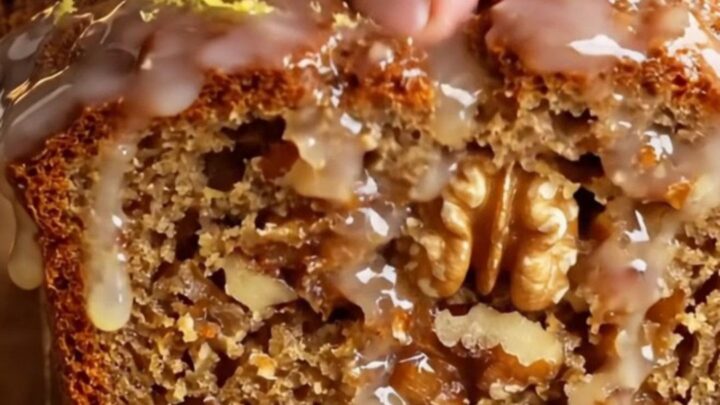
The glaze pours over the warm cake in a thick, glossy ribbon, then sets into a crackly white shell. Some glaze drips down the sides, creating a beautiful contrast with the golden crust. The cake is fully cool before slicing, revealing a moist, tender crumb with visible walnuts. The glaze is set but not hard, and each slice holds together cleanly.
Common mistakes
Overmixing the batter after adding the flour can develop gluten and make the cake tough. Blend the lemon mixture thoroughly until completely smooth; any large lemon pieces will create bitter, chewy spots.
If the cake is underbaked, the center will sink and be gummy. Always test with a toothpick and check the internal temperature. Adding too much glaze while the cake is too hot can make it slide off; let the cake cool for 10 minutes before glazing.
How to tell it’s done
The cake is done when it is deeply golden brown, domed on top, and a toothpick inserted into the center comes out clean or with a few moist crumbs attached. The internal temperature should register 200°F (93°C) in the center.
The top should spring back when lightly pressed. If the cake is browning too quickly, tent it with foil for the last 10 minutes. Let it cool in the pan for 10 minutes before lifting it out.
- Egg dishes: 160°F (71°C) in the thickest part
Up next · Part 3 of 3
4 variations · storage & make-ahead · 5 answers · printable card
Tips, FAQ & printable recipe (Part 3)← Back to the ingredients (Part 1)