Breakfast · Part 2 of 3: Instructions
Two-Tone Chocolate Croissant Buns: Easy French-Style Pastry Step-by-step instructions
- Prep
- Cook
- Total
- Serves
- 12
Before you start
Before starting, make sure all ingredients are at room temperature. Warm the milk and water to about 110°F (43°C) – it should feel warm but not hot to the touch. Dissolve the yeast in the warm liquid with the sugar and let it foam for 5 minutes.
This ensures the yeast is active. Have a clean work surface ready, lightly floured. Prepare a baking sheet with parchment paper. Melt the butter and set aside. If using a stand mixer, fit it with the dough hook; otherwise, a large bowl and a sturdy spoon work just as well.
Ingredients at a glance (11)
- 1 cup warm milk
- 1 cup warm water
- 1/2 cup vegetable oil
- 1 tbsp active dry yeast
- 3 tbsp granulated sugar
- 4 cups all-purpose flour
- 3 tbsp dark Dutch cocoa powder
- 2 tbsp milk
- 1/4 cup unsalted butter, melted
- 1 egg, beaten (for egg wash)
- 1/4 cup simple sugar syrup
Instructions
Making the Dough
- Make the DoughIn a large bowl, whisk together the warm milk, warm water, oil, yeast, and sugar. Let stand for 5 minutes until foamy. Gradually add the flour, stirring until a soft dough forms. Turn out onto a floured surface and knead for 5-7 minutes until smooth and elastic. Place in a greased bowl, cover, and let rest for 10 minutes.Look for The dough should be soft, slightly sticky, and elastic.Tip If the dough is too sticky, add a little more flour, a tablespoon at a time.
- Divide and Color the DoughDivide the dough into two equal parts. Keep one part plain. To the other part, add the cocoa powder and the 2 tablespoons of milk. Knead until the cocoa is fully incorporated and the dough is a deep chocolate color. If the dough becomes too dry, add a splash more milk.Look for The chocolate dough should be uniform in color and as soft as the plain dough.Tip Use your hands to really work the cocoa in for an even color.
- Roll and Stack the DoughsOn a lightly floured surface, roll out the white dough into a thin wide rectangle. Roll out the chocolate dough into a similar rectangle. Carefully place the chocolate sheet directly over the white sheet. Use a rolling pin to press them together gently. Brush the top with a little of the melted butter.Look for The two layers should be firmly adhered without air pockets.Tip Roll the stacked dough gently to seal without stretching too much.
At the end of this phase, you should have a soft, smooth dough that is slightly tacky but not sticky. The chocolate dough should be evenly colored and as pliable as the white dough. When you stack and roll them together, the layers should adhere without air pockets. The dough should feel springy and hold its shape when pressed.
Shaping and Proofing
- Cut into TrianglesUsing a pizza cutter or sharp knife, slice the stacked sheet into long slender triangles. You should get about 12 triangles, depending on the size of your rectangle. Make sure the cuts are clean for neat spirals.Look for Each triangle should be long and narrow, about 4-5 inches wide at the base.Tip Dip the cutter in flour if it sticks to the dough.
- Roll the CroissantsStarting from the wide base of each triangle, roll the dough up tightly toward the pointy tip. Tuck the tip underneath the bun to secure it. Place the buns on a baking sheet lined with parchment paper, leaving space between them.Look for The spirals should be tight and the tips tucked underneath.Tip Roll gently but firmly to get defined layers.
- Proof the BunsCover the baking sheet with a clean kitchen towel and let the buns proof in a warm place for 20 minutes, or until they have doubled in size. They should look puffy and slightly spring back when gently pressed.Look for The buns should be noticeably larger and airy.Tip A warm spot near the oven works well for proofing.
The triangles should be cleanly cut and the rolled buns should have tight, even spirals. After proofing, the buns should have doubled in size and look puffy and airy.
They should feel light when lifted and spring back slowly when gently pressed. The proofing time may vary depending on the warmth of your kitchen, so keep an eye on them.
Baking and Glazing
- Brush with Egg WashPreheat the oven to 360°F (182°C). Gently brush the proofed buns with the beaten egg, being careful not to deflate them. This will give them a golden, shiny crust.Look for The buns should be evenly coated with egg wash.Tip Use a light hand to avoid deflating the proofed dough.
- Bake the BunsBake the buns in the preheated oven for 22 minutes, until they are puffed and deep golden brown. The internal temperature should register 160°F (71°C) to ensure the egg wash is fully cooked. If the tops brown too quickly, loosely cover with foil.Look for The buns should be puffed, golden, and sound hollow when tapped.Safe temperature 160°F (71°C) internal temperature (egg dishes)Tip Rotate the baking sheet halfway through for even browning.
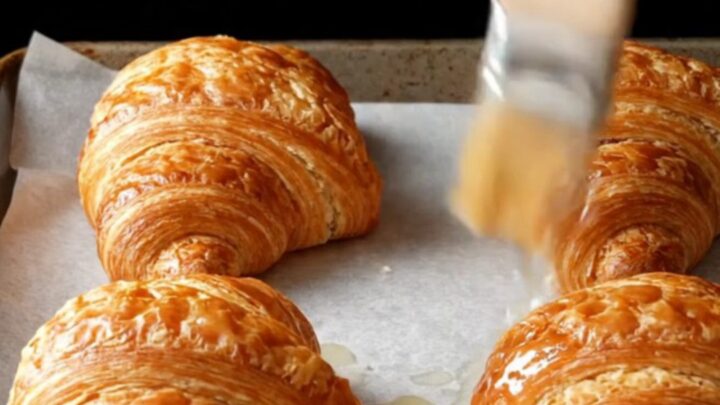
- Glaze and CoolRemove the buns from the oven and immediately brush them with the simple sugar syrup. This gives them a beautiful mirror shine. Let the buns cool on the baking sheet for 5 minutes, then transfer to a wire rack to cool completely.Look for The syrup should create a glossy, shiny finish.Tip Brush the syrup while the buns are still warm so it soaks in slightly.
The buns should be puffed, deep golden brown, and glossy from the egg wash. The syrup should give them a mirror shine. When you pull one apart, the layers should separate into delicate, flaky spirals. The interior should be soft and tender, with the chocolate flavor well balanced by the sweet glaze.
Common mistakes
Common mistakes include not proofing the dough long enough, which results in dense buns. Make sure they double in size before baking. Overworking the dough can make it tough – knead just until smooth. When rolling the stacked dough, be gentle to avoid tearing the layers.
If the dough sticks, dust with flour, but not too much or the layers won't adhere. Forgetting the egg wash will leave the buns pale and less shiny. Finally, don't skip the syrup – it gives that professional gloss and a touch of sweetness.
How to tell it’s done
The buns are done when they are puffed, deep golden brown, and sound hollow when tapped on the bottom. The internal temperature should reach 160°F (71°C) to ensure the egg wash is fully cooked.
If you insert an instant-read thermometer into the center of a bun, it should read at least 160°F (71°C). Let them cool slightly before glazing with the syrup; they will firm up as they cool but remain soft inside. Overbaking can dry them out, so start checking at 20 minutes.
- Egg dishes: 160°F (71°C) in the thickest part
Up next · Part 3 of 3
4 variations · storage & make-ahead · 5 answers · printable card
Tips, FAQ & printable recipe (Part 3)← Back to the ingredients (Part 1)