Dinner · Part 3 of 3: Tips & recipe card
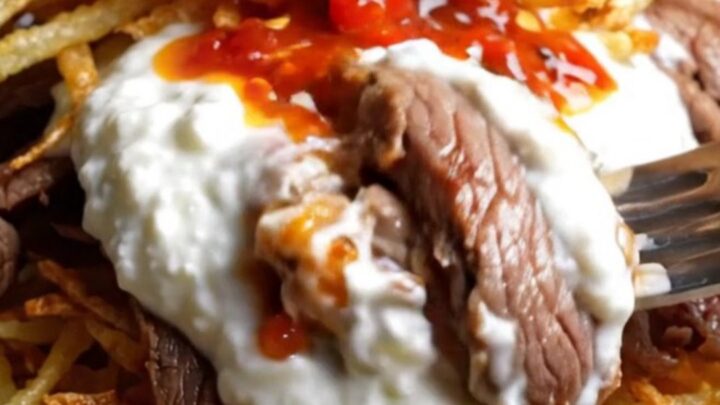
Turkish Çökertme Kebabı with Crispy Matchstick Potatoes Tips, FAQ & printable recipe
- Prep
- Cook
- Total
- Serves
- 4
Tips for success
For the crispiest potatoes, cut them as uniformly as possible – a mandoline with a julienne attachment is ideal. After soaking, dry them thoroughly in a clean kitchen towel, then let them air-dry for a few minutes.
Fry in small batches, keeping the oil at a steady 350°F (175°C). If the oil is too cool, the potatoes will absorb oil and become limp; if too hot, they will brown too quickly and remain soft inside.
The beef should be sliced very thin – about 1/8 to 1/4 inch – and against the grain. This ensures it cooks quickly and stays tender. When searing, don't move the beef around too much; let it develop a crust.
The tomato butter sauce is the finishing touch – make it in the same skillet to capture the beef's fond. Stir constantly over low heat to prevent burning, and pour it over the dish while still sizzling.
Variations
- Chicken Çökertme: Substitute chicken breast or thigh, sliced thin. Cook until the internal temperature reaches 165°F (74°C). The yogurt and sauce work equally well with poultry.
- Spicy Lamb Version: Use lamb leg or sirloin, sliced thin. Add an extra teaspoon of pul biber to the sauce for a more pronounced heat. Lamb pairs beautifully with the garlic yogurt.
- Vegetarian Option: Replace the beef with roasted eggplant slices or grilled mushrooms. Sear them in the skillet with butter and season well. The tomato butter sauce adds richness without meat.
- Herbed Yogurt: Stir chopped fresh mint or dill into the yogurt before spreading. This adds a fresh, bright note that complements the rich beef and spicy butter.
Storage and make-ahead
- Fridge
- Store leftover kebab in an airtight container in the refrigerator for up to 2 days. The potatoes will soften, but the flavors remain. Reheat gently.
- Freezer
- Freezing is not recommended as the potatoes and yogurt will become watery and lose texture. Best enjoyed fresh.
- Reheat
- To reheat, warm the beef and sauce in a skillet over medium heat. Serve with fresh yogurt and crispy potatoes if available.
Store leftover assembled kebab in an airtight container in the refrigerator for up to 2 days. The potatoes will lose their crispness, but the flavors will still be good.
To reheat, place the beef and sauce in a skillet over medium heat until warmed through, and serve with fresh yogurt and potatoes if you have them. For best texture, store the components separately: potatoes, yogurt, beef, and sauce in separate containers.
The components can be prepared ahead: fry the potatoes and store them in an airtight container at room temperature for a few hours, or reheat them in a 400°F (200°C) oven for a few minutes.
The beef can be seared and kept warm, but it is best served fresh. The yogurt can be whipped ahead and kept chilled. The tomato butter can be made in advance and reheated gently. Assemble just before serving to keep the potatoes crisp.
Serving ideas
Serve the kebab immediately after assembling, while the potatoes are still crisp and the sauce is sizzling. Use a wide platter so the layers are visible, and let guests scoop from the center. A simple green salad with lemon vinaigrette or a side of crusty bread complements the rich flavors. For a traditional touch, serve with a wedge of lemon and extra pul biber for those who want more heat.
This dish is best enjoyed as a main course, but it can also be served as a shared starter. The contrast of temperatures – hot potatoes, cool yogurt, warm beef – is part of its appeal. To drink, a cold glass of ayran (a yogurt-based drink) or a light red wine such as a Turkish Kalecik Karası works well. The kebab is hearty enough to satisfy, yet elegant enough for a special dinner.
Frequently asked questions
Can this dish be made ahead of time?
What is the best way to slice the beef into thin strips?
Can you use Greek yogurt instead of Turkish strained yogurt?
Why do your potatoes not get crispy?
What can you use instead of pul biber?
Turkish Çökertme Kebabı with Crispy Matchstick Potatoes
Ingredients
- 1 lb beef tenderloin, sliced into thin strips
- 3 medium russet potatoes, julienned into matchsticks
- 2 cups frying oil (such as vegetable or canola)
- 1 cup Turkish strained garlic yogurt
- 2 tbsp butter, divided
- 1 tbsp tomato paste
- 1 tsp pul biber chili flakes
- 1/2 tsp salt
- Black pepper, to taste
- Fresh parsley, chopped, for garnish, to taste
Instructions
- Julienne the potatoes into thin matchsticks, about 1/8 inch thick. Place them in a bowl of cold water and soak for 10 minutes. Drain and pat thoroughly dry with a clean kitchen towel. Season the beef strips with salt and black pepper. Set aside.
- Pour the frying oil into a large, heavy-bottomed pot. Heat over medium-high until it reaches 350°F (175°C). Use a kitchen thermometer to check the temperature.
- Working in batches, add a handful of potato matchsticks to the hot oil. Fry for 2 to 3 minutes, stirring occasionally, until golden and crisp. Remove with a slotted spoon and drain on paper towels. Season lightly with salt while warm.
- Heat a large skillet over high heat. Add 1 tablespoon of butter. When it sizzles, add the beef strips in a single layer. Sear for 1 to 2 minutes per side, until browned but still tender. Remove from the heat and let rest for at least 3 minutes.
- In the same skillet, reduce the heat to low. Add the remaining 1 tablespoon of butter, tomato paste, and pul biber. Stir constantly for 1 minute until the butter melts and the paste turns a deep red. Remove from heat.
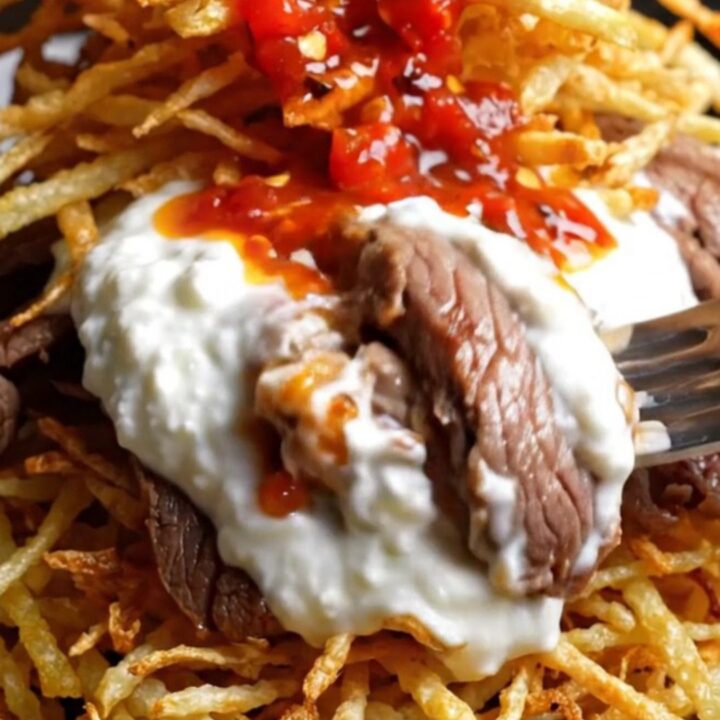
- Spread the crispy matchstick potatoes on a wide platter. Spoon the garlic yogurt over the center in a thick layer. Arrange the seared beef strips on top of the yogurt. Pour the sizzling tomato butter over the beef and potatoes. Garnish with chopped parsley.
Estimated nutrition per serving
- Calories
- 520
- Protein
- 28 g
- Carbohydrates
- 28 g
- Fat
- 33 g
Next recipe

Golden Crispy Chicken Caesar Wrap
See the recipe → →This recipe is based on a short cooking video and is published under the pen name Clara Weller. It was checked before publication, but errors can slip through. Nutrition, when shown, is an estimate. Read more in our editorial policy and on our food safety page.
More recipes to try

Creamy Garlic Butter Scallops with White Wine & Fresh Basil
Total time: 20 min
Creamy Garlic Butter Lobster Tails with Steamed Jasmine Rice
Total time: 20 min
Ultra-Crispy Salt and Pepper Smash Burgers with Secret Sauce
Total time: 40 min
Crispy Antakya Sheet Pan Kebab Dürüm: One-Pan Dinner
Total time: 55 min
Braised Stuffed Round Zucchini Bowls with Garlic Yogurt
Total time: 1 h 10 min