Breakfast · Part 3 of 3: Tips & recipe card
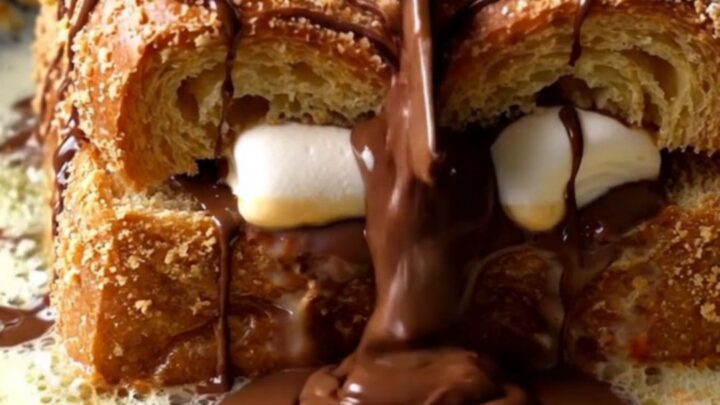
S’mores Stuffed Brioche French Toast with Melted Marshmallow & Milk Chocolate Tips, FAQ & printable recipe
- Prep
- Cook
- Total
- Serves
- 4
Tips for success
For the best results, use day-old brioche; it holds up better when dipped in custard and stuffed. If using fresh brioche, let it sit out for a few hours to slightly dry.
When cutting the pocket, use a serrated knife to avoid tearing the bread. Make the pocket wide enough to hold a generous amount of filling but not so large that it splits open. Press the edges together gently after stuffing to seal.
To keep the French toast warm while cooking in batches, place finished slices on a baking sheet in a 200°F (95°C) oven. If the chocolate syrup thickens, warm it in the microwave for a few seconds.
Serve with extra marshmallows or chocolate chips on the side for garnish. A sprinkle of sea salt can enhance the chocolate flavor. For a fun twist, add a few banana slices or strawberries to the filling.
Variations
- Peanut Butter S'mores: Spread a thin layer of peanut butter inside the pocket before adding the chocolate and marshmallows. The peanut butter adds a savory note and extra creaminess. Use peanut butter chips in addition to chocolate for a double dose of flavor.
- Berry S'mores: Add a few fresh raspberries or sliced strawberries to the filling along with the chocolate and marshmallows. The berries provide a tart contrast to the sweet chocolate and marshmallow. Cook as directed; the berries will soften and release their juices.
- Salted Caramel S'mores: Drizzle caramel sauce over the finished French toast instead of chocolate syrup, and sprinkle with flaky sea salt. The salt enhances the sweetness and adds a sophisticated touch. Use dark chocolate for a deeper flavor.
- Banana S'mores: Layer thin banana slices inside the pocket with the chocolate and marshmallows. The banana adds natural sweetness and a soft texture. Cook as directed; the banana will caramelize slightly, adding a delicious flavor.
Storage and make-ahead
- Fridge
- Store leftover French toast in an airtight container in the refrigerator for up to 3 days. Reheat in a toaster oven or skillet to restore crispness.
- Freezer
- Freeze cooked French toast in a single layer on a baking sheet, then transfer to a freezer-safe bag for up to 2 months.
- Reheat
- Reheat in a toaster oven or skillet over medium heat until warmed through and crisp. Avoid microwaving to prevent sogginess.
Store leftover French toast in an airtight container in the refrigerator for up to 3 days. Reheat in a toaster oven or skillet over medium heat until warmed through and crisp. Avoid microwaving, as it can make the bread soggy. The filling will re-melt when reheated.
The stuffed brioche can be assembled up to 4 hours ahead and kept in the refrigerator, covered, until ready to cook. The custard can also be prepared in advance and stored in the fridge. Dip and coat the bread just before cooking to prevent sogginess.
Serving ideas
Serve the S'mores Stuffed Brioche French Toast warm, straight from the skillet, with a generous drizzle of warm chocolate syrup and a dusting of powdered sugar.
For an extra indulgent touch, add a dollop of whipped cream or a scoop of vanilla ice cream. This dish is best enjoyed immediately, as the contrast between the crisp crust and the molten filling is at its peak.
Pair with a cup of strong coffee or a glass of cold milk to balance the richness. For a brunch spread, serve alongside fresh berries or a simple green salad to cut through the sweetness.
This French toast is a showstopper that will be the highlight of any breakfast or brunch table.
Frequently asked questions
Can this recipe be made gluten-free?
Can the French toast be made ahead and reheated?
What is the best way to cut the pocket in the brioche?
Can the custard be made without eggs?
How can the French toast be kept warm for a crowd?
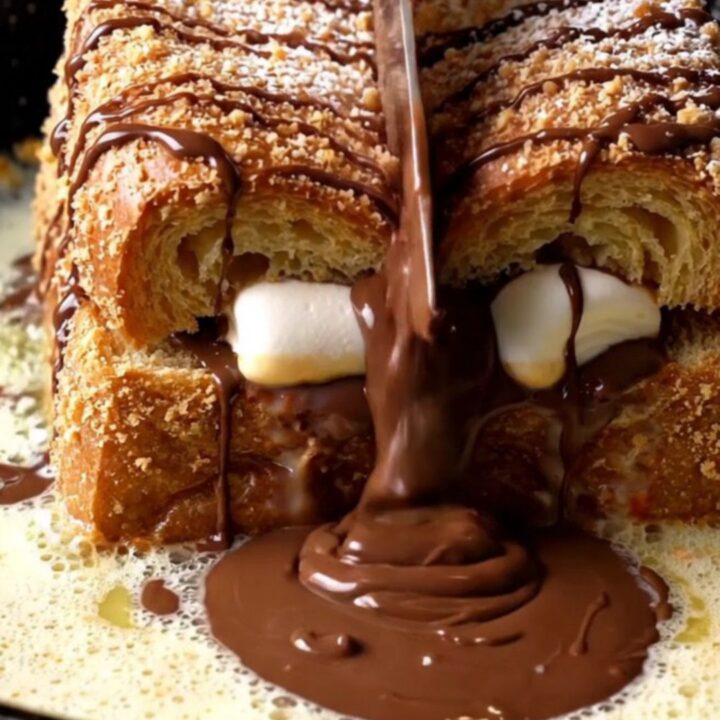
S'mores Stuffed Brioche French Toast with Melted Marshmallow & Milk Chocolate
Ingredients
- 4 thick slices brioche bread
- 4 oz milk chocolate chunks
- 1 1/2 cups fluffy marshmallows, halved
- 3 large eggs
- 1/2 cup whole milk
- 1 tsp vanilla extract
- 1 cup crushed graham cracker crumbs
- 3 tbsp unsalted butter
- Warm chocolate syrup, for serving
- Powdered sugar, for dusting, to taste
Instructions
- Using a sharp knife, cut a deep pocket into the side of each thick brioche slice, creating a generous slit without cutting all the way through. Stuff each pocket with milk chocolate chunks and halved fluffy marshmallows, pressing the filling in firmly so it stays sealed during cooking.
- In a shallow dish, whisk together the eggs, whole milk, and vanilla extract until fully combined and smooth. The mixture should be a uniform pale yellow with no streaks of egg white.
- Dip each stuffed brioche slice into the custard, turning to coat both sides and letting the excess drip off. Then press the flat sides of the slice into the crushed graham cracker crumbs, ensuring an even coating on both sides. Set the coated slices aside on a plate.
- Place a large skillet over medium heat and add the unsalted butter. Let the butter melt and foam until it sizzles but does not brown. Swirl the pan to coat the surface evenly.
- Carefully place the coated brioche slices in the skillet. Cook for 3 minutes per side, until golden brown and crisp on the outside and the marshmallow has melted inside. Adjust heat if needed to prevent over-browning.
- To ensure the eggs are fully set, insert an instant-read thermometer into the thickest part of the French toast; it should read at least 160°F (71°C). The outside should be crisp and golden, and the filling should be hot and melted.
- Transfer the cooked French toast to serving plates. Drizzle with warm chocolate syrup and dust generously with powdered sugar. Cut down the center to reveal the molten chocolate and marshmallow lava, and serve immediately.
Estimated nutrition per serving
- Calories
- 620
- Protein
- 18 g
- Carbohydrates
- 70 g
- Fat
- 30 g
Next recipe

Giant Stuffed Nutella Brioche French Toast with Strawberries
See the recipe → →This recipe is based on a short cooking video and is published under the pen name Clara Weller. It was checked before publication, but errors can slip through. Nutrition, when shown, is an estimate. Read more in our editorial policy and on our food safety page.
More recipes to try
Giant Crispy Churro French Toast with Dulce de Leche
Total time: 27 min
Crispy Nutella-Stuffed French Toast Roll-Ups
Total time: 19 min
Fluffy Turkish Açma Pastry Rings with Rich Butter
Total time: 2 h 25 min
Crispy Triangular Lavaş Breakfast Boat with Mozzarella and Egg
Total time: 20 min
Viral Triangular Lavaş Breakfast Pide Boat
Total time: 22 min