Breakfast · Part 2 of 3: Instructions
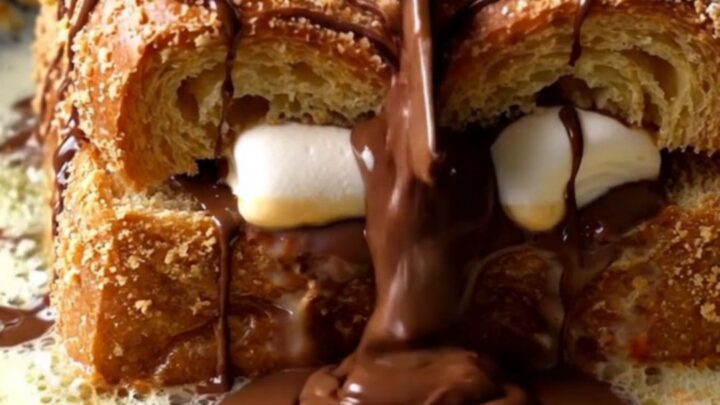
S’mores Stuffed Brioche French Toast with Melted Marshmallow & Milk Chocolate Step-by-step instructions
- Prep
- Cook
- Total
- Serves
- 4
Before you start
Before starting, gather all ingredients and equipment. Cut the brioche slices about 1 inch thick. Prepare the chocolate chunks and halve the marshmallows. In a shallow dish, whisk the eggs, milk, and vanilla until smooth.
Place the graham cracker crumbs in another shallow dish. Have the butter ready and a large skillet on hand. Preheat the skillet over medium heat while preparing the bread. This ensures a smooth workflow and even cooking.
Ingredients at a glance (10)
- 4 thick slices brioche bread
- 4 oz milk chocolate chunks
- 1 1/2 cups fluffy marshmallows, halved
- 3 large eggs
- 1/2 cup whole milk
- 1 tsp vanilla extract
- 1 cup crushed graham cracker crumbs
- 3 tbsp unsalted butter
- Warm chocolate syrup, for serving
- Powdered sugar, for dusting, to taste
Instructions
Prepare the Stuffed Bread
- Stuff the BriocheUsing a sharp knife, cut a deep pocket into the side of each thick brioche slice, creating a generous slit without cutting all the way through. Stuff each pocket with milk chocolate chunks and halved fluffy marshmallows, pressing the filling in firmly so it stays sealed during cooking.Look for The pocket should be deep enough to hold the filling without tearing the bread.Tip Cut the pocket from the top or side; avoid cutting through the bottom crust.
- Make the CustardIn a shallow dish, whisk together the eggs, whole milk, and vanilla extract until fully combined and smooth. The mixture should be a uniform pale yellow with no streaks of egg white.Look for The custard should be smooth and slightly thickened.Tip Use a wide dish so the brioche slices fit comfortably.
- Coat with Custard and CrumbsDip each stuffed brioche slice into the custard, turning to coat both sides and letting the excess drip off. Then press the flat sides of the slice into the crushed graham cracker crumbs, ensuring an even coating on both sides. Set the coated slices aside on a plate.Look for The bread should be moist but not soggy, with crumbs clinging evenly.Tip Press gently so the crumbs adhere without squeezing out the filling.
At this stage, the brioche slices should be neatly stuffed with chocolate and marshmallows, with the filling securely enclosed. The custard should be smooth and the graham crumbs evenly coated on the bread.
The slices should feel moist but not dripping. The kitchen should smell of vanilla and sweet bread. Check that the pockets are well sealed before moving to the skillet.
Cook Until Golden
- Heat the SkilletPlace a large skillet over medium heat and add the unsalted butter. Let the butter melt and foam until it sizzles but does not brown. Swirl the pan to coat the surface evenly.Look for The butter should be foaming and fragrant, not smoking.Tip Medium heat ensures the custard cooks through without burning the crust.
- Cook the French ToastCarefully place the coated brioche slices in the skillet. Cook for 3 minutes per side, until golden brown and crisp on the outside and the marshmallow has melted inside. Adjust heat if needed to prevent over-browning.Look for The crust should be deep golden and crisp; the filling should be molten.Safe temperature 160°F (71°C) internal temperature (egg dishes)Tip Use a spatula to gently press down on the slices to ensure even browning.
- Check for DonenessTo ensure the eggs are fully set, insert an instant-read thermometer into the thickest part of the French toast; it should read at least 160°F (71°C). The outside should be crisp and golden, and the filling should be hot and melted.Look for The internal temperature should reach 160°F (71°C).Safe temperature 160°F (71°C) internal temperature (egg dishes)Tip If the outside browns too quickly, lower the heat and cover the pan briefly.
During cooking, the French toast should sizzle gently in the butter, developing a golden-brown crust. The aroma of toasted brioche and melting chocolate fills the air. After 3 minutes per side, the exterior should be crisp and caramelized. The internal temperature should reach 160°F (71°C). The marshmallows should be fully melted, and the chocolate should be flowing.
Finish and Serve
- Finish and ServeTransfer the cooked French toast to serving plates. Drizzle with warm chocolate syrup and dust generously with powdered sugar. Cut down the center to reveal the molten chocolate and marshmallow lava, and serve immediately.Look for The center should be gooey and flowing when cut.Tip Warm the chocolate syrup slightly for easier drizzling.
Once cooked, the French toast should be plated and topped with warm chocolate syrup and powdered sugar. When cut, the center should release a stream of molten chocolate and marshmallow. The contrast between the crunchy graham crust and the gooey filling is the hallmark of success. Serve immediately to enjoy the full effect.
Common mistakes
One common mistake is cutting the pocket too shallow, causing the filling to leak out during cooking. Make sure the pocket is deep enough to hold the filling securely. Another mistake is oversoaking the bread in custard, which makes it soggy and difficult to cook.
Dip quickly and let excess drip off. Cooking over too high heat can burn the crust before the inside is done; maintain medium heat and adjust as needed. Pressing down on the French toast while cooking can help ensure even browning, but avoid squeezing out the filling.
How to tell it’s done
The French toast is done when the exterior is deep golden brown and crisp to the touch, and the internal temperature reaches 160°F (71°C) to ensure the eggs are fully set. The marshmallows should be completely melted and the chocolate molten.
To check, insert an instant-read thermometer into the thickest part of the bread, avoiding the filling. If the outside browns too quickly but the inside is not yet set, lower the heat and cover the pan for a minute or two.
- Egg dishes: 160°F (71°C) in the thickest part
Up next · Part 3 of 3
4 variations · storage & make-ahead · 5 answers · printable card
Tips, FAQ & printable recipe (Part 3)← Back to the ingredients (Part 1)