Dinner · Part 2 of 3: Instructions
Quick Smoky Wok Pad Thai with Tiger Prawns Step-by-step instructions
- Prep
- Cook
- Total
- Serves
- 2
Before you start
Before you start, read the entire recipe and assemble all ingredients. Soak the rice noodles in warm water according to package instructions until they are pliable but still slightly firm; this usually takes 20-30 minutes. Drain them well and set aside. In a small bowl, whisk together the tamarind-palm sugar fish sauce mixture.
Pat the tiger prawns dry with paper towels and season lightly with salt and pepper if desired. Cut the pressed tofu into small cubes and the garlic chives into 2-inch pieces. Crack the eggs into a small bowl and have the bean sprouts, crushed peanuts, lime wedges, and chili flakes ready. Place everything near the stove so you can work quickly once the wok is hot.
Ingredients at a glance (10)
- 80 ml tamarind-palm sugar fish sauce mixture
- 200 g soaked chantaboon rice noodles
- 200 g tiger prawns, peeled and deveined
- 100 g pressed tofu, cut into small cubes
- 1 bunch garlic chives, cut into 2-inch pieces
- 2 farm eggs
- 1 cup crisp bean sprouts
- 1/4 cup crushed peanuts, for serving
- 1 lime, cut into wedges, for serving
- Chili flakes, for serving
Instructions
Prep and Heat
- Prepare the ingredientsSoak the chantaboon rice noodles in warm water according to package directions until pliable but not fully soft; drain well. In a small bowl, whisk together the tamarind-palm sugar fish sauce mixture. Pat the tiger prawns dry with paper towels. Cut the pressed tofu into small cubes and the garlic chives into 2-inch pieces. Have all ingredients within reach of the wok.Look for Noodles are bendy but still slightly firm; sauce is well combined.Tip Soaking time varies by brand; check the package and adjust.
- Heat the wok until smokingPlace a carbon-steel wok over the highest heat your burner can produce. Heat until a drop of water sizzles and evaporates instantly and the wok just begins to smoke. Add a small amount of neutral oil and swirl to coat the entire surface.Look for The wok is very hot, with a light smoke rising.Tip A properly seasoned wok is essential for the smoky wok hei flavor.
At the end of this phase, the ingredients are prepped and the wok is ripping hot. The noodles are soaked and drained, the sauce is mixed, and the prawns are dried. The wok is smoking slightly, and a drop of water evaporates instantly. You should see a light wisp of smoke rising from the oil. This is the critical moment: everything must be ready to go because the cooking happens fast.
Sear, Toss, and Scramble
- Sear the prawns and aromaticsAdd the tiger prawns to the hot wok in a single layer. Sear without moving for 30 seconds, then flip and cook for another 30 seconds until they turn pink and are nearly opaque. Push the prawns to one side of the wok. Add the pressed tofu and garlic chives, stirring constantly for about 1 minute until the chives soften and the tofu is lightly browned.Look for Prawns are pink and just cooked through; chives are fragrant.Safe temperature 145°F (63°C) internal temperature (shellfish)Tip Do not overcrowd the wok; work in batches if needed.
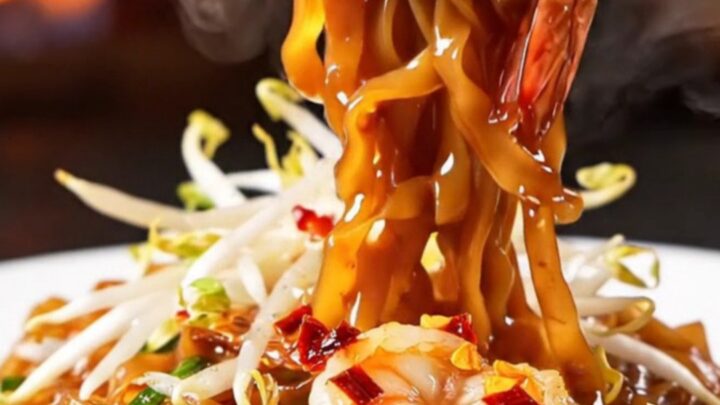
- Add the noodles and sauceAdd the soaked rice noodles to the wok, spreading them out. Pour the tamarind-palm sugar fish sauce mixture over the noodles. Use tongs or a spatula to toss everything together continuously, lifting and turning the noodles so they absorb the sauce and caramelize slightly. Cook for about 2 minutes, keeping the heat high.Look for Noodles are glossy and beginning to caramelize at the edges.Tip Keep tossing to prevent sticking and ensure even sauce coating.
- Scramble the eggsPush the noodle-prawn mixture to one side of the wok, clearing a space in the center. Crack the eggs directly into the cleared area. Let them set for a few seconds, then scramble them with the spatula until they are just set but still moist. Fold the scrambled eggs into the noodles along with the crisp bean sprouts.Look for Eggs are softly scrambled and just set; sprouts are still crisp.Safe temperature 160°F (71°C) internal temperature (egg dishes)Tip Scramble gently to keep the eggs in soft curds.
- Toss and finish over high heatContinue to toss all ingredients together over high heat for another minute, allowing the noodles to pick up smoky char marks and the flavors to meld. The sauce should cling to the noodles rather than pool at the bottom. If the mixture looks dry, add a splash of water or more sauce.Look for Noodles are slightly charred in spots and smell intensely smoky.Tip A few charred bits are desirable; they add authentic wok hei.
The prawns are pink and just cooked through, and the tofu is lightly browned. The noodles are glossy and coated with sauce, with some caramelization at the edges. The eggs are scrambled in the center and just set, and the bean sprouts are still crisp.
The entire wok is fragrant with smoky, savory aromas. The noodles should be sizzling and not sticking. This is the heart of the dish, and it all comes together in minutes.
Finish and Serve
- Plate and garnishTransfer the Pad Thai to a serving platter or individual plates. Top with crushed peanuts and a generous squeeze of fresh lime juice. Sprinkle with chili flakes to taste. Serve immediately while hot and smoky.Look for Garnish is bright and colorful; lime juice brightens the dish.Tip Serve with extra lime wedges and chili flakes on the side.
The Pad Thai is plated with crushed peanuts, a squeeze of lime, and chili flakes. The colors are vibrant: golden noodles, pink prawns, green chives, and white sprouts. The aroma is smoky and tangy. The dish is served immediately while hot. The final taste should be balanced—sweet, sour, salty, and slightly spicy. The noodles should be tender but not mushy, and the prawns juicy.
Common mistakes
The most common mistake is not heating the wok enough; if the wok is not screaming hot, the ingredients will steam instead of sear, resulting in soggy noodles and bland flavor. Another mistake is overcrowding the wok, which lowers the temperature; cook in batches if necessary.
Overcooking the eggs is another pitfall—scramble them just until set, then remove from heat. Finally, be careful not to oversoak the noodles; they should be slightly underdone when added to the wok because they will continue cooking. If the noodles stick, add a splash of water or extra sauce to loosen them.
How to tell it’s done
The Pad Thai is done when the noodles are tender but still have a slight chew, and they are coated with a glossy, caramelized sauce. The prawns should be pink and opaque throughout, with no translucent spots; they are safe to eat when they reach an internal temperature of 145°F (63°C).
The eggs should be fully set but still moist, not dry or rubbery. The dish should have a smoky aroma and a few charred spots on the noodles. Taste a noodle to ensure the sauce is balanced—sweet, sour, and salty. If it needs more lime or chili, add it at the table.
- Shellfish: 145°F (63°C) in the thickest part
- Egg dishes: 160°F (71°C) in the thickest part
Up next · Part 3 of 3
4 variations · storage & make-ahead · 5 answers · printable card
Tips, FAQ & printable recipe (Part 3)← Back to the ingredients (Part 1)