Dinner · Part 2 of 3: Instructions
Slow-Cooker Parmesan French Onion Pork Medallions Step-by-step instructions
- Prep
- Cook
- Total
- Serves
- 4
Before you start
Before you start, cut the pork tenderloin into eight equal medallions, about 2 inches thick. Slice the onions thinly — you want them to melt into the sauce, not stay in big chunks.
Soften the cream cheese at room temperature for about 30 minutes. Have the thyme sprigs, broth, and grated Parmesan measured and ready. There's no need to brown the meat or sauté the onions; everything goes into the slow cooker raw.
Ingredients at a glance (6)
- 2 lb pork tenderloin, cut into 8 medallions
- 3 medium Vidalia onions, thinly sliced
- 6 sprigs fresh thyme
- 1 cup beef broth
- 8 oz cream cheese, softened
- 1 cup freshly grated Parmesan cheese
Instructions
Layer and Dump
- Layer the Pork and OnionsPlace the pork tenderloin medallions in the bottom of a 6-quart slow cooker in a single layer. Scatter the sliced Vidalia onions over the top, tucking the fresh thyme sprigs among them. Pour the beef broth around the edges, being careful not to wash the onions off the meat.Look for The pork should be mostly covered by the onions, and the broth should come about halfway up the meat.Tip Cut the onions into thin, even slices so they soften and melt into the sauce during the long cook.
- Add the CheesePlace the block of softened cream cheese in the center of the slow cooker, right on top of the onions. Sprinkle the grated Parmesan evenly over the entire surface.Look for The cream cheese will look like a white island in a sea of onions; that's fine.Tip Soften the cream cheese at room temperature for about 30 minutes so it melts more smoothly.
You'll see a single layer of pink pork medallions nestled under a mountain of raw onions, with a few thyme sprigs tucked in.
The broth pools around the edges, and the cream cheese sits like a white island in the center, dusted with Parmesan. It looks like a pile of ingredients, not yet a dish — that's exactly right.
Slow Cook to Tender
- Cook Low and SlowCover the slow cooker and cook on low for 6 to 7 hours, until the pork is fork-tender and easily pulls apart. Avoid opening the lid during the first 5 hours to keep the heat steady. Let it rest for 3 minutes before slicing.Look for The sauce will look bubbly around the edges and the onions will be deeply golden and soft.Safe temperature 145°F (63°C) internal temperature (steaks, chops and roasts)Tip If the sauce seems thin at the end, leave the lid off for the last 30 minutes to let it reduce slightly.
- Shred and StirOnce the pork is tender, remove the thyme sprigs and discard them. Use two forks to break the pork into large chunks or shred it gently. Stir everything together so the cream cheese and Parmesan melt into a smooth, velvety sauce coating the meat and onions. Let it rest for 3 minutes before slicing.Look for The sauce should be thick and creamy, clinging to the pork and onions.Safe temperature 145°F (63°C) internal temperature (steaks, chops and roasts)Tip Shred the pork right in the slow cooker so it soaks up the sauce as it rests.
After 6 hours, the slow cooker is full of bubbling, golden liquid. The onions have collapsed into soft, sweet ribbons, and the pork is so tender it yields to a fork. The cream cheese and Parmesan have melted into a rich, creamy sauce that coats everything. The aroma is deeply savory with a hint of thyme.
Rest and Serve
- Rest the MeatLet the pork rest in the slow cooker, uncovered, for at least 3 minutes before serving. This allows the juices to redistribute and the sauce to settle.Look for The sauce will thicken slightly as it rests.Safe temperature 145°F (63°C) internal temperature (steaks, chops and roasts)Tip Resting is key for tender, juicy pork — don't skip it.
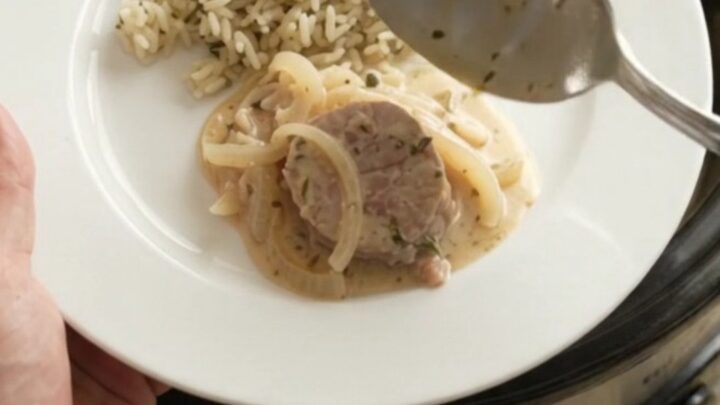
- Serve Over RiceSpoon the pork and sauce over fluffy herb rice or your favorite grain. The creamy sauce soaks into the rice beautifully.Look for The dish looks rich and glossy, with ribbons of onion throughout.Tip Warm the plates if you like — this dish is extra comforting when served hot.
The pork is shredded and stirred into the sauce, which is now thick and velvety. Spooned over rice, it looks like a comforting, elegant dinner — glossy ribbons of onion, tender chunks of pork, and a creamy sauce that clings to every grain. The thyme is gone, and the dish is ready to serve.
Common mistakes
One common mistake is lifting the lid too often. Every time you open the slow cooker, heat escapes and adds to the cooking time. Resist the urge to peek for at least the first 5 hours. Another mistake is using low-fat cream cheese, which can separate and turn grainy.
Stick with full-fat. Also, don't skip the fresh thyme — dried thyme can become bitter over a long cook. Finally, be patient: if the pork isn't fork-tender at 6 hours, give it another 30 minutes.
How to tell it’s done
The pork is done when it's fork-tender and easily pulls apart, which should take about 6 to 7 hours on low. To be safe, check that the internal temperature of the pork reaches at least 145°F (63°C) using an instant-read thermometer.
Because the meat is cooked low and slow in liquid, it will likely exceed that temperature, which is fine — the key is that it's tender, not dry. The sauce should be thick and creamy, and the onions should be soft and golden.
- Steaks, chops and roasts: 145°F (63°C) in the thickest part, then a 3-minute rest
Up next · Part 3 of 3
4 variations · storage & make-ahead · 5 answers · printable card
Tips, FAQ & printable recipe (Part 3)← Back to the ingredients (Part 1)