Dinner · Part 2 of 3: Instructions
Slow-Cooker Balsamic Fig and Rosemary Pulled Pork Roast Step-by-step instructions
- Prep
- Cook
- Total
- Serves
- 8
Before you start
Before beginning, ensure your slow cooker insert is clean and dry. Remove the pork shoulder from the refrigerator approximately 30 minutes before you plan to start, allowing it to take the chill off. This helps the meat reach the target internal temperature more consistently throughout the cooking cycle.
Have your ingredients measured and ready, with the red onion sliced into thick rounds and the Mission figs halved to expose their interior, which helps them break down more efficiently into the glaze. Clear your workspace to allow for easy assembly.
Ingredients at a glance (7)
- 1 red onion, sliced
- 4 lb pork shoulder
- 1 cup Mission figs, halved
- 3 sprigs fresh rosemary
- 1/2 cup aged balsamic vinegar
- 1/3 cup honey
- 1/2 cup broth
Instructions
Preparation and Layering
- Layer the ingredientsPlace the sliced red onion at the bottom of the slow cooker insert. Nestle the 4-pound pork shoulder on top of the onions. Scatter the halved Mission figs and rosemary sprigs around the meat, then pour the balsamic vinegar, honey, and broth over the entire assembly.Look for Ensure the pork is level and the liquid ingredients are distributed evenly across the surface.Tip Layering the onions at the bottom prevents the pork from scorching and adds flavor to the base of the sauce.
At the end of this phase, the slow cooker should be neatly arranged with the pork resting comfortably on the bed of onions. The liquid ingredients should be poured evenly over the top, and the figs and rosemary should be distributed around the meat. Check that the lid fits securely on the ceramic insert to ensure a tight seal during the long cooking process. The kitchen should be quiet and organized, with all prep work completed before you engage the heat.
Slow Cooking
- Slow cook the roastCover the slow cooker with the glass lid and set to the LOW temperature setting. Allow the pork to cook for 8 hours until it reaches an internal temperature of at least 145°F (63°C). Once cooked, let the meat rest for at least 3 minutes before shredding.Look for The figs should be completely softened and integrated into the dark, syrupy glaze.Safe temperature 145°F (63°C) internal temperature (steaks, chops and roasts)Tip Avoid opening the lid frequently during the cooking process to maintain a consistent temperature and moisture level.
After 8 hours, the kitchen will be filled with the deep, savory aroma of balsamic and rosemary. The pork should appear significantly shrunken and very soft to the touch. The liquid in the bottom of the slow cooker will have transformed from a thin broth into a dark, syrupy glaze. The figs should have largely disintegrated into the sauce, leaving behind small, sweet pockets of flavor. If you notice any stubborn fat caps, they should be easily removable with a fork.
Shredding and Final Presentation
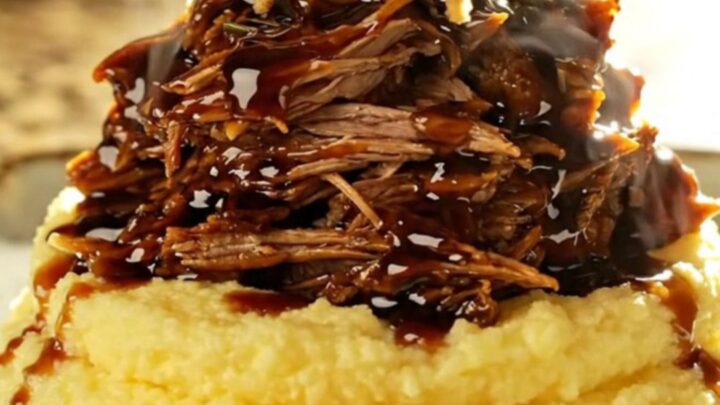
- Shred and serveOnce the cooking time is complete and the meat has rested, remove the pork from the slow cooker and transfer it to a cutting board. Use two forks to pull the meat apart into shreds. Return the shredded pork to the glaze in the slow cooker to coat thoroughly. Serve over creamy polenta, garnished with crispy fried rosemary.Look for The pork should pull apart effortlessly with minimal effort using two forks.Tip If the sauce is too thin, you can remove the lid for the final 30 minutes of cooking to help it reduce further.
The pork should now be fully shredded and glistening with the concentrated balsamic fig glaze. The texture should be uniform, with no large, tough chunks remaining. The final check involves ensuring the pork is thoroughly coated in the sauce.
When plated over the polenta, the meat should hold its shape while appearing incredibly moist. The garnish of crispy rosemary needles should provide a sharp, aromatic contrast to the rich, syrupy pork, signaling that the dish is ready for service.
Common mistakes
Avoid adding extra liquid beyond what is specified in the recipe. The pork shoulder releases a significant amount of natural juices during the cooking process, and adding too much broth will result in a watery sauce that fails to glaze the meat.
Another common mistake is failing to let the meat rest after shredding. Resting allows the juices to redistribute throughout the fibers, ensuring the final dish is as succulent as possible. Finally, ensure you do not skip the onions, as they serve as a necessary barrier against the direct heat of the base.
How to tell it’s done
The pork is perfectly cooked when it reaches an internal temperature of at least 145°F (63°C). Beyond the temperature, the visual and tactile cues are primary indicators. The meat should be extremely tender, pulling apart with almost no resistance when tested with two forks.
If the meat feels tough or rubbery, continue cooking for an additional 30 to 60 minutes. The glaze should be dark, glossy, and thick enough to coat the back of a spoon, indicating that the sugars from the honey and figs have properly reduced.
- Steaks, chops and roasts: 145°F (63°C) in the thickest part, then a 3-minute rest
Up next · Part 3 of 3
2 variations · storage & make-ahead · 3 answers · printable card
Tips, FAQ & printable recipe (Part 3)← Back to the ingredients (Part 1)