Appetizers · Part 3 of 3: Tips & recipe card
Slow-Cooker Asparagus and Goat Cheese Bisque — Dump-and-Go Silky Tips, FAQ & printable recipe
- Prep
- Cook
- Total
- Serves
- 6
Tips for success
Watch the pine nuts like a hawk: over medium heat they go from golden to burnt in under a minute, and there is no rescuing them once the smell turns acrid. Pull them the moment the pan smells nutty and slide them onto a cool plate.
When blending, tilt the crock slightly so the immersion blender head stays fully submerged — this prevents hot soup from spraying and pulls the vegetables into the blades evenly. If the bisque seems thicker than wanted after blending, loosen it with warm broth a few tablespoons at a time rather than water, which would dilute the flavor.
Taste the soup only after the goat cheese has gone in, because the cheese brings its own salt and the seasoning balance changes completely. Warm the serving bowls with hot tap water and dry them just before ladling; soup poured into a cold bowl loses its surface gloss in seconds.
Add the garnish at the table or just before serving rather than ahead of time — the blanched tips, crumbles, and pine nuts keep their contrast only on a hot, freshly poured surface. A few drops of lemon oil at the very end brighten the whole bowl more than any extra stirred in earlier.
Variations
- Frozen Asparagus: Swap in two pounds of frozen asparagus cuts when fresh spears are out of season. Skip the reserved garnish tips or use a few fresh ones, and keep the same cook time; the color stays deep and the purée is just as smooth.
- Herb Swap: Replace the tarragon with fresh dill or chervil for a softer, more delicate character. Add half the amount at the end as well, so the herb note stays bright against the goat cheese and lemon.
- Crunchy Crouton Top: Add torn sourdough croutons fried in olive oil alongside the pine nuts. They bring a wheaty crunch that contrasts the silk, and they make the bowl feel more like a full meal.
- Deeper Savor: Use a good-quality chicken broth instead of vegetable broth for a rounder, more savory base. Everything else stays the same, and the goat cheese still carries the finish with lemon and tarragon.
Storage and make-ahead
- Fridge
- Cool for 2 hours, then refrigerate airtight up to 4 days; it thickens, so loosen with broth when reheating.
- Freezer
- Freeze the blended base before the goat cheese and cream go in, up to 2 months; stir the dairy in after reheating for the smoothest texture.
- Reheat
- Reheat gently on the stovetop over low heat, stirring often; never boil once the goat cheese is in, or the bisque may turn grainy.
Let the bisque cool for no more than 2 hours after cooking, then transfer it to airtight containers and refrigerate for up to 4 days. The soup thickens as it stands because the potato starch keeps absorbing liquid; loosen it with a splash of broth or water when reheating. Keep the garnish components separate — blanched tips, crumbled goat cheese, and toasted pine nuts each hold better in their own container, and the pine nuts stay crisp only away from moisture.
This soup is built for entertaining: cook it through the 4-hour slow-cook step up to two days ahead, then cool and refrigerate the crock insert or transfer the base to containers.
On serving day, reheat the base gently on the stovetop or in the slow cooker on HIGH for about an hour, blend until smooth, and only then stir in the goat cheese, cream, and lemon zest. Blanch the tips and toast the pine nuts that afternoon, and the whole finish takes fifteen minutes with guests already in the room.
Serving ideas
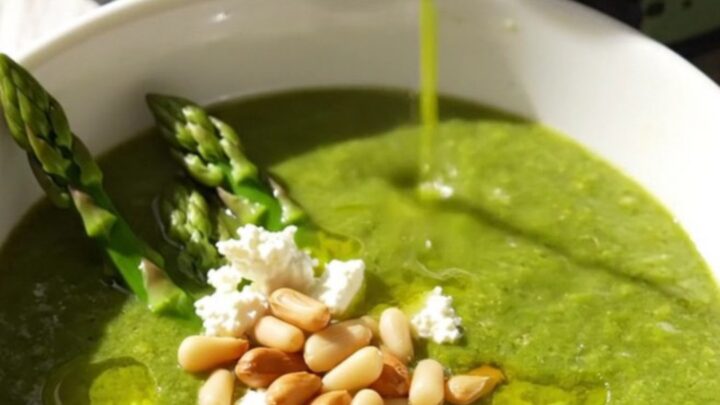
Serve the bisque in warmed shallow bowls so the garnish spreads across a wide surface instead of piling in the center. Arrange two or three blanched tips leaning against each other, add a deliberate crumble of goat cheese, and scatter the pine nuts last so they stay audible when the spoon first breaks the surface.
A thread of lemon oil pulled across the bowl in a figure-eight gives the glossy finish that makes the first look land. Crusty bread or warm baguette slices turn the starter into a full lunch.
As a dinner-party opener, pour smaller portions and let the garnish do the talking — the contrast of cool green tips, white cheese crumbles, and toasted nuts against the warm purée reads as considered without any extra work. A simple green salad with a sharp vinaigrette follows well, since the soup is rich and mellow. On the second day the flavor deepens and the leek sweetness comes forward, so do not hesitate to serve the leftovers as the main with more bread for dipping.
Frequently asked questions
Can this bisque be made ahead for a dinner party?
Why did the soup turn olive-green instead of emerald?
Can a countertop blender be used instead of an immersion blender?
Can the soup be frozen with the cheese already in it?
Why is the bisque grainy after adding the goat cheese?
Slow-Cooker Asparagus and Goat Cheese Bisque — Dump-and-Go Silky

Ingredients
- 2 lb fresh asparagus, trimmed and chopped
- 2 leeks, white and light green parts, sliced and washed
- 1 Yukon Gold potato, peeled and diced
- 4 garlic cloves, smashed
- 1 tbsp fresh tarragon leaves, chopped
- 3 1/2 cups vegetable broth
- 6 oz chèvre, softened
- 1/2 cup heavy cream
- 1 lemon, zested
- Blanched asparagus tips, for serving
- Crumbled chèvre, for serving
- 2 tbsp pine nuts, toasted
- Lemon oil, for serving
Instructions
- Snap off or cut the woody ends from the asparagus and chop the spears into 1-inch pieces. Reserve the tips from about six spears, cut 2 inches long, for the garnish. Keeping those tips out of the pot means they stay crisp-tender instead of disappearing into the purée.
- Slice the leeks into thin rounds, white and pale green parts only, and swish them in a bowl of cold water to release the grit hiding between the layers. Peel and dice the potato, smash the garlic cloves, and zest the lemon; set the zest aside for the finish.
- Pile the chopped asparagus, drained leeks, diced potato, and smashed garlic into the crock, then scatter the tarragon over the top. Pour in the vegetable broth — it should come most of the way up the vegetables, not drown them — and put the lid on.
- Cover and cook on LOW for 4 hours, until the asparagus is very tender and a knife slides through the potato with no resistance. Resist switching to HIGH: a long, gentle simmer keeps the color greener and lets the leeks turn sweet instead of scorching at the edges of the crock.
- About 20 minutes before the soup is done, drop the reserved asparagus tips into boiling water for 2 minutes, then shock them in ice water so they stay vivid green. Toast the pine nuts in a dry skillet over medium heat, shaking the pan often, until golden and fragrant.
- Working directly in the crock, blend the soup with an immersion blender for 1 to 2 minutes, until completely smooth with no visible threads of asparagus. If a countertop blender is used instead, fill it no more than halfway and vent the lid, blending in batches and returning each to the crock.
- Add the softened chèvre and the heavy cream, then blend briefly or whisk until fully incorporated and glossy. Stir in the reserved lemon zest, taste, and adjust the seasoning. Switch the cooker to WARM; a hard boil after this point can make the soup grainy.
- Ladle the bisque into warm bowls and finish each one with blanched asparagus tips, crumbled chèvre, and toasted pine nuts. Drizzle a little lemon oil over the top and serve immediately, while the surface is still glossy and the garnish contrasts with the silky base.
Estimated nutrition per serving
- Calories
- 260
- Protein
- 9 g
- Carbohydrates
- 18 g
- Fat
- 17 g
- Fiber
- 4 g
- Sugar
- 5 g
- Sodium
- 520 mg
Next recipe

Loaded Birria Waffle Fries — One-Pan Broiler Appetizer
See the recipe → →This recipe is based on a short cooking video and is published under the pen name Clara Weller. It was checked before publication, but errors can slip through. Nutrition, when shown, is an estimate. Read more in our editorial policy and on our food safety page.
More recipes to try

Crispy Cowboy Caviar Tostada Bites in Five Minutes
Total time: 5 min
Hot Street Corn Esquites Dip for Parties
Total time: 30 min
Crispy Air-Fryer Cheesy Taco Pinwheels in 7 Minutes
Total time: 22 min
Crispy Birria Egg Rolls with Consomé Dip
Total time: 40 min
Crispy Cheddar Potato Patties with Tangy Dip
Total time: 36 min