Appetizers · Part 2 of 3: Instructions
Slow-Cooker Asparagus and Goat Cheese Bisque — Dump-and-Go Silky Step-by-step instructions
- Prep
- Cook
- Total
- Serves
- 6
Before you start
Start by trimming the asparagus and cutting the spears into 1-inch pieces, reserving a handful of tips for the garnish. Slice and wash the leeks, swishing the rounds in cold water until no sand settles at the bottom of the bowl. Peel the potato and dice it just before layering so it does not brown, and smash the garlic cloves with the flat of the knife. Zest the lemon and keep the zest in a small dish for the finish. Set the goat cheese out to soften, and clear counter space for the immersion blender.
Ingredients at a glance (13)
- 2 lb fresh asparagus, trimmed and chopped
- 2 leeks, white and light green parts, sliced and washed
- 1 Yukon Gold potato, peeled and diced
- 4 garlic cloves, smashed
- 1 tbsp fresh tarragon leaves, chopped
- 3 1/2 cups vegetable broth
- 6 oz chèvre, softened
- 1/2 cup heavy cream
- 1 lemon, zested
- Blanched asparagus tips, for serving
- Crumbled chèvre, for serving
- 2 tbsp pine nuts, toasted
- Lemon oil, for serving
Instructions
Load the crock
- Trim and chop the asparagusSnap off or cut the woody ends from the asparagus and chop the spears into 1-inch pieces. Reserve the tips from about six spears, cut 2 inches long, for the garnish. Keeping those tips out of the pot means they stay crisp-tender instead of disappearing into the purée.Look for The ends snap cleanly where the spear bends; the cut pieces look moist and bright green, not dried at the cut edge.Tip Thick asparagus blends smoother than pencil-thin spears; if only thin ones are available, keep the chop coarse so they do not overcook.
- Slice the leeks and prep the aromaticsSlice the leeks into thin rounds, white and pale green parts only, and swish them in a bowl of cold water to release the grit hiding between the layers. Peel and dice the potato, smash the garlic cloves, and zest the lemon; set the zest aside for the finish.Look for Leeks slice into even thin rings, and the soaking water shows sand settling at the bottom of the bowl.Tip Dice the potato last, right before layering, so it does not brown on the board while the leeks are being washed.
- Layer the slow cookerPile the chopped asparagus, drained leeks, diced potato, and smashed garlic into the crock, then scatter the tarragon over the top. Pour in the vegetable broth — it should come most of the way up the vegetables, not drown them — and put the lid on.Look for The broth line sits just below the top of the vegetables, and the tarragon leaves float on the surface.Tip No stirring is needed; the vegetables settle and cook evenly as the broth heats from the bottom of the crock.
At the end of this phase the slow cooker holds a layered but unstirred pile: emerald asparagus pieces on top of pale leek rounds, yellow potato dice, and smashed garlic, with tarragon scattered across the surface and broth rising most of the way up the vegetables.
The smell is raw and green — sharp tarragon, a little garlic bite. Before closing the lid, check two things: the leek soaking water ran clean, meaning no grit remains, and the broth reaches near the top of the vegetables without submerging them, so the soup stays thick rather than watery.
Four hours on LOW
- Cook low and slowCover and cook on LOW for 4 hours, until the asparagus is very tender and a knife slides through the potato with no resistance. Resist switching to HIGH: a long, gentle simmer keeps the color greener and lets the leeks turn sweet instead of scorching at the edges of the crock.Look for The lid looks lightly fogged, the vegetables have slumped and darkened, and the kitchen smells of sweet leeks and tarragon.Tip Lift the lid only once, near the end, to test; every peek releases heat and stretches the cooking time.
- Blanch the tips and toast the pine nutsAbout 20 minutes before the soup is done, drop the reserved asparagus tips into boiling water for 2 minutes, then shock them in ice water so they stay vivid green. Toast the pine nuts in a dry skillet over medium heat, shaking the pan often, until golden and fragrant.Look for The tips bend slightly without breaking and glow bright green; the pine nuts turn evenly golden and smell nutty.Tip Pine nuts go from toasted to burnt in under a minute — keep the pan moving and pull them the moment the smell turns nutty.
After four hours the vegetables have slumped and darkened, the asparagus pieces collapse at the touch of a spoon, and a paring knife meets no resistance in the potato. The broth has taken on a soft green-gold cast and smells sweetly of cooked leeks and tarragon, with the raw garlic bite gone entirely.
The surface should be calm, with only a lazy bubble here and there — a rolling boil means the setting is too hot. Before blending, confirm the potato is truly soft all the way through; any firm piece will survive the blender as a gritty speck in the finished purée.
Blend, swirl, and serve
- Blend to a velvet puréeWorking directly in the crock, blend the soup with an immersion blender for 1 to 2 minutes, until completely smooth with no visible threads of asparagus. If a countertop blender is used instead, fill it no more than halfway and vent the lid, blending in batches and returning each to the crock.Look for The surface turns uniform emerald with a soft swirl, and a spoonful shows no fibers or specks when rubbed between two fingers.Tip Tilt the crock slightly toward one side so the blender head stays fully submerged and does not spray hot soup.
- Swirl in the goat cheese and creamAdd the softened chèvre and the heavy cream, then blend briefly or whisk until fully incorporated and glossy. Stir in the reserved lemon zest, taste, and adjust the seasoning. Switch the cooker to WARM; a hard boil after this point can make the soup grainy.Look for Streaks of white marble through the green, then a single uniform pale-emerald color with a glossy, coat-the-spoon texture.Tip Soften the chèvre in a bowl while the soup cooks so it melts in within seconds instead of leaving white specks.
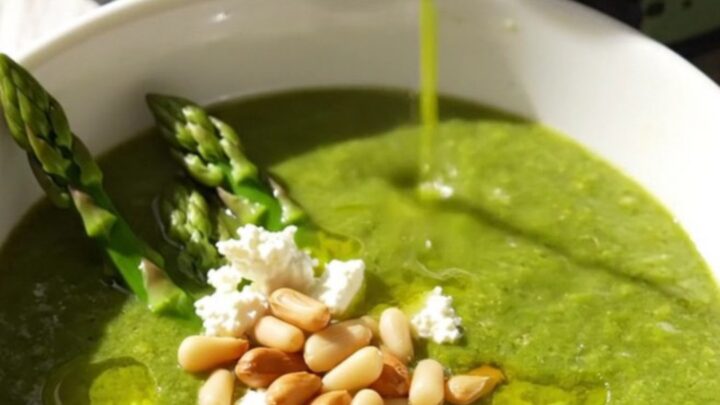
- Ladle and garnishLadle the bisque into warm bowls and finish each one with blanched asparagus tips, crumbled chèvre, and toasted pine nuts. Drizzle a little lemon oil over the top and serve immediately, while the surface is still glossy and the garnish contrasts with the silky base.Look for The garnish sits on the surface instead of sinking, and the lemon oil spreads into a thin bright ring at the rim.Tip Warm the bowls with hot tap water for a minute and dry them; hot soup served into a cold bowl loses its gloss fast.
The finished bisque is a uniform, glossy emerald purée that coats the back of a spoon and pours in a slow ribbon. The goat cheese and cream have turned the color from bright green to a soft pale jade, and the lemon zest lifts the aroma over the cooked-vegetable smell.
In each warm bowl the garnish sits on the surface instead of sinking: two or three blanched tips, a crumble of white goat cheese, a scatter of golden pine nuts, and a thin ring of lemon oil at the rim. Taste one spoonful before serving and adjust the seasoning one last time.
Common mistakes
The most common failure is unwashed leeks: one gritty layer sends sand through the whole pot, so slice and soak them every time. Cooking on HIGH to save time costs color — the chlorophyll fades and the edges of the crock scorch — so protect the four hours on LOW. Adding the goat cheese while the soup is at a rolling boil makes it grainy; stir it in on WARM instead. Over-blending with a countertop blender can heat the soup further and thin the body, and forgetting to reserve the asparagus tips leaves nothing to garnish with.
How to tell it’s done
The soup is done cooking when the asparagus pieces collapse under a spoon and a paring knife slides through the potato with no resistance at the center — around the 4-hour mark on LOW.
After blending, the test is visual and tactile: the purée should be a uniform emerald with no visible threads, and a spoonful drawn across the surface should leave a momentary trail before closing. Once the goat cheese and cream are in, the bisque looks glossy and pours in a slow ribbon. There is no raw protein in this recipe, so no internal temperature applies.
Up next · Part 3 of 3
4 variations · storage & make-ahead · 5 answers · printable card
Tips, FAQ & printable recipe (Part 3)← Back to the ingredients (Part 1)