Dinner · Part 3 of 3: Tips & recipe card
Seared Tomahawk Ribeye with a Crackling Crust Tips, FAQ & printable recipe
- Prep
- Cook
- Total
- Serves
- 2
Tips for success
The thermometer is worth more than any other tool in this recipe. A two-inch steak hides a wide range of interiors under an identical crust, and the difference between 128°F and 138°F at the pull is the difference between rosy and gray at the table.
Probe the thickest part of the eye, angled toward the center and away from the bone, and check two spots. Remember the temperature climbs a few degrees during the rest, so pull the steak just shy of the target.
Heat management is the other skill worth practicing. If the pan smokes heavily and the crust darkens too fast while the center lags, drop the burner to medium and keep turning the steak every minute; the crust keeps building without burning.
If the crust is pale at the end of the searing time, the pan was not hot enough at the start. Trim and render a little of the fat rim in the empty hot pan before the steak goes in to test how the pan behaves.
Variations
- Reverse Sear: Slow-roast the seasoned steak at 250°F (120°C) until the center reaches about 120°F (49°C), then finish in smoking-hot cast iron for 1 to 2 minutes per side. This method gives an edge-to-edge pink interior and slightly more time control for very thick cuts.
- Grill Version: Build a hot zone and a cooler zone on the grill. Sear over direct high heat 3 minutes per side, then move the steak to the cooler side, cover and continue to the target temperature. Sear the fat rim over direct heat last for even color.
- Garlic Butter Baste: In the last 2 minutes of searing, add a knob of butter, a smashed garlic clove and a sprig of thyme to the pan, tilt and spoon the foaming butter over the steak repeatedly. It adds richness and a subtle herb aroma to the crust.
- Boneless Ribeye: Swap in a boneless ribeye or strip steak of the same thickness and weight. Searing times stay the same, carving is simpler since there is no bone to cut away, and the thermometer still decides doneness, not the clock.
Storage and make-ahead
- Fridge
- Refrigerate leftover slices in an airtight container for up to 3 days; keep the juices with them to preserve moisture.
- Freezer
- Freeze cooled slices wrapped tightly in plastic and foil for up to 2 months; thaw overnight in the refrigerator before reheating.
- Reheat
- Warm slices gently in a covered skillet over low heat with a splash of water, or briefly in a low oven; the microwave toughens the meat.
Cool any leftover steak for no more than 2 hours at room temperature, then refrigerate it in an airtight container. Leftover ribeye keeps its best texture for about 3 days. Store slices rather than the whole steak if the bone makes the container awkward, and keep the carved bone for beef stock if stock-making is part of the routine.
This is a cook-and-serve dish, but one step can move ahead: salting. Dry-brining up to 24 hours ahead, with the salted steak uncovered on a rack in the refrigerator, deepens the seasoning and dries the surface even further for a better crust.
Bring the steak out for no more than 30 minutes before searing to take off the deep chill. Everything else, from the preheat to the carve, happens in real time and takes well under half an hour.
Serving ideas
Serve the tomahawk the way it was carved: the long bone laid across a wooden board or platter with the thick slices fanned beside it, still steaming. A sprinkle of flaky salt over the warm slices wakes up the crust, and nothing else is required.
For sides, think in contrast rather than competition: something sharp and cold, something starchy and simple, and the pan juices spooned over the top.
For a full plate, a crisp green salad with a sharp vinaigrette, roasted potatoes or a simple bread round out the richness of the beef. Warm the plates before plating so the slices hold their temperature at the table, and put the carving board in the center of the table for anyone who wants a second slice straight from the bone.
Frequently asked questions
What temperature should a tomahawk ribeye be pulled at?
Can this steak be cooked without an instant-read thermometer?
Why is the steak rested before slicing?
Can this recipe be made on a grill instead of the stovetop?
How is a medium-rare steak handled safely?
Seared Tomahawk Ribeye with a Crackling Crust
Ingredients
- 2 lb tomahawk ribeye steak (one 2-inch-thick steak)
- Coarse kosher salt, to taste
- Coarsely ground black pepper, to taste
- 2 tbsp neutral high-heat oil, such as avocado or canola
Instructions
- Pat the tomahawk ribeye completely dry on every side with paper towels. Set it on a rack or plate and leave it on the counter for no more than 30 minutes so the surface dries and the chill fades. A dry surface is the single biggest factor in a dark, even crust.
- Season all surfaces of the steak, including the bone edge, with coarse kosher salt and a heavy dusting of coarsely ground black pepper. Press the seasoning in gently with your hand so it adheres. Do not season until shortly before cooking, so the salt draws moisture outward but the meat does not sit in it.
- Add the oil to a 12-inch cast iron skillet and set it over high heat. Let it heat for 4 to 5 minutes, until the oil shimmers and thins out and the first faint wisps of smoke appear. Cast iron needs this long preheat to hold enough heat for a sear that does not drop in temperature.
- Lay the steak in the pan away from you, then press it flat with the metal spatula for a few seconds so the entire surface makes contact. Leave it completely undisturbed for 3 to 4 minutes. Moving it early tears the forming crust; patience here is what builds the deep mahogany color.
- Flip the steak and sear the second side for 3 to 4 minutes. Then use tongs to turn it on its edge and sear the narrow fat rim all around, about 1 minute per side, tilting the pan so the fat renders against the hot metal. The goal is color on every square inch.
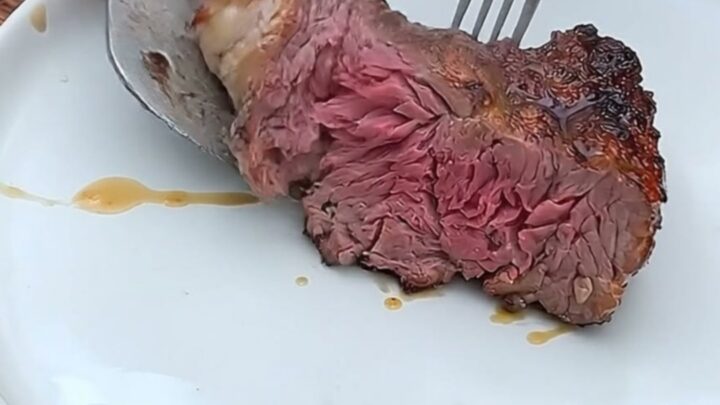
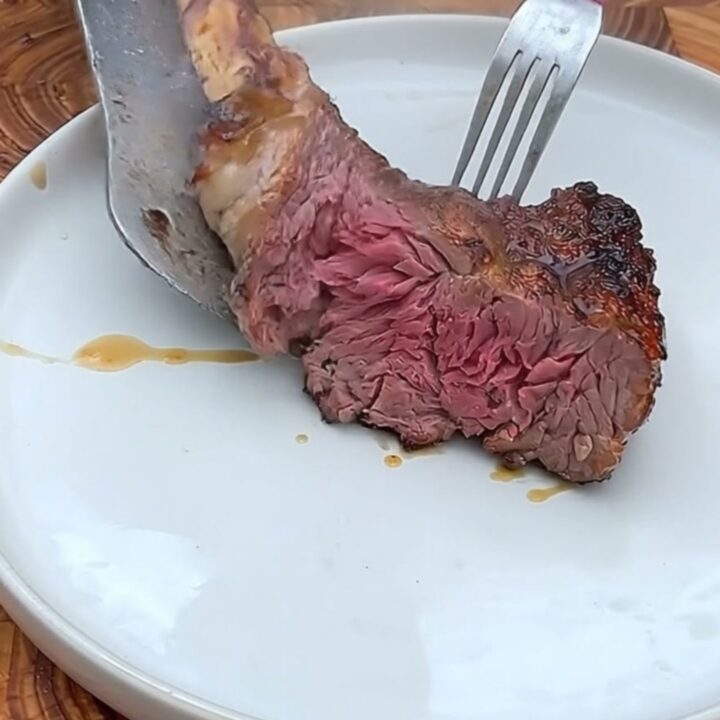
- Insert an instant-read thermometer into the thickest part of the meat, away from the bone. For a fully cooked steak, take it to at least 145°F (63°C) and let it rest at least 3 minutes. For the rosy pink medium-rare finish shown here, pull it earlier, at 130 to 135°F (54 to 57°C), and still rest it fully.
- Transfer the steak to a large cutting board and let it rest for 8 to 10 minutes, uncovered. The heat inside evens out and the juices redistribute through the meat instead of spilling out at the first cut. Skipping this rest is the fastest way to lose everything the sear locked in.
- Hold the bone with the carving fork and cut the thick eye of meat away from it in one long strip. Slice the strip against the grain into thick, generous slices, then cut one slice crosswise to show the pink interior. Arrange the slices on a warm plate and bring them to the table right away, while steam still rises.
Estimated nutrition per serving
- Calories
- 850
- Protein
- 58 g
- Carbohydrates
- 0 g
- Fat
- 65 g
Next recipe
Sheet Pan Sausage and Onion Bake, Ready in 40 Minutes
See the recipe → →This recipe is based on a short cooking video and is published under the pen name Clara Weller. It was checked before publication, but errors can slip through. Nutrition, when shown, is an estimate. Read more in our editorial policy and on our food safety page.
More recipes to try
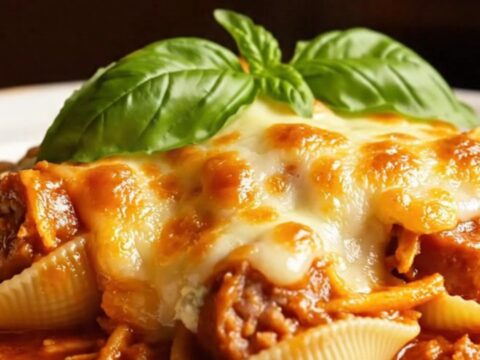
No-Boil Crockpot Stuffed Shells with Sweet Italian Sausage
Total time: 4 h 40 min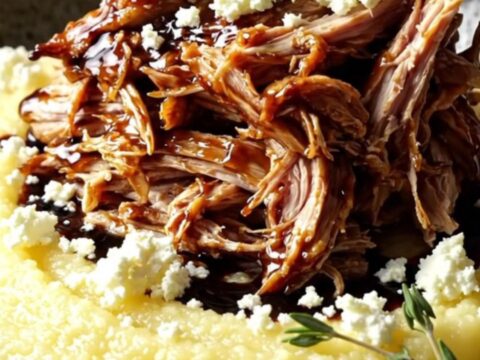
Crockpot Balsamic Fig Chicken with Creamy Polenta
Total time: 4 h 20 min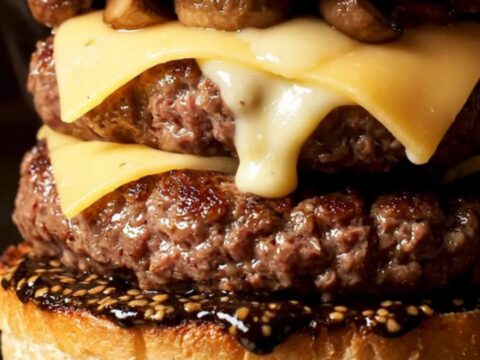
Truffle Mushroom Swiss Smash Burger in 25 Minutes
Total time: 25 min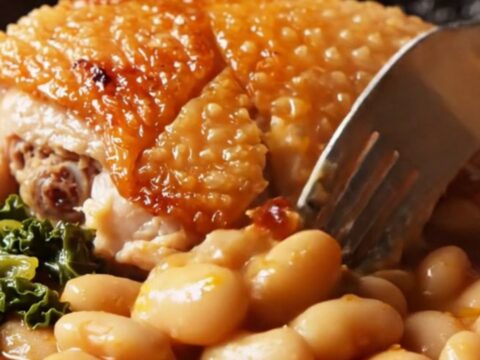
Spanish Chorizo and Butter Bean Crispy Chicken Skillet
Total time: 55 min
Steak and Shrimp Fajita Skillet with Sizzling Lime Butter
Total time: 45 min