Dinner · Part 1 of 3: Ingredients
Seared Tomahawk Ribeye with a Crackling Crust
- Prep
- Cook
- Total
- Serves
- 2
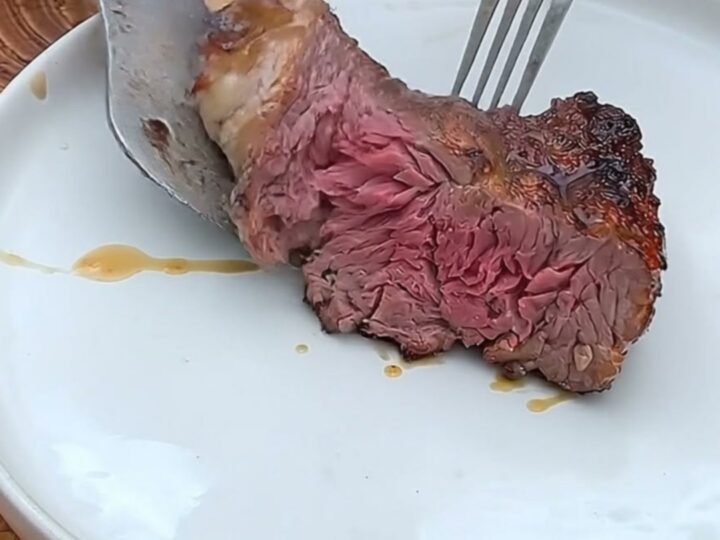
A tomahawk ribeye is the whole show: a long bone, a two-inch slab of marbled beef and room for a crust that actually crackles. Salt, pepper, oil and one cast iron pan are all it takes. Sear it hard, rest it well and slice it thick against the grain for a steakhouse plate made at home.
The tomahawk cut gets its drama from the frenched rib bone left long and clean, but the eating part is pure ribeye: generous marbling, a rich fat cap and deep beefy flavor that stands up to nothing more than salt and pepper. Because the steak is so thick, the challenge is getting a dark crust on the outside while the center stays rosy and tender.
The answer is simple and old-fashioned: a blazing-hot cast iron skillet, a completely dry surface and the discipline to leave the meat alone while it browns. This recipe walks through that process step by step, from patting the steak dry to carving it off the bone and plating thick slices that still steam at the table.
Ingredients
- 2 lb tomahawk ribeye steak (one 2-inch-thick steak)
- Coarse kosher salt, to taste
- Coarsely ground black pepper, to taste
- 2 tbsp neutral high-heat oil, such as avocado or canola
Why this recipe works
High, dry, direct heat is what builds a steakhouse crust. When the surface of the meat is dry and the pan is hot enough, the proteins and sugars on the exterior brown rapidly, creating hundreds of new flavor compounds in minutes.
A wet surface never gets there: the moisture has to evaporate before browning can begin, and by then the meat has steamed gray. That is why patting the steak dry matters as much as the sear itself, and why the pan gets a long preheat so its stored heat does not collapse the moment cold beef lands on it.
Leaving the steak undisturbed is the second half of the method. Contact with the hot metal is what browns; lifting and peeking resets the clock and tears the forming crust. Searing the narrow fat rim last, with the pan tilted, renders that fat against the steel instead of leaving it flabby and pale.
And the rest at the end is not optional: a thick steak carries a steep heat gradient after cooking, and ten minutes off the heat lets the juices settle back through the meat so they stay in each slice instead of pooling on the board.
Notes and substitutions
Buy a tomahawk that is genuinely thick, at least two inches, since a thin steak finishes before it can build much crust. Look for even marbling through the eye of the meat rather than one dramatic fat cap; the marbling is what keeps the interior juicy during the sear.
Kosher salt is the right tool here because its coarse flakes season evenly and cling to the surface. If the steak is saltier than expected next time, weigh the salt: roughly one teaspoon of kosher salt per pound of beef is a reliable starting point.
Equipment is short but specific. A 12-inch cast iron skillet holds and releases heat better than anything else in a home kitchen, and a good instant-read thermometer removes every guess about doneness in a cut this thick. Metal tongs or a long carving fork let you turn the steak and sear its edges without piercing the meat deeply. If cast iron is not available, a heavy stainless-steel pan is the next best choice; thin nonstick pans cannot reach or hold the temperature this method depends on.
- tomahawk ribeye steak: A boneless ribeye, strip steak or any thick-cut steak of similar weight works; adjust searing time to the thickness.
- neutral high-heat oil: Grapeseed, peanut or refined safflower oil all have high smoke points and will not burn at searing temperature.
- cast iron skillet: A heavy stainless-steel or carbon-steel pan holds heat almost as well; avoid thin nonstick pans, which cannot build a real crust.
Equipment
- 12-inch cast iron skillet
- instant-read thermometer
- metal spatula
- long carving fork
- large cutting board
- chef's knife
- paper towels
Up next · Part 2 of 3
8 steps · 15 min of cooking · what to look for at each stage
Step-by-step instructions (Part 2)