Dinner · Part 3 of 3: Tips & recipe card
Seared Swordfish with Tomato Caper Sauce in One Skillet Tips, FAQ & printable recipe
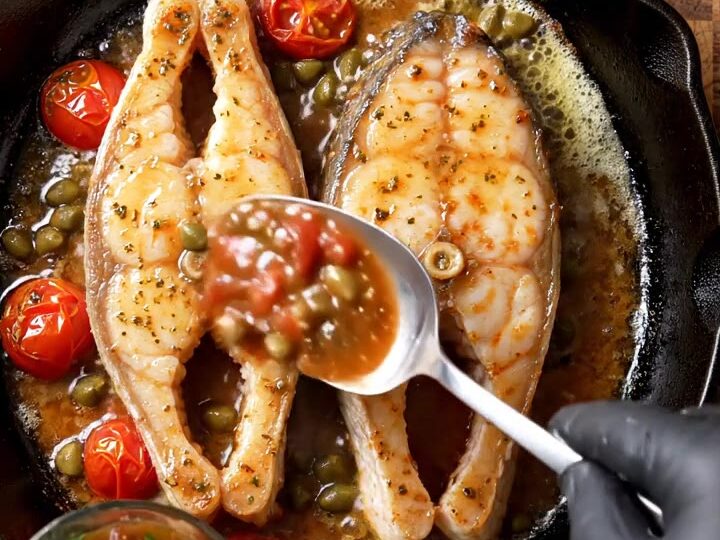
- Prep
- Cook
- Total
- Serves
- 4
Tips for success
Choose steaks of even thickness so they cook at the same rate in the pan. Thinner ends cook faster, so if one steak is much thinner, tuck it near the edge of the skillet where it will sit cooler. Buy the steaks the same day you cook them, and keep them very cold until the pan is hot.
Freshness matters more with swordfish than with many other fish, since its mild flavor shows any age quickly. Ask the fish counter to cut the steaks from the thickest part of the loin, and check that the flesh looks moist and firm rather than dull or dry.
Use the best olive oil and butter you have, since the sauce depends on the fat in the pan for flavor. Taste the olives before adding them: Kalamata olives bring a fruitier, saltier character than mild black olives, and capers add a briny bite that may replace the need for extra salt. Season the sauce only after tasting, because the capers and olives already contribute salt. Keep fresh herbs for the end so their color stays bright and their aroma is fresh when the dish reaches the table.
Variations
- Kalamata Olive Version: Swap the black olives for pitted Kalamata olives, halved for a fruitier, saltier sauce. Add them to the pan at the same point as the cherry tomatoes so they warm and soften while the swordfish sears.
- Lemon Herb Finish: Add extra chopped parsley and a little lemon zest to the sauce just before serving. The zest adds fragrant citrus oil, while the fresh herbs keep the sauce bright and green against the golden fish.
- Extra Caper Bite: Double the capers and rinse them briefly if they are very salty. Stir them into the sauce at the end for a sharper, more assertive briny flavor that pairs well with the rich butter and tomatoes.
- Tuna Steak Swap: Use thick tuna steaks in place of swordfish and keep the same skillet method. Sear them briefly for a rarer center, or cook longer for a firmer result, and check the fish with a thermometer before serving.
Storage and make-ahead
- Fridge
- Store cooled swordfish and sauce in airtight containers in the refrigerator for up to two days, and keep the grated cheese separate.
- Reheat
- Warm the sauce gently in a skillet over low heat, then add the fish for one to two minutes until heated through. Do not overcook it.
Leftover swordfish and sauce should cool for no more than 2 hours at room temperature before they go into the refrigerator. Transfer the fish and the tomato, caper and olive sauce to separate airtight containers so the fish keeps its texture and the sauce stays glossy. Store them in the refrigerator for up to two days.
The sauce keeps its flavor well, while the fish is best eaten within a day. Keep the grated cheese separate so it stays fresh and does not clump. Do not leave the dish out on the counter during a long meal, and discard anything that smells sour or looks dull. When you are ready to reheat, bring the sauce to a gentle simmer first and warm the fish briefly until it is heated through.
You can prepare most of this dish in advance so the cooking itself is quick. Halve the cherry tomatoes, pit the black olives and drain the capers up to a few hours before dinner, and keep them covered in the refrigerator. Grate the hard cheese in advance and store it in a small airtight container. Juice the lemon the same day you cook, since fresh juice tastes brightest.
Season the swordfish just before cooking, not earlier, so the salt does not draw out too much moisture from the flesh. The sear itself must be done right before serving, because swordfish is best freshly cooked and the crust softens as it sits. With the prep done ahead, the actual skillet work takes about 15 minutes, which makes this a practical choice for a weeknight meal.
Serving ideas
Serve the swordfish immediately on warm plates so the sear stays crisp and the sauce stays glossy. Spoon the tomato, caper and olive sauce over each steak, making sure some of the burst tomatoes and olives land on the fish.
Finish with fresh herb sprigs and a light scattering of grated hard cheese, then add a lemon wedge on the side for extra brightness. The dish pairs well with plain rice, crusty bread for the sauce, or a simple green salad dressed with olive oil and lemon. Keep the table setting simple so the golden fish and the bright sauce remain the focus.
For a relaxed dinner, plate the swordfish family-style on a large platter and let everyone spoon the sauce onto their own portion. Offer extra lemon wedges, a bowl of grated cheese and a small dish of olives so guests can adjust each serving to their taste. Pour a crisp, dry white wine or a light sparkling water with lemon, and serve the fish while it is still warm. Pair it with a side of steamed green beans or roasted potatoes to round out the plate without overpowering the delicate swordfish.
Frequently asked questions
Can this swordfish be made ahead of time?
How do you know when swordfish is cooked through?
Why does the tomato sauce turn out thin?
Can you use a different fish instead of swordfish?
What is the best pan for searing swordfish?
Seared Swordfish with Tomato Caper Sauce in One Skillet
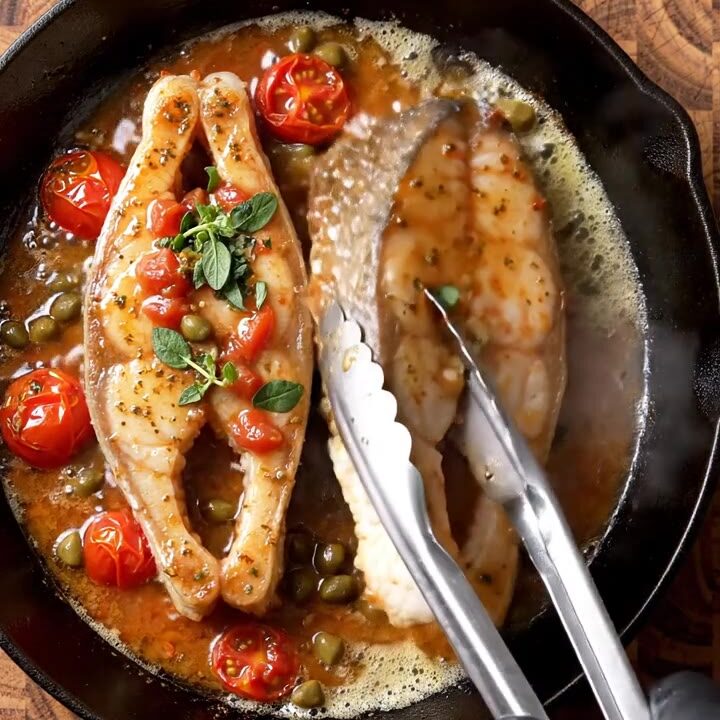
Ingredients
- 4 thick swordfish steaks, about 1 inch thick
- kosher salt, to taste
- freshly ground black pepper, to taste
- 1 lemon, for juice and wedges
- 2 tbsp extra-virgin olive oil
- 2 tbsp unsalted butter
- 1 cup cherry tomatoes, halved
- 1/2 cup pitted black olives
- 2 tbsp capers, drained
- fresh herbs, to taste
- hard cheese, grated, for serving
Instructions
- Keep the swordfish refrigerated until cooking. Pat the steaks dry, season both sides generously with kosher salt and freshly ground black pepper, and set them on a board. Squeeze a little lemon juice over the steaks.
- Halve the cherry tomatoes and pit the black olives. Set them beside the steaks, and grate the hard cheese on a box grater to one side so everything is ready when the pan is hot.
- Place the cast iron skillet over medium-high heat. Add the olive oil and butter, and heat until the butter is foaming and the oil shimmers across the surface of the pan.
- Lay the seasoned swordfish steaks into the skillet, leaving space between them. Scatter the cherry tomatoes and olives around the fish so they soften and blister in the buttery oil while the underside sears.
- Flip each steak with a fish spatula. Spoon the melting butter over the fish repeatedly, and cook until the swordfish is just opaque in the center. Check with a thermometer; it should read at least 145°F (63°C).
- Scatter the capers and fresh herbs into the pan around the steaks. Press the tomatoes gently with a spoon so they burst into a rustic sauce that coats the fish and olives.
- Remove the pan from the heat and squeeze a generous amount of fresh lemon juice over the sauce. Plate the golden steaks, spoon the glossy tomato, caper and olive sauce on top, and finish with herb sprigs and grated cheese.
Estimated nutrition per serving
- Calories
- 480
- Protein
- 38 g
- Carbohydrates
- 8 g
- Fat
- 30 g
- Fiber
- 2 g
- Sugar
- 3 g
- Sodium
- 900 mg
Next recipe
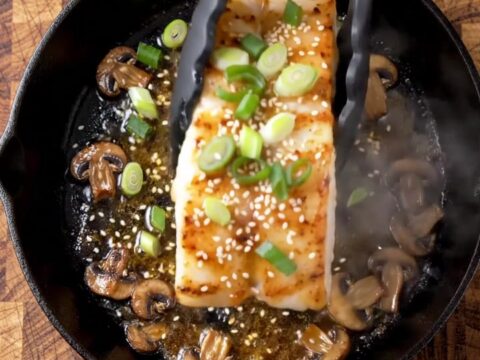
Seared Miso Butter Halibut with Shiitake and Bok Choy
See the recipe → →This recipe is based on a short cooking video and is published under the pen name Clara Weller. It was checked before publication, but errors can slip through. Nutrition, when shown, is an estimate. Read more in our editorial policy and on our food safety page.
More recipes to try
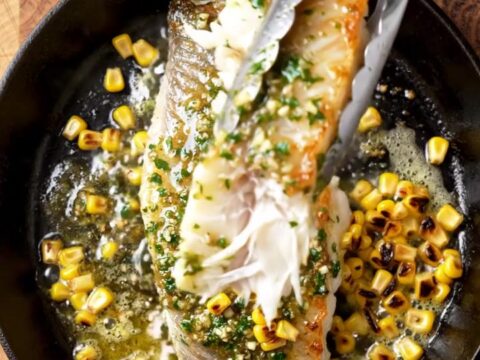
Chimichurri Sea Bass with Garlic Butter Corn in One Skillet
Total time: 35 min
Creamy Taleggio Polenta with Garlic Butter Mushrooms in One Skillet
Total time: 55 min
Baked Zucchini Lasagna Rolls with Ricotta and Marinara
Total time: 1 h 5 min
Parmesan Crusted Cod Skillet with Garlic Lemon Butter in One Pan
Total time: 27 min
Crispy Polenta Fries with Melted Provolone and Marinara Skillet
Total time: 35 min