Dinner · Part 3 of 3: Tips & recipe card
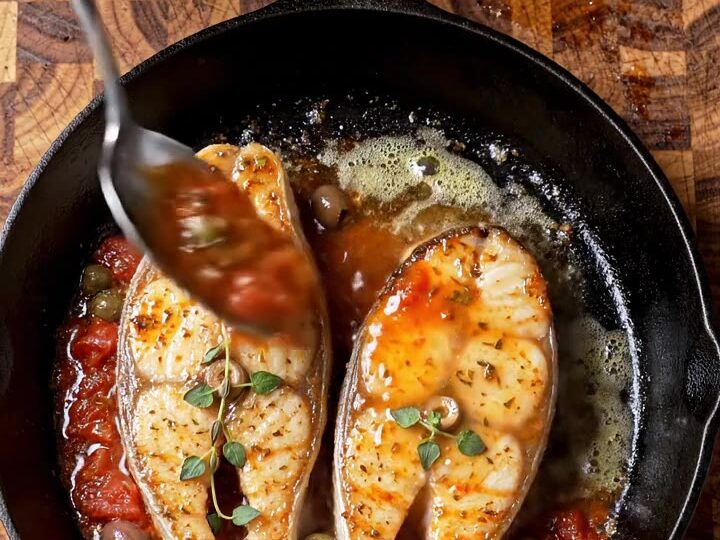
Seared Swordfish with Burst Tomato Caper Sauce Tips, FAQ & printable recipe
- Prep
- Cook
- Total
- Serves
- 4
Tips for success
For the best sear, make sure the skillet is really hot before adding the fish. You should see a slight wisp of smoke from the oil. Pat the fish completely dry with paper towels—moisture is the enemy of browning.
If you're cooking more than two steaks, do it in two batches to avoid crowding the pan. Let the fish rest after searing, just like a steak, so the juices settle and the texture is tender.
When adding the tomatoes, let them cook undisturbed for a minute or two before stirring, so they can blister and char slightly. This adds a smoky depth to the sauce. If you like a smoother sauce, gently crush a few tomatoes with the back of a spoon.
Taste the sauce before serving and adjust seasoning—capers and olives are salty, so you may not need additional salt. Fresh oregano is best, but dried oregano can be used in a pinch, adding it with the garlic herb butter.
Variations
- Spicy Arrabbiata Twist: Add 1/2 teaspoon red pepper flakes along with the garlic herb butter for a spicy kick. You can also use a splash of white wine to deglaze the pan after searing the fish, adding extra depth to the sauce.
- Grilled Swordfish: Instead of pan-searing, grill the swordfish over medium-high heat for 4-5 minutes per side. Make the tomato caper sauce separately in a small saucepan, then spoon it over the grilled fish.
- Roasted Tomato Variation: In the winter, use 1 cup of drained canned whole tomatoes instead of cherry tomatoes. Crush them with your hands before adding to the skillet, and simmer for a few extra minutes to concentrate the flavor.
- Herb-Infused Butter: If you don't have garlic herb butter, make a quick compound butter by mixing 3 tablespoons softened butter with 1 minced garlic clove and 1 tablespoon chopped fresh oregano or thyme. Stir into the sauce at the end.
Storage and make-ahead
- Fridge
- Store leftovers in an airtight container in the refrigerator for up to 2 days. Reheat gently in a skillet with a splash of water or olive oil to prevent drying.
- Freezer
- Not recommended—swordfish can become dry and mealy when frozen and thawed.
- Reheat
- Reheat in a skillet over medium-low heat with a splash of water or olive oil, or microwave on low power in 30-second increments until just warmed through.
Leftover swordfish and sauce can be stored in an airtight container in the refrigerator for up to 2 days. The fish may dry out slightly when reheated, so gently warm it in a skillet with a splash of water or olive oil, or microwave on low power. The sauce will keep well and can be spooned over the fish when reheating.
The garlic herb butter can be made up to 3 days ahead and kept refrigerated. The lemon slices can be cut a few hours in advance and stored in a sealed container. You can also measure out the tomatoes, capers, and olives the night before to streamline the cooking process. However, the swordfish is best cooked fresh—searing ahead and reheating will compromise the texture.
Serving ideas
Serve the swordfish hot, with the sauce spooned generously over each steak. Place a few lemon rounds on the side for squeezing, and offer the grated sheep milk cheese in a small bowl so everyone can sprinkle it over their portion.
Fresh oregano leaves can be scattered on top just before serving for a pop of color and herbaceous flavor. This dish pairs well with crusty bread to soak up the sauce, or a simple green salad.
For a complete Mediterranean meal, serve alongside roasted potatoes, couscous, or a bed of sautéed spinach. The bright, briny flavors also work well with a light white wine like Sauvignon Blanc or Pinot Grigio.
If you have extra sauce, it's delicious spooned over grilled vegetables or tossed with pasta. The lemon and cheese on the side allow each person to customize their plate to taste.
Frequently asked questions
What can be used instead of swordfish?
Can this recipe be made without a cast iron skillet?
Why does the sauce need garlic herb butter?
How can the dish be made less salty?
Can the swordfish be cooked from frozen?
Seared Swordfish with Burst Tomato Caper Sauce
Ingredients
- 4 swordfish steaks, about 1 inch thick
- 2 tbsp olive oil
- 2 tbsp butter
- 1 pint cherry tomatoes
- 2 tbsp capers, drained
- 1/2 cup kalamata olives, pitted
- 3 tbsp garlic herb butter, softened
- 1 lemon, thinly sliced into rounds
- 1/2 cup aged sheep milk cheese, grated (such as Manchego or Pecorino)
- 2 tbsp fresh oregano leaves
Instructions
- Grate the aged sheep milk cheese on a box grater into a fresh, fluffy pile. Slice the lemon into thin rounds. Have the cherry tomatoes, kalamata olives, and capers measured and ready.
- Place a 12-inch cast iron skillet over high heat and add the olive oil and butter. Heat until the butter is melted and foamy but not browned.
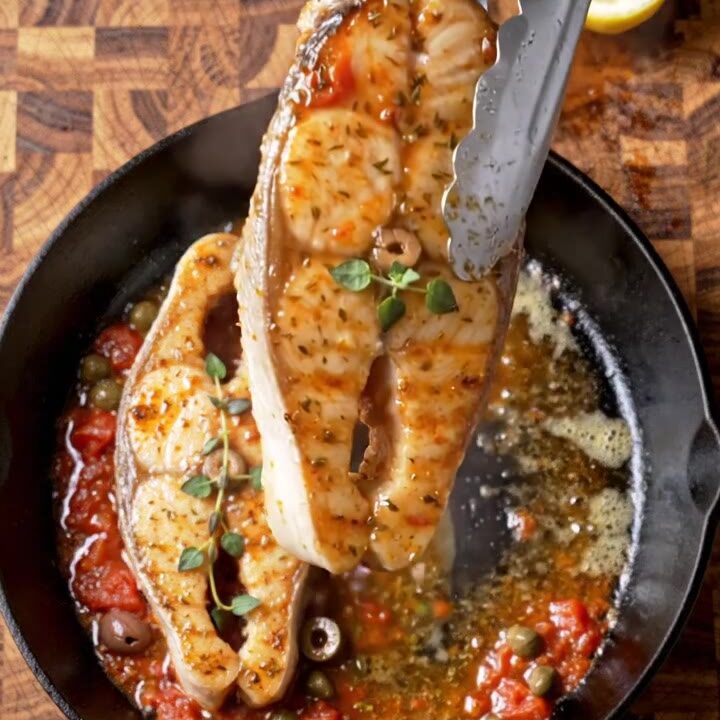
- Pat the swordfish steaks dry with paper towels. Place them in the hot skillet in a single layer. Sear without moving for 3-4 minutes, until nicely browned on the bottom. Flip and sear the other side for 2-3 minutes.
- Reduce the heat to medium. Add the cherry tomatoes, capers, and kalamata olives to the skillet around the fish. Cook for 2-3 minutes, stirring occasionally, until the tomatoes begin to burst and release their juices.
- Add the garlic herb butter to the skillet and stir it into the tomato mixture until melted and combined. Let the sauce bubble gently for 1-2 minutes, spooning it over the fish.
- Check the internal temperature of the thickest part of a swordfish steak with an instant-read thermometer; it should read at least 145°F (63°C). Remove the skillet from the heat and let the fish rest in the pan for 3 minutes.
- Spoon the burst tomato olive pan sauce over the seared swordfish. Top with fresh oregano leaves. Serve immediately with the lemon rounds and grated sheep milk cheese on the side.
Estimated nutrition per serving
- Calories
- 420
- Protein
- 35 g
- Carbohydrates
- 8 g
- Fat
- 28 g
Next recipe
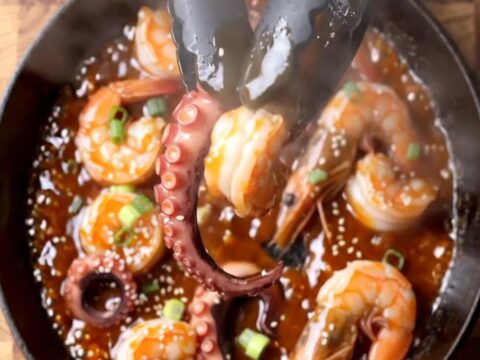
Honey Gochujang Shrimp and Charred Octopus Skillet
See the recipe → →This recipe is based on a short cooking video and is published under the pen name Clara Weller. It was checked before publication, but errors can slip through. Nutrition, when shown, is an estimate. Read more in our editorial policy and on our food safety page.
More recipes to try

Brown Butter Sage Scallops with Squash and Parmesan
Total time: 27 min
French Onion Rigatoni with Blistered Gruyere Crust
Total time: 1 h 5 min
Coconut Crusted Mahi Mahi with Mango Salsa
Total time: 30 min
Crispy Eggplant Parmesan Skillet with Molten Mozzarella
Total time: 45 min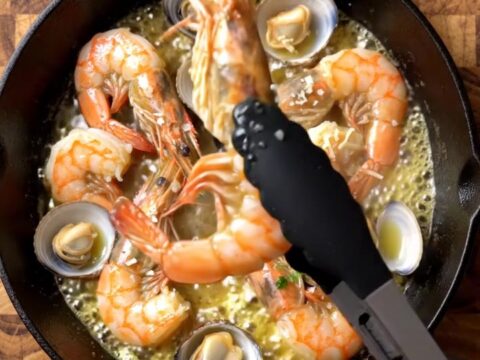
One-Pan Garlic Butter Clams and Prawns in White Wine
Total time: 25 min