Dinner · Part 3 of 3: Tips & recipe card
Queso Chicken Enchiladas with Creamy Cheese Pull Tips, FAQ & printable recipe
- Prep
- Cook
- Total
- Serves
- 6
Tips for success
Temperature is the whole game with a cheese sauce, so treat low heat as non-negotiable: melt the cheese with the pan barely simmering, add it in handfuls, and stir until each addition disappears before the next goes in.
If the queso ever tightens, a splash of warm broth whisks it back to a pourable consistency in seconds. Warm the tortillas before rolling even if they look supple—fifteen seconds in the microwave prevents the cracks that let sauce seep in and make the bottoms soggy.
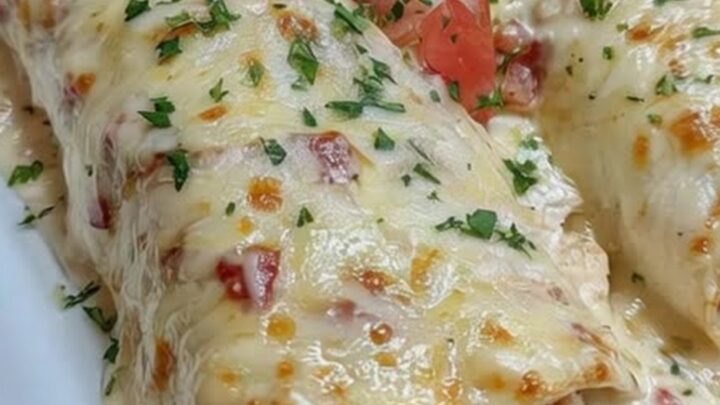
For the most dramatic cheese pull, serve within minutes of broiling, while the queso is at its stretchiest, and lift each piece with a spatula rather than scooping. Shred the chicken along the grain for longer strands that hold together in the tortilla.
When checking the chicken, test the thickest breast, not the smallest, and pull everything the moment it reads 165°F (74°C); carryover heat on the board finishes any marginal spots gently.
Variations
- Extra-spicy version: Swap half the chili powder for chipotle chili powder and stir a few tablespoons of the drained green chile brine into the queso. The sauce picks up a smoky, noticeable heat that still lets the cheese flavor lead.
- Black bean filling: Stir half a cup of drained, rinsed black beans into the shredded chicken before filling the tortillas. They add heft and a creamy bite, and the same amount of filling stretches to eight rolls comfortably.
- Corn tortilla version: Use corn tortillas instead of flour for a more traditional enchilada flavor. Warm them in a dry skillet first so they roll without cracking, and expect a slightly firmer, more rustic texture.
- Smaller casserole: Halve every ingredient and roll four tortillas in an 8-inch square baking dish. Keep the same oven temperature and check for bubbling at about 15 minutes, then broil as directed.
Storage and make-ahead
- Fridge
- Cover and refrigerate within 2 hours of baking; keeps 3 days. Loosen with a splash of broth when reheating.
- Freezer
- Freeze the baked dish, tightly wrapped, up to 2 months. Thaw overnight in the refrigerator before reheating.
- Reheat
- Cover with foil and bake at 350°F (175°C) for 15 to 20 minutes, or microwave individual portions with a splash of broth.
Leftovers cool at room temperature for no more than 2 hours before going into the refrigerator, covered. The queso firms as it chills, which is expected; the enchiladas reheat beautifully with a splash of broth to loosen the sauce. Keep them in a single layer if possible so the tops stay intact, and eat within three days for the best texture.
Each component can be prepared ahead. Cook and shred the chicken up to 2 days in advance and refrigerate it in an airtight container; make the queso sauce up to 2 days ahead too, then rewarm it gently with a splash of broth before assembling.
The dish can be fully assembled, sauced and topped in the morning, covered and refrigerated, then baked at dinner time—add roughly 10 extra minutes to the bake since it starts cold, and broil as directed at the end.
Serving ideas
Serve the enchiladas straight from the baking dish, lifting each one out with a spatula so the cheese pull happens at the table where everyone can see it.
A spoonful of the diced tomatoes from the top of the dish should land on each plate for brightness against the rich queso. Warm plates keep the sauce fluid longer, and a thin spatula slid under each roll leaves the neighbors in the dish undisturbed for second helpings.
Portion one or two enchiladas per person depending on appetite, and offer extra warmed queso on the side for anyone who wants the plate even creamier. The dish is at its stretchiest in the first ten minutes after broiling, so time the rest of dinner to come off the stove as the enchiladas come out of the oven rather than the other way around.
Frequently asked questions
Can the queso sauce be made ahead of time?
Why did the cheese sauce turn grainy?
Can this be assembled ahead and baked later?
How is the chicken cooked safely in this recipe?
Can the enchiladas be frozen?
Queso Chicken Enchiladas with Creamy Cheese Pull

Ingredients
- 1 1/2 lb boneless skinless chicken breasts
- 1 tbsp olive oil
- 1 tbsp chili powder
- 2 tsp ground cumin
- 1 tsp garlic powder
- 1 tsp kosher salt
- 2 tbsp butter
- 2 tbsp all-purpose flour
- 1 1/2 cups chicken broth
- 1 cup whole milk
- 2 cups shredded Mexican blend cheese, divided
- 1 can (10 oz) diced tomatoes with green chiles, drained and divided
- 8 8-inch flour tortillas
Instructions
- Pat the chicken breasts dry with paper towels and rub them all over with olive oil. Combine the chili powder, cumin, garlic powder and kosher salt in a small bowl, then sprinkle the mixture evenly over both sides of each breast, pressing gently so the spices adhere. Even coverage now means every shred of chicken carries flavor, not just the surface.
- Set a large skillet over medium heat and lay the chicken in a single layer. Cook 5 to 6 minutes per side, turning once, until the thickest part reaches 165°F (74°C) on an instant-read thermometer; that temperature is what makes the poultry safe to eat. Transfer the chicken to a cutting board and let it sit while a splash of steam escapes.
- Once the chicken is cool enough to handle, hold one breast steady with a fork and pull the fibers apart with a second fork, working along the grain. Continue until all the meat is shredded into bite-size strands. Pile the shreds in a bowl and pour over any juices left on the board so nothing flavorful is wasted.
- Melt the butter in a medium saucepan over medium heat. Sprinkle in the flour and whisk constantly for about 1 minute, until the mixture smells faintly nutty and looks like wet sand. This short cook removes the raw flour taste while keeping enough thickening power to build a sauce that clings to the enchiladas instead of pooling at the bottom of the dish.
- Pour in the chicken broth a little at a time, whisking until smooth after each addition, then add the milk the same way. Raise the heat slightly and simmer, whisking often, for 3 to 4 minutes, until the sauce thickens enough to coat the back of a spoon. Adding the liquids gradually is what keeps the queso silky instead of lumpy.
- Lower the heat to its minimum and add 1 1/2 cups of the shredded cheese a handful at a time, stirring until each addition fully melts before adding the next. Stir in half of the drained diced tomatoes. Keep the pan off a hard boil; gentle heat is what keeps the queso creamy and glossy rather than grainy or oily.
- Spoon a generous line of shredded chicken down the center of each tortilla, top with a little of the remaining shredded cheese, then roll each one snugly. Arrange them seam-side down in the baking dish, packing them side by side so they hold their shape. Work in batches if the tortillas cool and stiffen between rolls.
- Pour the warm queso sauce evenly over the rolled tortillas, nudging it into the gaps with a spatula so every roll is coated. Scatter the remaining shredded cheese over the top, then spoon the rest of the diced tomatoes across the surface. An even layer now means an even melt and an even cheese pull on every serving.
- Bake in a preheated 375°F (190°C) oven for 18 to 20 minutes, until the sauce bubbles at the edges and the cheese on top has fully melted and merged with the queso. The edges should look lively and the center should be hot all the way through, since the dish only needs heating through, not further cooking.
- Slide the dish under the broiler for 1 to 2 minutes, watching constantly, until the top blisters with golden-brown spots. Let the enchiladas rest 5 minutes so the sauce settles, then lift one out with a spatula, plate it and pull it apart for that long, creamy cheese pull before serving hot.
Estimated nutrition per serving
- Calories
- 520
- Protein
- 38 g
- Carbohydrates
- 30 g
- Fat
- 27 g
- Fiber
- 2 g
- Sodium
- 980 mg
Next recipe
Mississippi Chicken Casserole with Cheesy Pasta in One Dish
See the recipe → →This recipe is based on a short cooking video and is published under the pen name Clara Weller. It was checked before publication, but errors can slip through. Nutrition, when shown, is an estimate. Read more in our editorial policy and on our food safety page.
More recipes to try
French Onion Meatloaf with Bubbly Gruyère Topping
Total time: 1 h 55 min
Creamy Sun-Dried Tomato Chicken Meatballs in One Skillet
Total time: 40 min
Oven Roasted Sausage and Potatoes: One Pan, Crispy in 40 Minutes
Total time: 48 min
5-Minute Spicy Garlic Chili Oil Ramen
Total time: 5 min
Spicy Lamb Birria Pizzadilla with Crispy Consomé Tortillas
Total time: 22 min