Dinner · Part 3 of 3: Tips & recipe card
Open-Crumb Sourdough Bread with a Crackling Crust Tips, FAQ & printable recipe
- Prep
- Cook
- Total
- Serves
- 12
Tips for success
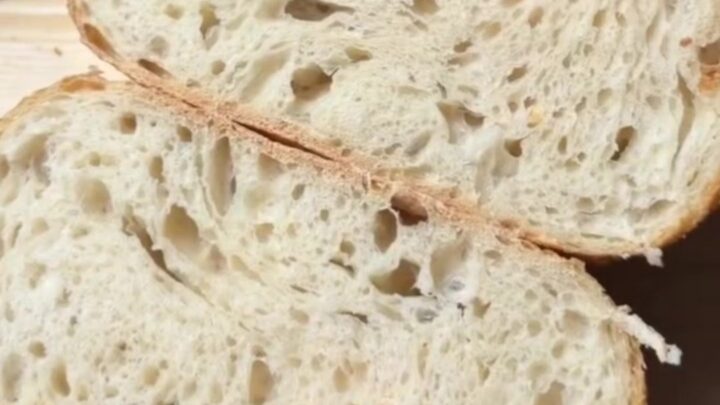
For the best open crumb, handle the dough gently during shaping. Avoid deflating it by pressing too hard. Use a light touch and let the dough guide you.
If the dough is very sticky, wet your hands slightly rather than adding extra flour, which can make the crumb dense. Also, make sure your starter is at its peak activity — a young starter won't give you the rise you want.
To get a dramatic ear, score the dough with confidence. Use a very sharp razor blade or lame and make one clean, swift slash at a 30-degree angle. Don't saw back and forth.
The depth should be about 1/2 inch. The angle and depth are what create the ear that curls up during baking. If you're new to scoring, practice on a few loaves — it gets easier with time.
Variations
- Seeded Sourdough: Add 1/2 cup of mixed seeds (sunflower, sesame, poppy) to the dough along with the starter and salt. Toast the seeds lightly beforehand for extra flavor. You can also roll the shaped loaf in seeds before scoring.
- Whole Wheat Sourdough: Replace 100g of the bread flour with whole wheat flour. Increase the water by 25ml, as whole wheat absorbs more. The crumb will be slightly denser but more flavorful.
- Rosemary Garlic Sourdough: Add 2 tablespoons of chopped fresh rosemary and 3 cloves of minced garlic to the dough during the stretch-and-fold phase. Fold them in gently to distribute evenly.
- Olive and Herb Sourdough: Fold in 1/2 cup of pitted and chopped kalamata olives and 1 tablespoon of dried Italian herbs during the final stretch-and-fold. This adds a Mediterranean twist to the classic loaf.
Storage and make-ahead
- Fridge
- Store the bread in a paper bag or cloth at room temperature; do not refrigerate, as it accelerates staling.
- Freezer
- Slice the cooled bread and place in a freezer-safe bag.
- Reheat
- To refresh a whole loaf, place it in a 350°F (175°C) oven for 10-15 minutes. This restores the crust's crispness. For slices, toast as usual.
Store the cooled bread in a paper bag or wrapped in a clean kitchen towel at room temperature for up to 3 days. The crust will soften slightly, but you can re-crisp it in a 350°F (175°C) oven for 5-10 minutes. Avoid storing in plastic, which traps moisture and makes the crust chewy. For longer storage, slice and freeze.
The dough can be prepared through the shaping step and then refrigerated overnight for a cold ferment. This slow fermentation develops more complex flavors and makes the dough easier to handle.
The next day, let the dough come to room temperature for about 1 hour before scoring and baking. You may need to extend the baking time slightly if the dough is cold.
Serving ideas
Slice the bread with a serrated knife using a gentle sawing motion to avoid crushing the crumb. Serve warm or at room temperature with good butter, olive oil, or your favorite spreads.
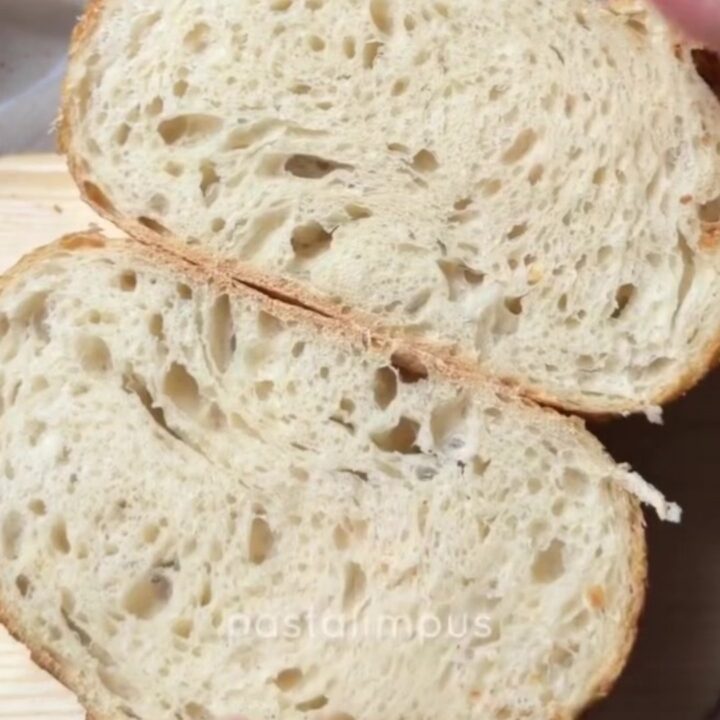
The crackling crust and open crumb make it perfect for dipping into soups, stews, or salads. It also makes excellent toast that holds up to toppings without getting soggy.
For a special treat, use this bread for grilled cheese sandwiches or panzanella salad. The sturdy crumb absorbs flavors without falling apart. You can also cube it and toast it for croutons. The bread's robust crust and chewy interior are versatile enough for both sweet and savory applications. Enjoy it fresh, toasted, or grilled.
Frequently asked questions
Why does the dough feel so sticky?
Can this bread be made without a Dutch oven?
How do you know if your starter is active enough?
Why is your crust not crackling?
Can you use all-purpose flour instead of bread flour?
Open-Crumb Sourdough Bread with a Crackling Crust
Ingredients
- 520 g unbleached bread flour
- 350 ml warm water
- 100 g bubbly active sourdough starter
- 12 g fine sea salt
- 1 ice cube
Instructions
- In a large mixing bowl, combine the unbleached bread flour and warm water. Stir with a spatula or your hand until no dry flour remains. Cover the bowl with plastic wrap or a damp towel and let it rest for 45 minutes. This autolyse step hydrates the flour and starts gluten development naturally.
- After the autolyse, add the bubbly active sourdough starter and fine sea salt to the dough. Use wet hands to pinch and squeeze the ingredients into the dough until fully incorporated. The dough will be sticky and loose at this point; that's expected.
- Over the next 2 hours, perform 4 sets of stretch-and-folds. To do one set, reach under one side of the dough, stretch it up and over to the opposite side, then repeat for all four sides. Cover the bowl between sets. This builds gluten tension and creates a smooth, glossy surface.
- After the final stretch-and-fold, let the dough rest at room temperature until it has increased in volume by about 30-50% and shows small bubbles on the surface. This bulk fermentation usually takes 1-2 hours, depending on your kitchen temperature and starter strength.
- Turn the dough out onto a lightly floured surface. Gently shape it into a round or oval loaf by folding the edges toward the center and then rolling it over to create surface tension. Place the shaped dough on a piece of parchment paper, seam side down.
- Using a razor blade or a lame, score a dramatic curved ear across the top of the loaf. Make one deep, confident slash at about a 30-degree angle. This allows the dough to expand in the oven and creates the classic sourdough ear.
- Place the scored loaf, still on the parchment, into a screaming hot Dutch oven preheated to 240°C (465°F). Add one ice cube to the side of the pot (not on top of the dough). Cover with the lid and bake for 25 minutes. The ice cube creates steam, which keeps the crust supple and promotes oven spring.
- Remove the lid and continue baking for 15 more minutes, until the crust is a deep mahogany brown and blistered in spots. The internal temperature of the bread should read at least 200°F (93°C) if you want to check. The crust will feel hard and sound hollow when tapped on the bottom.
- Transfer the baked loaf to a wire rack and let it cool completely, at least 1 hour, before slicing. This allows the crumb to set and the moisture to redistribute. Slicing too early will result in a gummy, sticky crumb.
Estimated nutrition per serving
- Calories
- 180
- Protein
- 6 g
- Carbohydrates
- 36 g
- Fat
- 1 g
Next recipe

Crispy Fried Chicken Nuggets with Creamy Pepper Sauce
See the recipe → →This recipe is based on a short cooking video and is published under the pen name Clara Weller. It was checked before publication, but errors can slip through. Nutrition, when shown, is an estimate. Read more in our editorial policy and on our food safety page.
More recipes to try

Crispy Chicken Mozzarella Potato Doughnuts
Total time: 29 min
Crunchy Butter Chicken Cheese Pull-Apart Baguette
Total time: 27 min
Crispy Buttermilk Fried Chicken Sandwich with Garlic Herb Mayo
Total time: 40 min
Loaded Sweet Potato Skins with Spiced Beef and Cheddar
Total time: 1 h 7 min
Cheesy Taco Boat Skillet with Chipotle Drizzle
Total time: 26 min