Dinner · Part 1 of 3: Ingredients
Open-Crumb Sourdough Bread with a Crackling Crust
- Prep
- Cook
- Total
- Serves
- 12
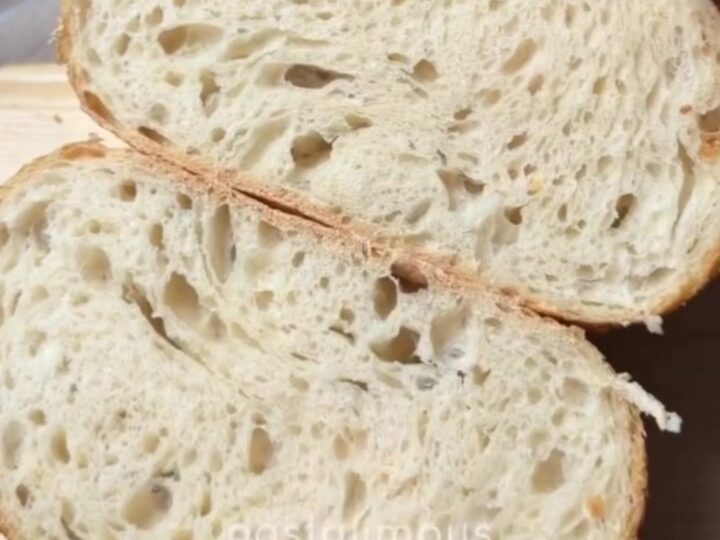
This sourdough bread recipe delivers everything you want from a homemade loaf: a dramatic, crackling crust that shatters when you slice it, and an open, glossy crumb with irregular holes that catch butter and jam.
The method is straightforward — mix, autolyse, stretch and fold, then bake in a screaming-hot Dutch oven. No complicated equipment, no kneading, just a few simple steps that build flavor and structure over time. The result is a bakery-quality loaf that fills your kitchen with the most comforting aroma.
Baking sourdough at home can feel intimidating, but this recipe breaks it down into manageable steps that anyone can follow. The key is a 45-minute autolyse, which hydrates the flour and starts gluten development before you even add the starter. Then, four sets of gentle stretch-and-folds over two hours build strength without any heavy kneading.
Finally, baking in a preheated Dutch oven with a single ice cube creates the steam that gives the crust its signature blistered, mahogany finish. The payoff is a loaf with a crackling crust and a tender, open crumb that tastes as good as it looks.
Ingredients
- 520 g unbleached bread flour
- 350 ml warm water
- 100 g bubbly active sourdough starter
- 12 g fine sea salt
- 1 ice cube
Why this recipe works
The autolyse is the first secret to an open crumb. By mixing just flour and water and letting it rest, you give the enzymes time to break down the starches and proteins, making the dough more extensible and easier to shape.
This also means you need less mixing time later, which preserves the dough's structure and leads to a more irregular, airy crumb. The 45-minute rest is short enough to fit into a busy schedule but long enough to make a real difference in the final texture.
The stretch-and-fold technique replaces traditional kneading. Instead of working the dough vigorously, you gently stretch and fold it in four directions, repeating this four times over two hours. This builds a strong gluten network without deflating the gas bubbles that the yeast is producing.
The result is a dough that holds its shape beautifully in the oven, springs up tall, and develops that coveted open crumb with glossy, translucent walls. It's a low-effort, high-reward method that produces professional results.
Notes and substitutions
Use unbleached bread flour for the best structure. The higher protein content (around 12-13%) gives the dough more strength, which translates to a taller rise and a more open crumb. If you only have all-purpose flour, you can still make this bread, but the crumb will be slightly tighter. Make sure your sourdough starter is bubbly and active — it should double in volume within 4-6 hours of feeding. A sluggish starter will result in a dense loaf.
A Dutch oven is essential for this recipe because it traps steam, creating the perfect environment for the bread to rise and develop a crispy crust. If you don't have a Dutch oven, you can use a heavy cast-iron pot with a lid, or even a roasting pan covered with foil. The ice cube added to the pot creates extra steam, which keeps the crust pliable during the first part of baking, allowing the dough to expand fully before the crust sets.
- unbleached bread flour: All-purpose flour works, but the crumb will be slightly less open. Use the same weight.
- fine sea salt: Kosher salt can be substituted; use 1 1/2 teaspoons by volume if you don't have a scale.
- bubbly active sourdough starter: A mature starter that doubles in volume within 4-6 hours of feeding works best.
Equipment
- Large mixing bowl
- Dutch oven with lid
- Parchment paper
- Razor blade or lame
- Plastic wrap or damp towel
- Kitchen scale
Up next · Part 2 of 3
9 steps · 40 min of cooking · what to look for at each stage
Step-by-step instructions (Part 2)